
Planning your first trek in the Nepal Himalayas? The Annapurna Base Camp (ABC) trek is an excellent option for beginners. This is one of the most rewarding high-altitude trekking destinations in Nepal. You don’t need previous technical climbing or trekking experience, but you do need a reasonable level of physical fitness, proper preparation, and a well-planned itinerary.
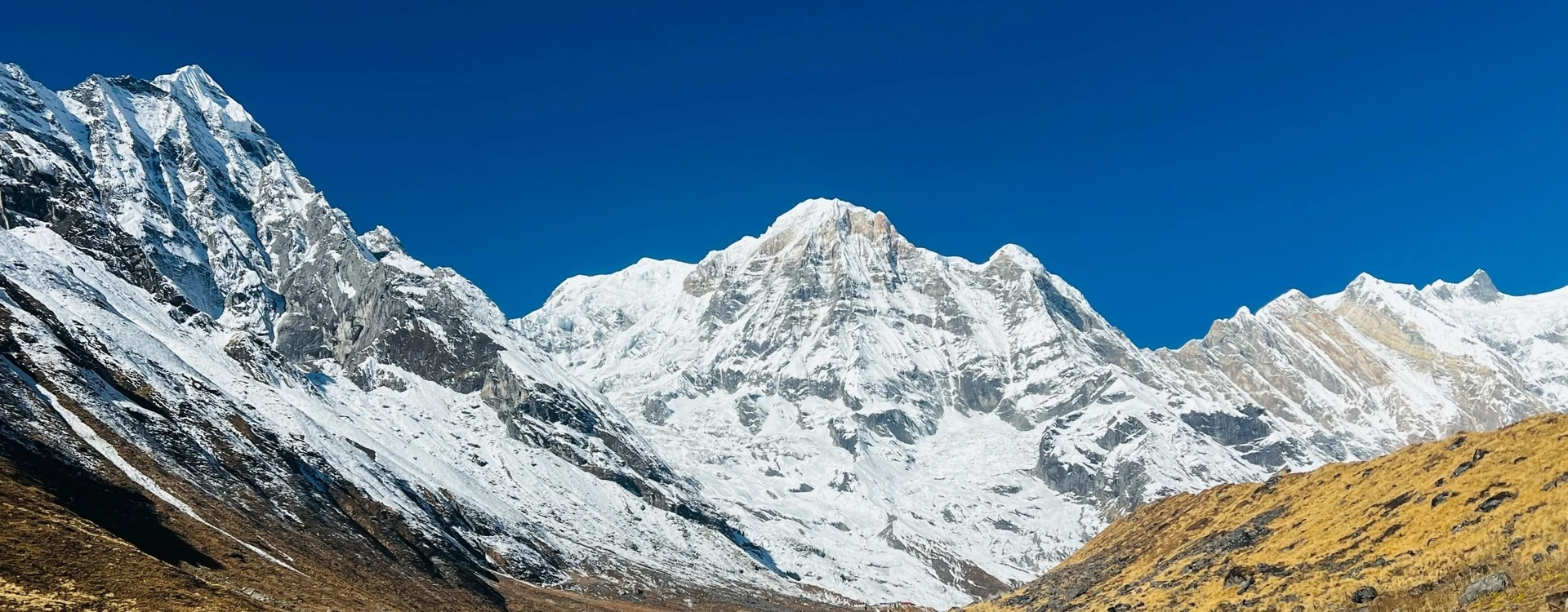
The trail takes you through lush terraced farm fields, charming traditional villages, dense forests of rhododendron and pine, and dramatic Himalayan landscapes. Located at 4,130 m, Annapurna Base Camp offers breathtaking close-up views of the surrounding Himalayas.
As a first-time trekker in Nepal, there are several things you should know, including itinerary, altitude gain, duration, permits, season, teahouses and accommodations, and more. This guide covers everything you need to know before starting the ABC trek.
Is Annapurna Base Camp Suitable for Beginners?
Yes, Annapurna Base Camp can be an excellent choice for beginners. Trekking to the ABC does not require technical climbing. The infrastructure is well established. Well-maintained mountain trails, accommodation facilities, and scenic trails make the journey unforgettable. This does not mean the trek is easy.
You’ll walk for several hours, often on steep, uneven stone trails. The altitude is the most difficult part of the trek. Every day you’ll walk at a different altitude until you reach the Annapurna Base Camp. A complete, comfortable itinerary, proper acclimatization, and listening to your body are essential.
For beginners, the ABC trek offers a combination of adventure, natural beauty, and cultural experience.
How Difficult Is the Annapurna Base Camp Trek?
The Annapurna Base Camp is generally considered a moderate trek and can be achievable for first-time trekkers with proper preparation. Being a moderate trek does not mean you don’t need preparation, experience, and fitness. It does not demand technical mountain climbing skills. Walking for several hours on mountain trails, tackling steep ascents and descents, cold temperatures at higher elevations, changing and challenging weather conditions, and increasing altitude are the main challenges of the ABC trek.
Your experience and preparation matter. If you regularly exercise, do cardiovascular exercise, and hike or walk for several hours, you are more likely to complete the trek comfortably than someone who is not physically active.
How Many Hours Do You Need To Walk Each Day?
Walking hours generally depend on your route, altitude, trail condition, weather conditions, and your walking pace. Typically, you can expect to walk for around 5-7 hours per day.
For beginners, maintaining pace and enjoying the picturesque views of the Himalayas and surrounding hills is more important. The goal is not to finish the trek as quickly as possible, but rather to enjoy every moment of the trek as a beginner.
How Long Does the Annapurna Base Camp Trek Take?
A typical ABC trek takes around 7-12 days, depending on your starting and ending points, acclimatization, and transportation arrangements. It also depends on whether you add an additional destination or not.
As a first-time trekker, a longer itinerary is preferable because it allows you to explore the region at a comfortable pace. Adding rest or acclimatization days can give your body time to adjust to changing altitudes.
A typical itinerary might look like:
Day | Routes | Approx. Walking |
01 | Arrival/Transfer | — |
02 | Drive to trailhead and trek to Ghandruk | 4-6 hours |
03 | Ghandruk to Chhomrong | 5-7 hours |
04 | Chhomrong to Himalaya | 5-7 hours |
05 | Himalaya to MBC | 5-7 hours |
06 | MBC to ABC and descent | 4-6 hours |
07 | Descent to lower village | 4-6 hours |
08+ | Return | Varies |
Plan your itinerary based on your time availability, fitness level, and transportation facilities.
ABC Trek Altitude and Acclimatization
The ABC trek is a moderate trekking route in the Himalayas. Altitude must be taken seriously while trekking at high elevations. Proper acclimatization is essential for a high-altitude trek. It helps your body to adjust to changing conditions.
As you start from lower farmland towards reaching the ABC at an elevation of 4,130 meters, the landscape changes dramatically. As you reach higher, the atmospheric pressure decreases, making it difficult to breathe. Your body needs time to adjust to changing elevation, particularly during the final stages of the trek.
Altitude Profile
Location | Approx. Altitude |
Pokhara | 822 M |
Ghandruk | 1,940 m |
Chhomrong | 2,170 m |
Himalaya | 2,920 m |
Machhapuchhre Base Camp | 3,700 m |
Annapurna Base Camp | 4,130 m |
The exact route and overnight stop can vary, so altitude gain may differ. However, the altitude you gain every day depends on your itinerary.
An acclimatization day is important when you trek at high altitude, although a dedicated acclimatization day is not included in many standard ABC itineraries. Most of the days' trekking hours are short, which allows trekkers to adjust to changing elevation.
Don’t rush to reach the teahouse early. Maintain a steady pace, stay hydrated, get enough sleep, eat properly, and avoid alcohol at high altitude. This helps your body manage the risk of altitude sickness and other problems.
Best Season to Trek
For beginners, spring and autumn are generally the perfect seasons to trek. The weather during these seasons is generally favourable. You’ll experience dry, comfortable trails, cool and crisp weather and temperatures, and clear views of the Himalayas and surrounding hills.
March to May: Spring
Spring is one of the most beautiful seasons for trekking in the Nepal Himalayas. Trekking to the Annapurna Base Camp in spring offers warm temperatures, and the forest along the trail is alive with colorful blooming rhododendrons and other wildflowers. The environment is picturesque.
Temperatures become comfortable in April and May; March is still colder in the high-altitude region. The mountain views are generally clear, and the combination of snow-covered peaks, lush green forests, and calming valleys makes the ABC journey especially scenic.
September to November: Autumn
Many trekkers love to trek during the autumn season for the ABC trek. This post-monsoon season offers clear skies, crystal-clear Himalayan views, comfortable trekking temperatures, and dry, comfortable weather.
The daytime temperature is comfortable for walking, while mornings and nights become noticeably colder as you approach ABC. November and October are the busiest months, so most of the popular trails feel crowded.
December to February: Winter
Winter trekking is possible for experienced trekkers, but not considered the best time for the ABC trek. During winter, temperatures drop at higher elevations, and snowfall makes the trail more challenging. However, trails are quieter, the mountains look spectacular under fresh snow, and accommodation may be easier to find.
June to August: Monsoon
Monsoon is generally the least favourable season for ABC trekking. Trails become slippery; the risk of landslides in lower elevations makes the trek more challenging. Clouds lower the visibility of mountains, and leeches may be present on some trails in lower-altitude sections. With proper preparation, guidance, and the right gear, an experienced trekker can complete the ABC trek.
What Permits Do You Need?
The Annapurna region passes through the Annapurna Conservation Area, which is a protected area, so a trekking permit is required to enter. Depending on current rules and regulations, a TIMS is also required.
Because Nepal's trekking regulations and fees can change, verify the current requirements with the Nepal Tourism Board or your registered trekking agency before departure. For the Annapurna Conservation Area Permit, foreign trekkers need to pay NPR 2,000, and for SAARC nations, it's NPR 200.
NOTE: Please check the NTB page for actual data.
Do Beginners Need a Guide for the ABC Trek?
Yes, hiring an experienced and licensed guide is strongly recommended while trekking in the Annapurna region. Beginners should verify the current requirements with the Nepal Tourism Board or a registered trekking agency before departure. Hiring an experienced guide can assist with navigation, accommodation, weather decisions, communication, and emergencies.
Food and Accommodation on the ABC Trek
Throughout your Annapurna trek, you’ll find teahouses and lodges that provide comfortable and essential food supplies and basic sleeping facilities.
Teahouse generally offers a variety of options like dal bhat, noodles, rice, pasta, soup, potatoes, eggs, pancakes, porridge, hot drinks, and so on. Taste dal bhat, an authentic Nepali meal that consists of rice, lentils, seasonal vegetables, and pickles. It is a full plate of carbohydrates, vegetables, and protein, which gives you energy during long trekking days.
There is a saying: “Dal-Bhat Power-24 Hour”.
As you gain altitude, the food price generally increases because supplies have to be transported into the mountains.
For accommodation, teahouses or mountain lodges are available. Accommodation is simple but comfortable. Bathrooms may be shared, and facilities such as hot showers, electricity, and Wi-Fi can be limited. So, don’t expect luxury like city hotels. As you trek higher, facilities become increasingly basic.
For first-time trekkers, experiencing simple teahouse accommodation and traditional mountain food is also a part of the adventure.
What Should Beginners Pack for the ABC Trek?
You should carry things that are essential for trekking in the high-altitude region. Here is the list of things:
Clothing
Moisture-wicking base layers
Trekking shirts
Warm fleece or mid-layer
Insulated jacket
Waterproof/windproof outer layer
Trekking trousers
Thermal underwear
Warm hat
Gloves
Footwear
Trekking socks
Comfortable trekking boots
Lightweight camp shoes
Trekking Gear
Backpack or daypack
Sleeping bag suitable for the expected conditions
Trekking poles
Headlamp
Water bottles or hydration system
Personal Essentials
Sunglasses
Sunscreen
Personal first-aid supplies
Toiletries
Power bank
Universal travel adapter
Copies of important documents
Is Annapurna Base Camp Safe for First-Time Trekkers?
For first-time Himalayan trekkers, the ABC trek is manageable with proper preparation. This is a high-altitude trek, so there is a real risk related to altitude and changing weather. Beginners should prepare for changing altitude, weather, and cold temperatures, slippery or uneven mountain trails, and physical exhaustion.
For safety, don’t rush, stay hydrated, keep warm, follow the planned itinerary, walk with a guide, do not ignore altitude symptoms, and always get insurance before going on a trek.
What Are the Biggest Mistakes Beginners Make?
Trying to Walk Too Fast
Don’t walk too fast while trekking in the high-altitude region as a first-time trekker. There is no reward for reaching the teahouse first. Walking too fast on the steep ascent makes you feel exhausted and saps all your energy, making it more difficult to continue the trek. A slow and steady pace saves your energy.
Ignoring Altitude Symptoms
As a beginner, trekking in a mountain region makes you feel tired, which is normal. As you gain elevation, the atmospheric pressure decreases. You may experience symptoms like difficulty breathing, slow walking, feeling dizzy, fatigued, and even restless. If the symptoms of altitude sickness develop, don’t ignore them. Communicate with your guide, rest, and seek medical assistance if the situation gets worse. If symptoms get worse, seek immediate assistance and descend to a lower elevation.
Packing Too Much
Don’t pack your whole wardrobe. Trekking while carrying a heavy daypack is quite hard. Pack only what you need, such as warm layers, gloves, trekking poles, personal medication, and other essential gear.
Focusing only on the Destination
Annapurna Base Camp is the ultimate goal. You’ll pass through charming traditional villages, terraced farmlands, the pristine rhododendron and pine forest of the Annapurna Conservation Area, cascading waterfalls, and dramatic landscapes, which are the major attractions of the trek. While trekking as a beginner, don’t only focus on your destination; focus on the route and surrounding beauty, which are a major part of the experience.
ABC vs EBC for Beginners
Both treks are renowned Himalayan trekking destinations in Nepal that offer totally different experiences to trekkers. ABC is renowned for its dramatic landscape, with stunning mountain views, making it a perfect choice for first-time trekkers.
Everest Base Camp is a popular trekking destination that offers iconic views of Mt. Everest, Ama Dablam, and surrounding peaks.
Feature | ABC | EBC |
Maximum Altitude | ~4,130 m | ~5,364 m |
Typical Experience | Mountain sanctuary and varied landscapes | Everest region and Sherpa culture |
Technical Climbing | Not required | Not required |
Duration | Generally shorter | Generally longer |
Main Challenge | Steep sections and altitude | Higher altitude and longer duration |
Beginner Suitability | Excellent with preparation | Achievable but more demanding |
If you prefer a shorter-duration trek, go for the Annapurna Base Camp. Witness the diverse landscapes, villages, forests, and the Annapurna Sanctuary.
If your main goal is to see Mt. Everest, then choose the Everest Base Camp trek. The walking distance is longer, and altitude gain is higher, but with proper preparation, this trek is achievable.
Why Annapurna Base Camp Is Worth It
The major attraction of the ABC trek is the spectacular views of the Himalayan ranges and dramatic landscapes. The trek begins at a lower elevation, passing through terraced farm fields and charming traditional villages before entering rhododendron forest and eventually reaching a high-altitude Annapurna Sanctuary.
As you trek at higher elevation and approach the Annapurna Base Camp, you will feel a strong sense of achievement. As you reach the ABC, you’ll be mesmerized by the spectacular views of the Himalayas.
For the beginner trekker, this trek is worth it. The memories of this adventurous trek will stay with you for a lifetime.
Conclusion
Overall, the Annapurna Base Camp trek is suitable for beginners. The trek does not require technical mountain climbing skills, so a reasonable level of fitness and proper preparation is enough. The well-established teahouses and trail make the trek more comfortable for beginners.
With proper preparation, a sensible itinerary, comfortable gear, and good safety practices, the Annapurna Base Camp trek can be an excellent choice for a first-time Himalayan adventure.
FAQs
How difficult is the Annapurna Base Camp Trek?
ABC trek is considered a moderate to challenging trek. Because of the changing altitude, steep mountain trails, and walking for long hours, the trek becomes challenging.
What is the altitude of Annapurna Base Camp?
Annapurna Base Camp sits at approximately 4,130 meters (13,550 feet) above sea level.
How many days do you need for the ABC Trek?
A typical itinerary takes around 7-12 days to complete this trek. Depending on the itinerary start and end point, transportation, acclimatization, and pace, the total itinerary varies.
How many hours do you walk each day?
On average, you need to walk for 4-7 hours on the trail. It depends on your distance and walking pace. Some days you walk for 7-8 hours; some days 3-4 hours.
Can beginners get altitude sickness on the ABC Trek?
Yes, a beginner can get altitude sickness on the trek. Your fitness will help you during walking days; it does not save you from altitude sickness.
What is the best month to trek to Annapurna Base Camp?
The most favourable seasons for the ABC trek is during spring and autumn. Both of these seasons offer incredible beauty of the Himalayas, surrounding hills, and valleys.
Do I need a guide for the ABC Trek?
A guide helps you with navigation, communication, accommodation, altitude management, and emergencies. So, hiring a guide is beneficial for first-time trekkers.
What permits are required for Annapurna Base Camp?
The Annapurna Conservation Area Permit (ACAP) and TIMS permit are required for the Annapurna Base Camp Trek.
What should I pack for my first ABC Trek?
Carry the essential items in your bag. Items like good trekking boots, layered clothes, personal care items, permits, and so on.
Is ABC harder than Everest Base Camp?
Both ABC and EBC are difficult in their own way. ABC is generally shorter and reaches a lower altitude, whereas EBC is higher and involves more altitude and more acclimatization days.
Are there teahouses and Wi-Fi on the ABC Trek?
Yes, teahouses are available along the main ABC route. And Wi-Fi is also available, but the speed is relatively slower than in city areas. As you gain altitude, facilities become basic.
Is the ABC trek safe?
Yes, the ABC trek is a safe trekking route. The main concern is altitude sickness, changing weather, slippery trails, and fatigue. Trekking with an experienced guide makes your journey safer.
Do I need previous trekking experience?
Previous trekking experience is helpful but not essential. Good physical fitness, proper preparation, and a comfortable itinerary help you to have a smooth trek.
Is the ABC trek crowded?
During the season, such as in spring and autumn, the trail is very crowded, particularly around popular villages and the base camp itself.