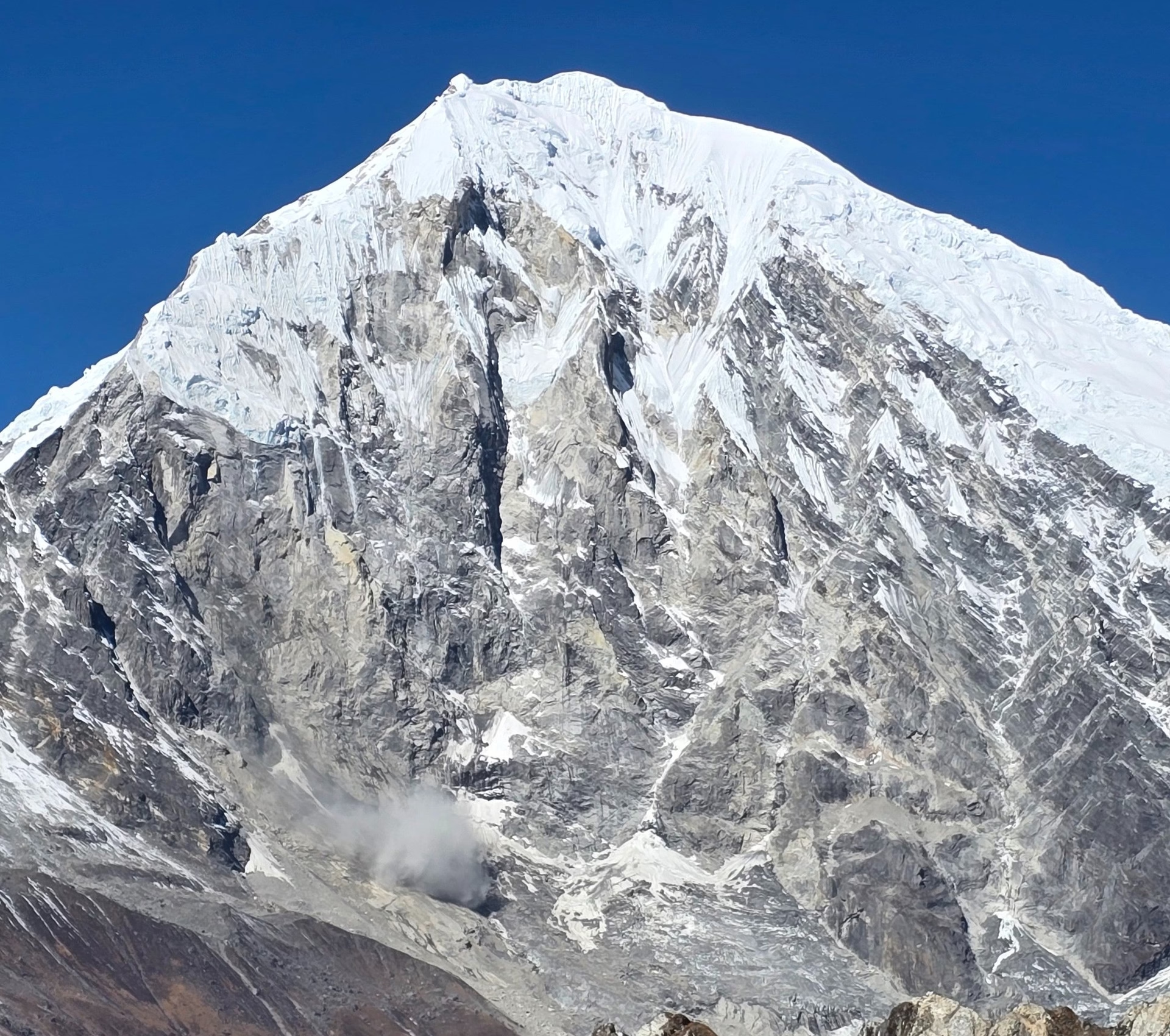

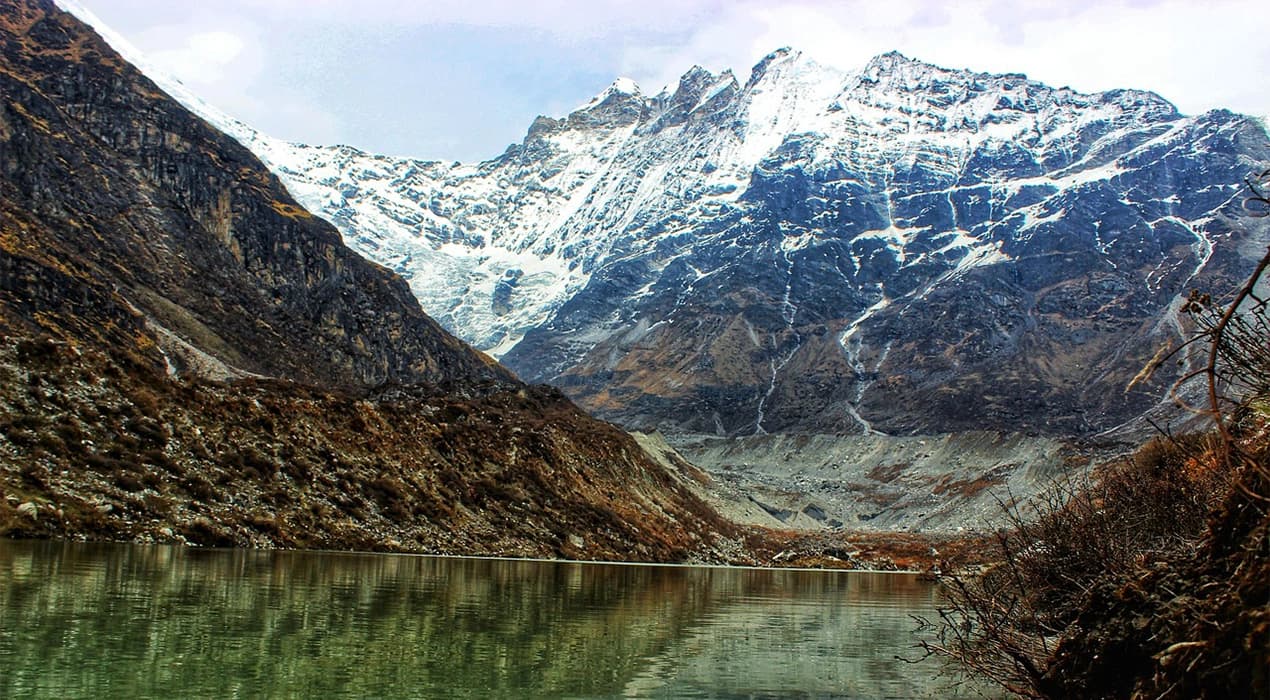
Staring at beautiful peaks, such as Langtang Lirung, and others almost overwhelming in their splendor
Kyanjin Gompa and Tserku Ri provide the ultimate bird's-eye view of the mountains.
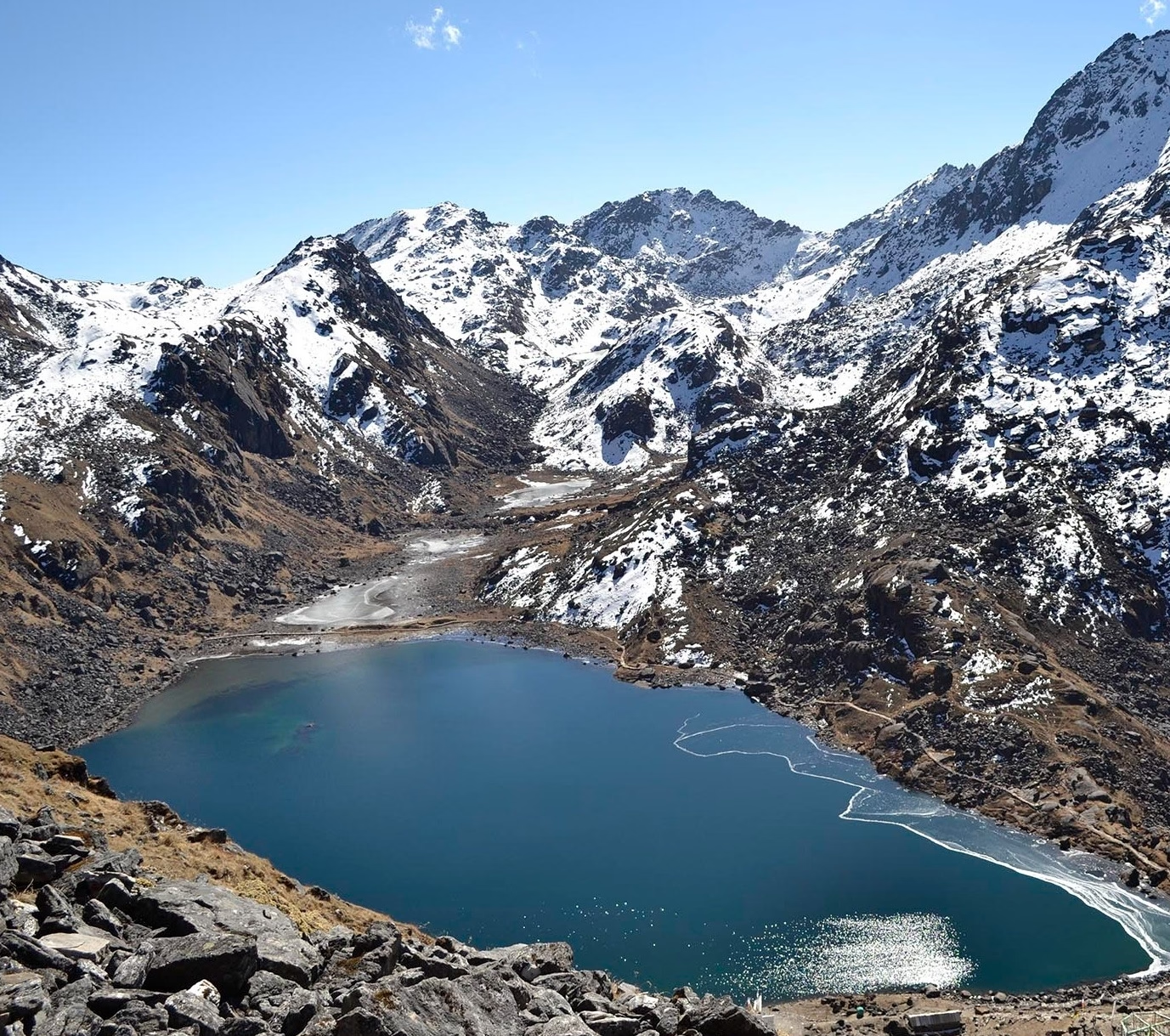
The sacred Gosaikunda Lake is the site of the religious pilgrimage for both Hindus and Buddhists.
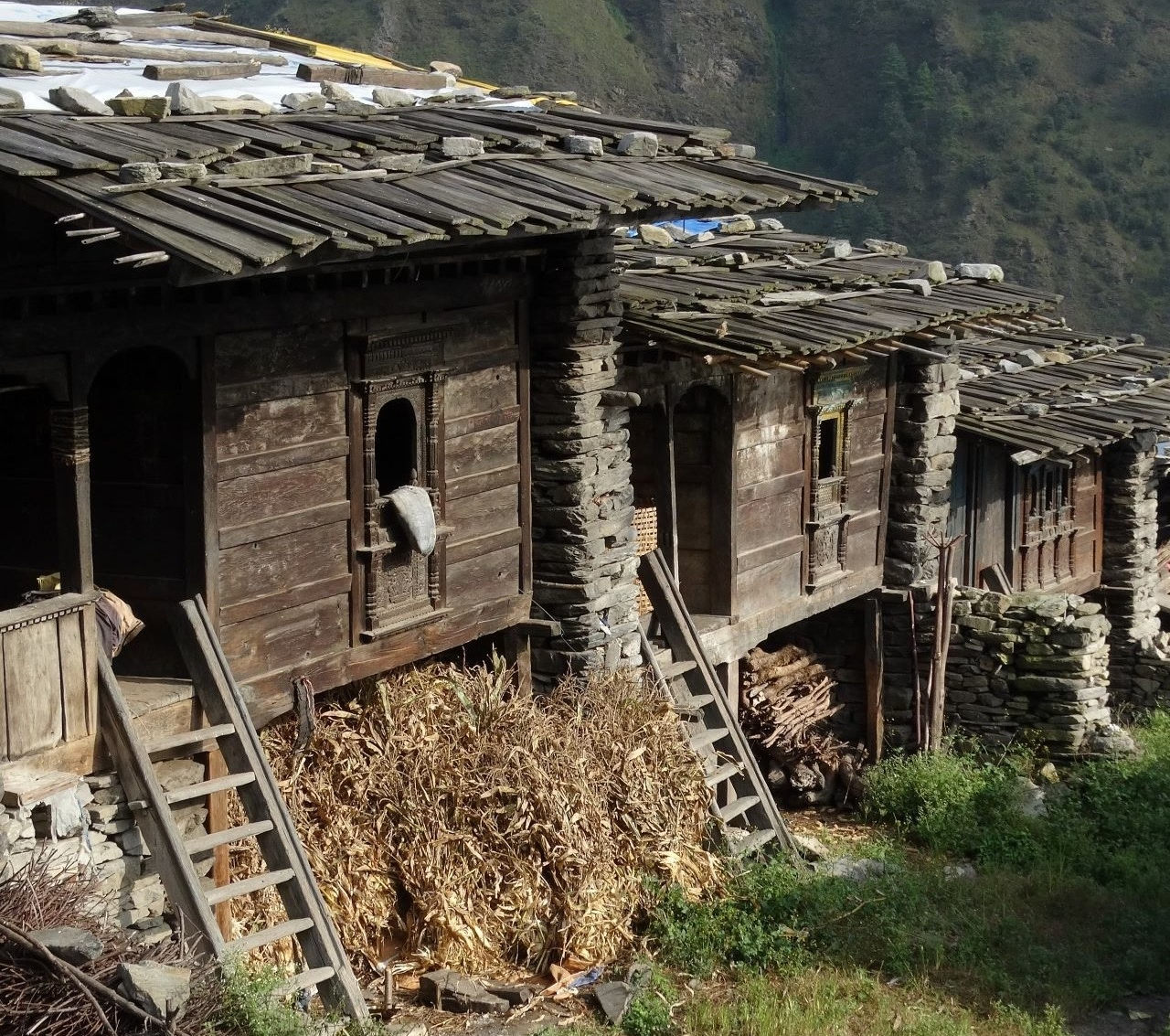
Experiencing Tibetan culture through monasteries and remote villages.
Exciting hikes at altitude, including Kyanjin Ri and Tserku Ri.
Wonderful views of rhododendron forests and alpine meadows.
Langtang Valley and Gosaikunda Trek
5.0/0 reviews
Langtang Valley and Gosaikunda 14 days Trek, Combines 2 treks itinerary cost 1275$ for cultural and holy trip with beautiful landscape and lakes
- DestinationTrekking in Langtang
- Group TypeTop Seller !
- Activities Guided Trekking
- Accommodation Guest House
- Max. Elevation4280m.
- Group SizeMin. 1 Pax
- VehicleLocal Bus
- MealsBLD
Langtang Valley and Gosaikunda Trek Highlights
14 days Langtang Valley and Gosaikunda Trek Overview
Dip in the holy water and walk on the divine trekking trail protected by snowy mountains and mythical ancient gods! Clean your soul while traversing through the ideal landscapes which you may have imagined in the legendary paintings only! Yes, the Nepal Trekking Rangers offers you the most fantasy filled trekking adventure itinerary that takes you to the mystical valleys and sacred glacial lake in one single trip. The Langtang Valley and Gosaikunda Trek is probably the best lake comprising trekking route alongside the Gokyo Lake Everest Base Camp Trek to trek in Nepal. Therefore, don’t miss out to knit an ideal walking holiday moments here in Nepal!
Imagine walking in the trekking trail that traverses through diverse vegetation and ends in the sacred glacial lake! It is indeed the journey filled with joy, spirit, mountains, flora, fauna, ancient monasteries, landscapes, and Tamang culture! Accumulate Himalayan holiday moments at the most competitive cost in the two weeks long journey into the jewels of the Langtang Region of Nepal.
Jewels of Langtang Region
Do you know that the Langtang Valley and Gosaikunda Trek Route traverses through almost every popular places of the Langtang Region? Yes, this is the perfect trekking route to trek in the Langtang Region if you want to explore every nooks and corners of the region. The region is in the northern side of Kathmandu Valley and it is the nearest yet famous trekking region of Nepal. The guaranteed departure options make this region favorite among trekkers from across the globe.
Major highlights of the Langtang Region of Nepal are Gosaikunda Lake, Thulo Syabru Village, Lama Village, Ghoda Tabela Forests (known for spotting of endangered species of Red Panda), Langtang Village, Kyanjin Gompa, Syabrubeshi, Chortens, Monasteries, Stupas, forest core areas of the Langtang National Park, etc. All these things are inside the trekking route of the Langtang Valley and Gosaikunda Trek. Therefore, the trail is often referred as the jewels of the Langtang Region. Grab your seats for the mesmerizing trekking trips! We guarantee enticing scenery and impeccable hospitality throughout the trekking trip. In addition, you can get the wholesome trekking package of 14 days itinerary at just 1275 $ per person.
Langtang Valley and Gosaikunda Trek Itinerary and Cost
Syabrubeshi as the starting point of the Langtang Valley and Gosaikunda Trek is no surprise as it is same for almost all the trekking trips inside the Langtang region of Nepal. Our itinerary starts from your arrival until your departure from Kathmandu. The trek traverses through Lama Hotel, Langtang Village, Kyanjin Gompa, Thulo Syabru, Gosaikunda Lake, and Dhunche before ending the trip in Kathmandu. You can call this as a mini Langtang Circuit Trek.
Please note that the detour trekking trip which is also famously known as the Langtang Circuit Trek is the Langtang Valley Tamang Heritage Gosaikunda Lake Trek. Please note that the Langtang Valley and Gosaikunda Trek itinerary costs from 1275 $ to 1500 $ per person. It depends upon the preferences of trekkers and amenities used in the trek. You can contact our travel planners to get more information about the cost and possible change in the itinerary. We are here 24/7 to assist you in customizing the trekking trip according to your budget and preferences.
Short Introduction of Langtang Valley Trek
The Langtang Valley Trek in Nepal is one of the commercial and popular trekking routes of Nepal. It is the well-trodden trekking route full of modern facilities required for the trekkers from accommodation to meals. The trek is known for its diverse flora and fauna. Moreover, the trail of the Langtang Valley Trek is considered as the spiritual walking path into the heart of the Himalayas where one can find inner peace and solace. The man – made monasteries built 700 years ago and mundane Himalayan life can surely change your perspective of life. In addition, the trek is possible in less than a week’s holiday and the trail is one of the best guaranteed departure trekking routes of Nepal. The face of the Langtang region is the Langtang Valley Trek in Nepal. Therefore, the travel planners of the Nepal Trekking Rangers knitted an ideal trekking itinerary of the Langtang Valley and Gosaikunda Trek.
Gosaikunda Lake Trek Short Introduction
The Gosaikunda Lake is sacred glacial lake for both Hindus and Buddhists. This is the pilgrimage and scenic trekking trip which is possible to do in less than 4 – 5 days as well. In addition, the trek offers exploration of various glacial lakes in the surrounding the main Gosaikunda Lake. The myth says that the lake was formed by the hit of the Lord Shiva’s trident. During the ocean churning for excavation of elixir, poison too emerged out which was about to engulf the whole universe, lord Shiva came the rescue. He drank all poison and became Neelkantha (Blue necked). To get relieved from the pain, he threw his trident and drank the water that came out of the trident strike on rocks. The trek is purely divine and scenic.
Things to Know before Langtang Valley and Gosaikunda Trek
There are few things that you must know before the Langtang Valley and Gosaikunda Trek. You need to prepare physically before embarking on this enticing trekking trip. Make sure that you have enough physical fitness and stamina to withstand the demands of walking at least 6 to 7 hours in an average every day for 9 to 12 days continuously. In addition, the trekking trail is full of uphill and downhill including the high altitude places. Always hire a guide and for efficient budget friendly trek, choose the reliable trekking agency, hire a guide, and buy a trekking package. Get the entry permit of the Langtang National Park and pack the essentials. Ask as many questions as possible to your travel planners before booking the trip.
Can I visit Gosaikunda Lake first before Langtang Valley Trek?
Yes, it is possible to start the Langtang Valley and Gosaikunda Trek from Dhunche instead of Syabrubeshi. However, the Langtang Valley Trek in the first phase is best from the altitude sickness point of view and steep uphill sections. We can operate trekking from either ways. Therefore, without any delays, book the Langtang Valley and Gosaikunda Trek in Nepal with us.
Langtang Valley and Gosaikunda Trek Itinerary
The first day, you land in Kathmandu and are taken away to the best vibrant capital city of Nepal it is organized to take you to your hotel to get you rest and acclimatize to the time zone before heading out for trekking. Enjoy the evening exploring the local restaurants or stroll around the city.
You will also have a pre-trek briefing by your guide where they will explain all the details regarding the trek and hand you any gear or supplies.
You start your journey to the Langtang region on the second day of your trek. From Kathmandu, you might need about 5 to 6 hours driving via bus or jeep to the place known as Syabrubensi. En route, this scenic drive is sure to introduce you to the wonders of Nepal viewed through terraced fields, traditional villages, and forests. Syabrubensi, a tiny village in the hills, will be your stopover tonight. The scenery around is beautiful enough for an excellent evening.
After breakfast is completed, the walk begins for the first trek to Lama Hotel. The six-hour walk terminates and begins inside thick rhododendron forests along the bank of the Langtang River. With every step upwards, you will be enchanted by the natural charm of Langtang Valley with the magnificent view of snow-capped peaks far away in sight.
At 2,470 meters above sea level, the Lama Hotel presents a calming atmosphere for your rest and acclimatization to the rise in altitude.
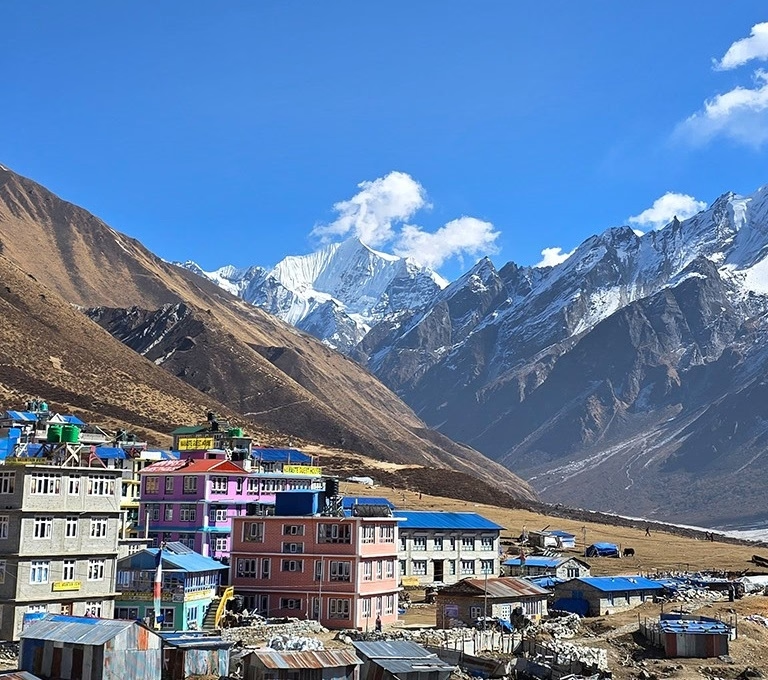
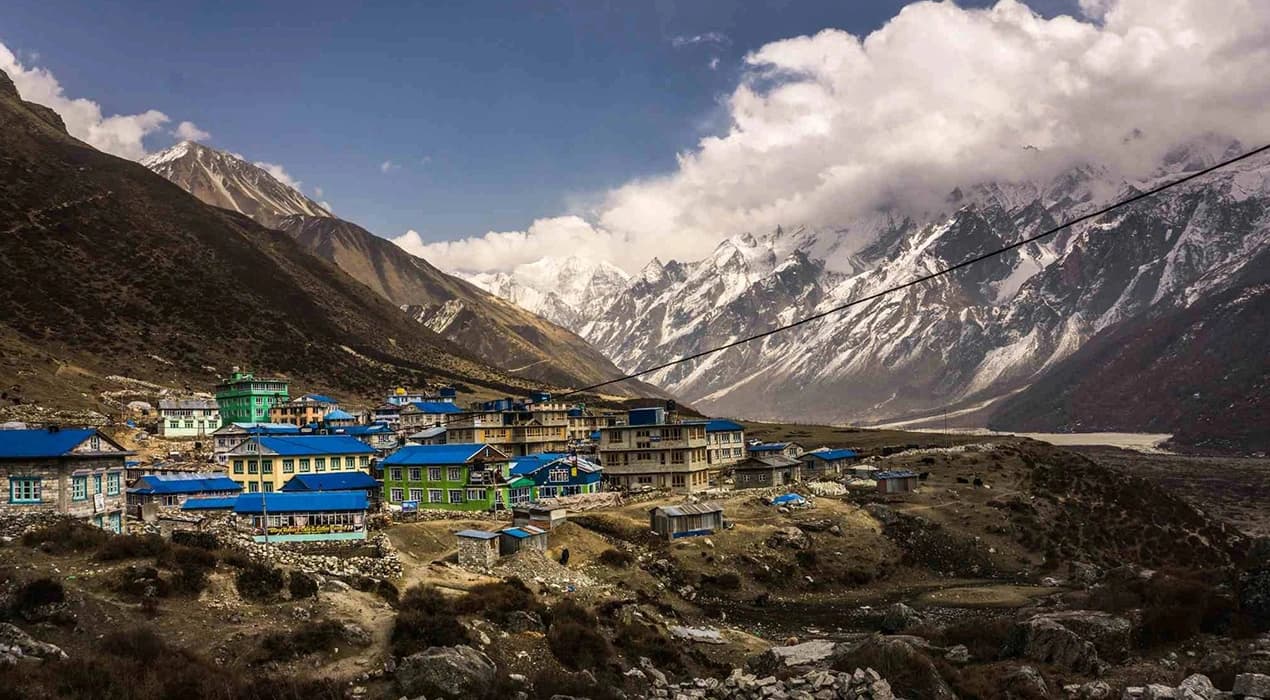
Day 4 is the day of gradual ascent. Around 5 to 6 hours of trek will have it around 3430 meters by Langtang Village. The path continues through the Langtang Valley, rising on either side with tall peaks. Traveling towards Langtang Village brings you to traditional Tibetan-style houses and monasteries, and tamangs filling the vibrant culture.
Some wonderful places to rest and explore all the richness of culture present in this village.
On day 5, you will complete your trek to Kyanjin Gompa, a Buddhist monastery that stands at an altitude of 3,865 meters. It will be the shortest trek from 3 to 4 hours into the mountains that induce wonderful sights of range around. Visit Kyanjin Ri, a peak ascent with a viewpoint of about 4,770 meters that features awesome views of Langtang Lirung, Ganchenpo, and others, upon reaching Kyanjin Gompa. The hike to Kyanjin Ri is a 3-hour round trip.
On the sixth day of your travel, you will be walking with a great view of one of the fine sightseeing places-Churku Ri lies at an elevation of 4,985m above sea level. It will take about 7-8 hours to reach, but the view from there is just wow: the Langtang Valley and its snow-clad mountains and glaciers are spread in front of you.
This view other than other higher altitudes offers a whole new angle to admire all the surrounding natural beauty throughout the day, you will be spending time staring at this view, with all the tranquility brought by those higher mountains.
After taking the trek for six to seven hours, you will eventually return to Lama Hotel on Day 7. You'll tread the trail down with perspective as the forested trails, streams, and villages will appear even more beautiful from this angle after the descent.
Once at your destination, you will spend an evening at the Lama Hotel, getting ready for your next adventure.
It is a relatively easy day, one goes on a five-hour hike to the stunning village of Thulo Syabru at an elevation of 2,210 meters. The wonderful trail along green forests and small settlements is lined with awe-inspiring views of surrounding mountains and valleys.
Thulo Syabru has Tibetan influences and after an entire day of trekking, is a peaceful place to relax.
Today, Day Nine, you leave for a trek to Chandanbari or Sing Gompa at an elevation of 3,330 meters. The trek will take between five and six hours, passing deep, languid forests of rhododendrons and pine trees.
Sing Gompa is a peaceful place with a monastery where religious serenity pervades. Soak in all the gorgeous views of the Langtang range while enjoying the calm of the gut.
Day 10 is one long day that, after fighting uphill-descent uphill, earns the name of both torture and reward. At an elevation of 4,380 meters, Gosaikunda Lake is a spiritual water for common Hindus and Buddhists. The lake is at about the end of a 6- or 7-hour walk that includes alpine meadows, yak pastures, and rocky stretches.
For the magnificent surroundings formed by compatible mountains, Gosaikunda Lake is one of the most beloved and awe-inspiring destinations in the entire Langtang region.
On Day 11, take a deserved rest and head to the surrounding lakes near Gosaikunda. You could go to other smaller lakes such as Saraswati Kunda and Bhairab Kunda, both of which are equally beautiful and holy. This day will be spent in a laid-back manner, basking in the peaceful ambiance and contemplating the spiritual significance of the area.
So the twelfth day is the day which brings you back to Dhunche. The trek will take approximately 6 to 7 hours with the beautiful passing of forests, small villages on its way, and propitious views. The descent represents an exodus starting not only in altitude loss but also in vegetation type and temperature from alpine subsidence to subtropical forest conditions.
Your resting point after this is Dhunche, where you will stop before heading back to Kathmandu, at an altitude of 2,030 meters.
On Day 13, you shall drive back to Kathmandu for 5 to 6 hours from Dhunche. The scenery will be mindblowing, as the drive shall be along another set of winding mountain roads that afford one last glimpse of the amazing landscapes you have trekked on.
Once in Kathmandu, you will find time to sit back and enjoy the comforts of the city after a memorable trek to Langtang and Gosaikunda.
The last day will be Transfer to Tribhuvan International Airport for departure from Nepal. You would treasure all the memories from the Langtang Valley and Gosaikunda, whether heading home or traveling for further experience that will dive deep into breathtaking landscapes, spiritual avenues, and nature's attachment. Travel safe and see you in Nepal again.
If the provided schedule isn't suitable for you, we are able to create personalized travel arrangements according to your preferences and requirements.
Choose Your Package
US $470per person
Best Price GuaranteeTaxes Included
(Guide. Porter. Permits. Transportation. Accommodation)
Cost Includes
Transportation
International/Domestic Airport pick up and drop off by Private Vehicle as per group size
Tourist Bus or Local Jeep (KTM-Syabrubensi and Dhunche-KTM) – Both Ways
Accommodation
2 Nights Accommodation at Tourist Standard Hotel or Boutique in KTM
11 Nights Accommodation along the trek (Guest Houses or Tea Houses and Attached bathroom in Possible Places)
Food/Drink/Snacks
Not Included
Permits and Expenses
Langtang National Park Entry Permit
TIMS CARD (If It Requires)
All Local Government Taxes and Official expenses
Guide and Porter
Government Register Licensed holder Guide with fluently speaking English Language
An Assistant guide each 7 Trekkers
A porter for each 2 clients (20 KGs limit weights for a Porter)
Covers their (guide and porter) wages, meals, hot drinks, accommodation, transportation, insurance and necessary trekking gears)
Souvenir or Complimentary
Nepal Trekking Rangers Company’s T-shirt/Cap/Buff
Trekking Route Pocket Map
Benefits
NTR’s Duffel Bag each client (return basis)
Sleeping Bag and Dawn Jacket (return basis) If you require
Cost Excludes
Entry Regulations and Visa
International Flights Fare
Nepal Entry Fees (15D-$30, 30D-$50 and 90D-$125)
Accommodation
If you stay more than 2 nights in Kathmandu in case of early return in any reason or late departure
Food and Drink
All Food and Drink (Breakfast Included)
Tips
Guides and Porters as gratitude
Travel Insurance and Expenses
Travel Insurance covers emergency High Altitude Rescue/Evacuation (upto 6000m)
Personal Transportation of ground and Air both
All soft and hard drinks, All hot drinks in pot size or above 4 cups a day, Snacks, extra Chocolate bar
Sanitary material such as wet wipe tissues/toilet paper
Hot Shower/hot or boiled water, Wifi, Battery Charge
Hot bag during the nights
Shopping/Souvenir for family and friends
All the extra things/expenses which has not included in the list
Dates & Prices
Your private Langtang Valley and Gosaikunda Trek begins in Kathmandu and ends in Kathmandu, covering 14 days of adventure.
Private departures run on any date you choose, for groups of 1–30, for a personal and flexible experience.
Private Group Deals
| 1 Person | US$799 |
| 2 - 6 People | US$530 |
| 7 - 14 People | US$500 |
| 15 - 30 People | US$470 |
Know Before You Go
FAQs
Traveller Review
 5.0 Rating out of 5 based on 1850 Reviews
His quite nature, and taking care of things when and where required.
I spent over one month with Yuddha, his wife and team of assistants on treks and religious travel namely i) Annapurna , 5 days ii) Pokhara and Muktinath, 8 days and iii) Everest Base Camp and Three Passes, 19 days. I must say that my wife and I had wonderful time with Yuddha and his family. Yuddha is a true professional and goes out of way to make things happen. During my time there were several weather related events but Yuddha was able to find solutions for each adverse situation and allow us to continue our journey. He is flexible with timeline, providing facilities and help. My wife also stayed with his family while I was on trek. She thoroughly enjoyed the hospitality provided by his wife. 
Prakash B 20th Oct, 2026 Great Himalaya experience
Hiked the Three Passes trek with Nepal Trekking Rangers and our guide Yuddha. He was a fantastic guide to have on this trek — knowledgeable, professional, and a great match for our group. I’ll be happy to use their services again on our next Himalaya adventure. 
Camper14369775626 12th Aug, 2026 Great holiday on the roof of the world
Yuddha the company owner has taken care of everything from domestic flights to car transfers, hotels etc. He has put together a very individual trip that has left nothing to be desired. Also the hike Anapourna Circuit was perfectly organized. I can only recommend this company to anyone who wants to travel to Nepal individually. 
Laura B 12th Aug, 2026 A wonderful experience
Excellent trek with a group of friends. Yuddah and his team planned and organized everything brilliantly. Professionalism and good atmosphere throughout the trek with the reward of walking in sublime landscapes. 
Al1do 12th Aug, 2026 A Guide Who Truly Spreads Light
Yuddha is the best guide I have ever met. He is sensitive, very experienced, and always cheerful. He answered my questions with openness, honesty, and kindness. He paid close attention to our group’s needs, and I felt completely safe under his guidance. He booked wonderful accommodations for us and handled the meals very professionally as well. I hope I’ll get the chance to hike with him again — I really miss our conversations. 😊 
Ghyzsofi 12th Aug, 2026 Trek with Nepal Trekking experts if you are going to Nepal!
I just finished the Everest Base Camp trek with Nepal Trekking Rangers and would 100% recommend them to anyone coming to Nepal.Yuddha, the owner, is a true professional. From the beginning when I contacted him, he was super responsive and able to provide advice on which trek was best. Whenever I had follow-up questions, he would always respond the same day. They also operate with the utmost integrity. Originally, I was meant to trek with them in 2020, but this was cancelled because of Covid. Yuddha reminded me that I had paid the deposit five years ago (which at the time I had told him to hold on to) and took that off the price — I had completely forgotten.They gave me a warm welcome at the airport as soon as I arrived, and Yuddha met me at my hotel to make sure I had the correct kit, even providing me with things I didn’t have free of charge.On the trek itself, Yuddha was our guide — so knowledgeable, fun, and spoke great English. Every time I asked him a question about the mountains or region, he had an answer. All the tea houses booked were great and had good food. In the evening, he would play cards with us, and if we ever needed help with anything, he was always on hand.Words can’t describe the views you see on this trek — we were completely surrounded by the mountains. Yuddha also made sure we went at a sensible pace to avoid any risk of altitude sickness and to ensure we could take it all in.Overall, it was an experience of a lifetime, and next time I am back in Nepal, I will be trekking with Nepal Trekking Rangers.Thanks so much, Yuddha! 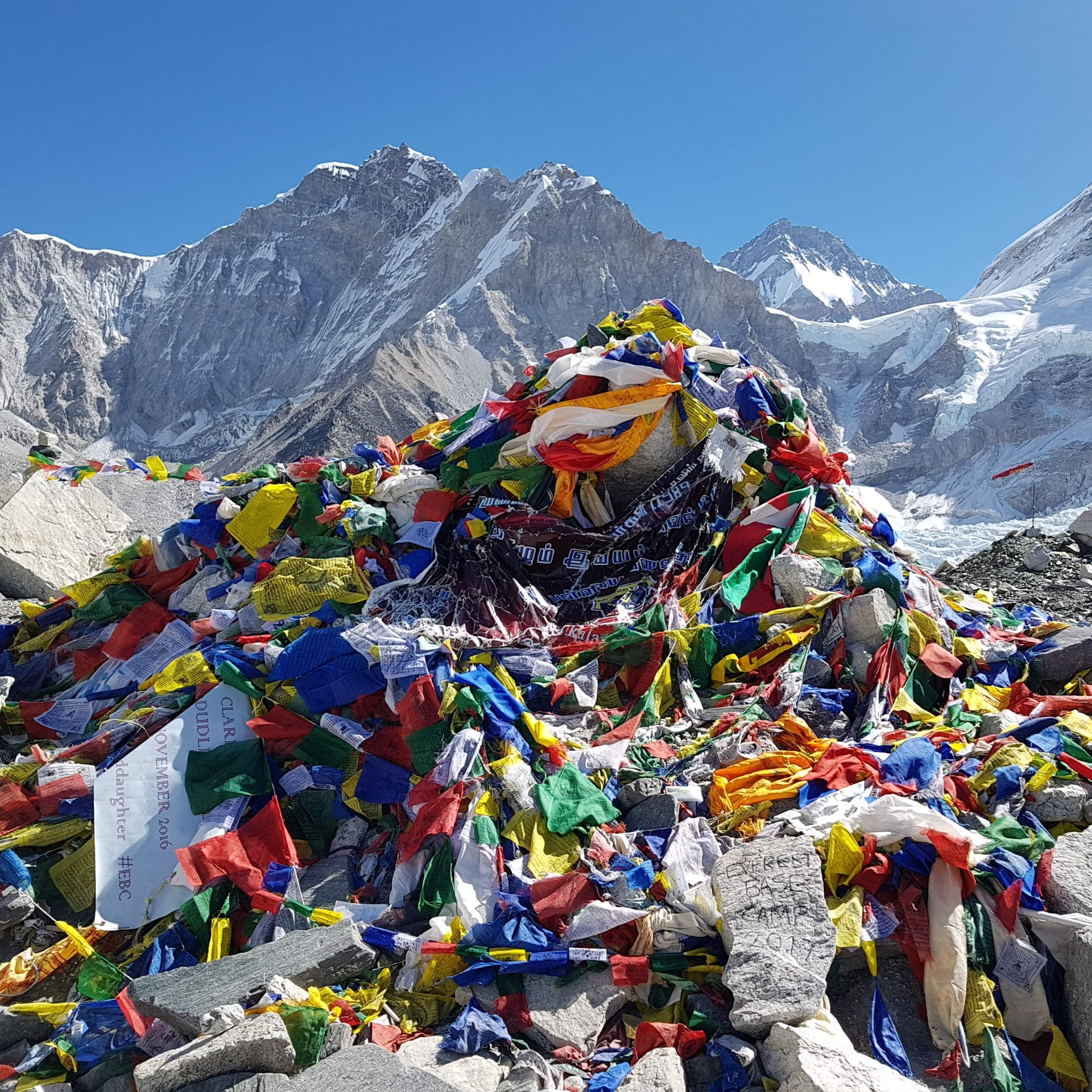
Eoin W 18th Jun, 2026 Highly recommend
I had an amazing experience trekking in the Everest region with Nepal Trekking Rangers. What truly made this journey special was Yuddha. I first met him as a customer during the trek, and by the end of the trip, we had become friends.Yuddha was incredibly supportive, knowledgeable, and attentive throughout the experience. Even after the tour ended, he continued to check in and offer extra care and help, which really meant a lot. His information, guidance, and genuine concern made the whole trip smooth and memorable.He is a truly nice guy—down to earth, mellow, and easy to be around. You can tell he genuinely cares about his clients and his work. I highly recommend Nepal Trekking Rangers and especially Yuddha to anyone planning a trek in Nepal. I sincerely hope his business continues to grow strong—he deserves it. 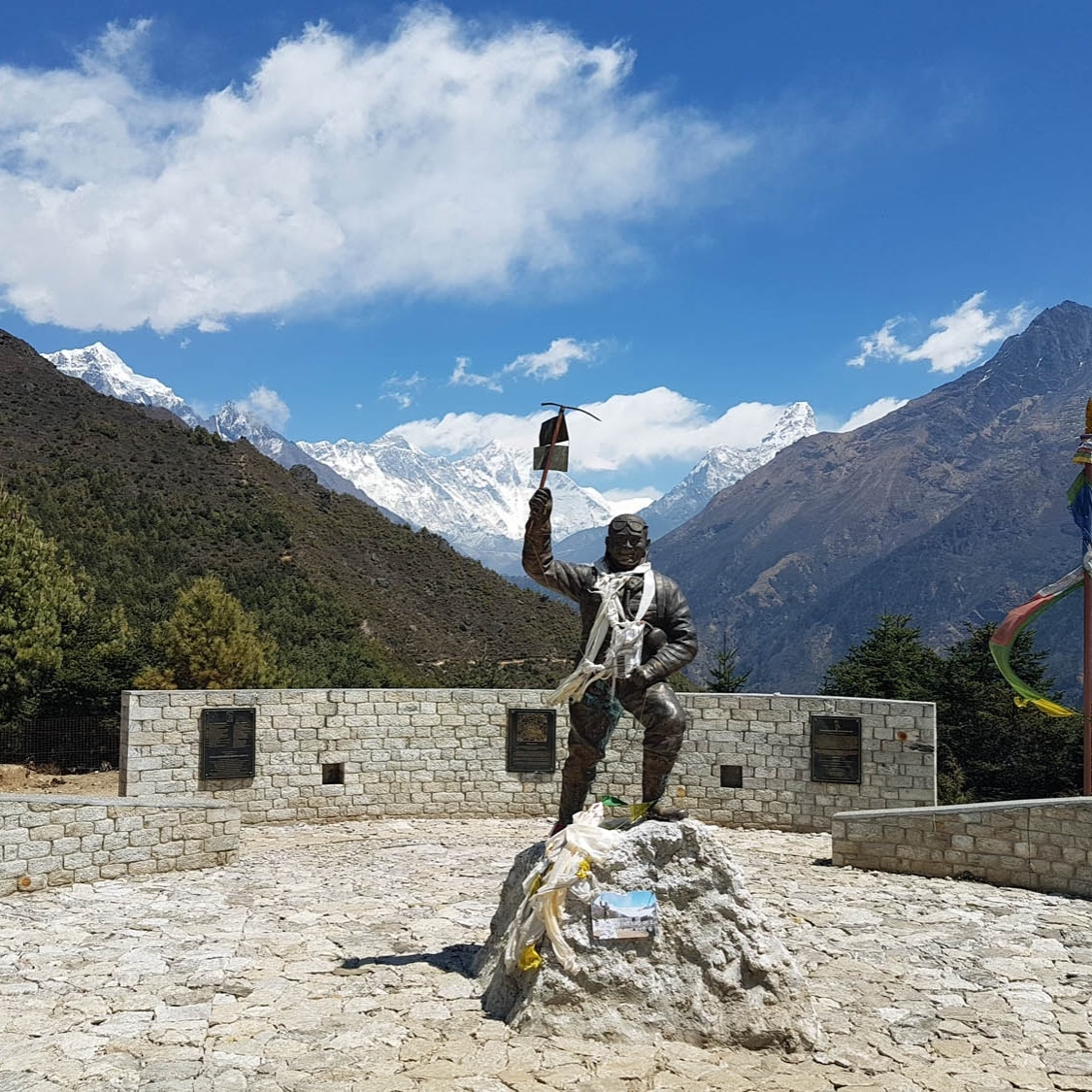
Tia 15th Oct, 2025 Well organised, authentic Nepalese experience
Wow what an amazing experience we had - thanks to Nepal Trekking Rangers. We wanted a trekking holiday to experience authentic Nepal - vistas, people, places and experiences. Yuddha organised our trip of a lifetime - advising on our itinerary, booking accommodation, internal flights, guides, drivers and where to go and what to do. We did a 3 day guided trek around Nagarkot - for most of the trek we didn't see another tourist. We walked through villages, farm land and saw great views of the HImalaya. Our guide was an easy companion, pointing out sights and translating our discussions with the locals. Next we did the trek to Gokyo Lakes. The whole team made this experience amazing. The trek was planned so our acclimatisation went smoothly. Our trek lengths, route, meal stops and over night accommodation were all considered to make the trek a success. The views and experience were five star. Next we went to Pokhara and relaxed. A short guided day trek to Camp Australia provided great views and another fun experience. Finally back to Kathmandu and a walk around the Patan Durbar area. I recommend Nepal Trekking Rangers if you want an amazing, authentic, organised, safe and fun trip. 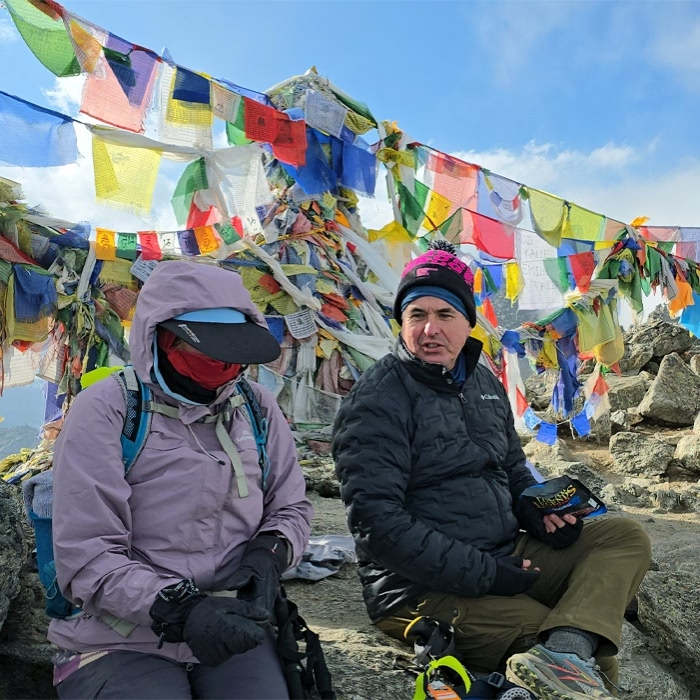
Andrew H 21st May, 2025 The best guides in Nepal!
Nepal Trekking Rangers was phenomenal. Yuddha and his team were communicative, organized, and fairly priced. When our flight to Kathmandu was delayed, Yuddha met us at the airport and ensured we made our connection to Lukla without issue.On the Three Passes trek, Yuddha was exceptional — attentive, flexible, and fun (he taught us Nepali card games we played nonstop). Thanks to Nepal Trekking Rangers, this truly was a once-in-a-lifetime experience! 5 friends. 14 days. 2 high passes. 135 + kms. But countless memories.
5 friends. 14 days. 2 high passes. 135+ kms. But countless memories.Nepal Trekking Rangers ensured that our trek to Nar Phu Valley – Kang La Pass – Thorong La Pass was smooth and incident-free. The team was alert, responsive, and attentive all the way. At one point, we made a decision to tweak the itinerary a bit — our guide Yuddha was extremely proactive in providing alternatives to us, as well as in actioning the changes for the rest of the journey. But most importantly, the team got us back safely. Climbing is one thing, but getting back down safe is equally important.Our experience with Nepal Trekking Rangers has been A1. Incredible Three Passes Trek Experience!
We had an incredible time on our Three Passes trek (and during our whole visit to Nepal) thanks to Nepal Trekking Rangers! I researched trekking guides thoroughly before we started our trip and probably reached out to 15 of them. I decided Nepal Trekking Rangers was the best in terms of reviews, ease of communication, and price. After the trip was complete, I can confidently say I was right to choose them.We had a specific itinerary in mind that needed to fit our schedule, and Yuddha was extremely helpful and accommodating. He answered all our questions promptly during planning and provided extra info, tips, and advice that we wouldn’t have known to ask about. When our international flight to Nepal was delayed by 12 hours, he pulled out all the stops to make sure we still made it to Lukla on time — coming to the airport himself with all the gear we rented, helping us repack into their duffel bags, and storing our suitcases at their office. It was incredibly convenient, and we would have been hugely delayed without his extra effort. He even brought Nepalese rupees to exchange from our USD so we wouldn’t waste time at the airport — and at a better rate!Our guide, Yuddha, was clearly one of the best we saw on the trails. His decades of experience showed. He was kind, attentive, knowledgeable, and a lot of fun. He helped us navigate the chaos of Lukla airport, made sure we got the best possible accommodations within our budget, communicated with tea house staff, showed us local plants, animals, and landmarks, and answered all our “Which mountain is this?” questions with patience and insight. He told us amazing stories, taught us a Nepali card game that became a nightly tradition, and kept us safe and confident through tricky sections like Chukhung Ri, glacier crossings, and the steep descents from the passes.When we decided mid-trip to skip an acclimatization day in Dingboche, Yuddha quickly rebooked all our accommodations to adjust the schedule. That flexibility allowed us to return to Kathmandu a day early and enjoy more time in the city — a perfect ending to the trek.Nepal Trekking Rangers clearly employs some of the best in the business, and Yuddha is incredibly skilled and dedicated to making sure guests have an unforgettable experience. After the trek, we visited his office in Kathmandu to share our experience, and he was a warm and gracious host, eager to hear our feedback — which was all glowing.This was a truly memorable trip, and we’re so glad we chose Nepal Trekking Rangers. Perfekter Trek zum Everest Basecamp
We have nothing but positive things to say about our trek with Nepal Trekking Rangers! Our group of three friends was looking for something a little different from the EBC trek and didn’t have time to do the full Three Passes loop. Nepal Trekking Rangers gave us lots of options, and we decided to trek directly to Gokyo Lakes, then over Renjo La and back down to Lukla. It was perfect for us.Our guide, Yuddha, was super knowledgeable, and the team supporting us was kind and helpful throughout. The communication before and after the trek was excellent, and when we ran into a small snag during our journey, Yuddha handled it smoothly and professionally.I can’t say enough about how experienced, well-connected, and genuinely kind everyone was. We had an amazing trip, and you’ll be in great hands with Nepal Trekking Rangers.