
Trekking through practically unpopulated and unexplored territories of the country within the Kanchenjunga Conservation Area.
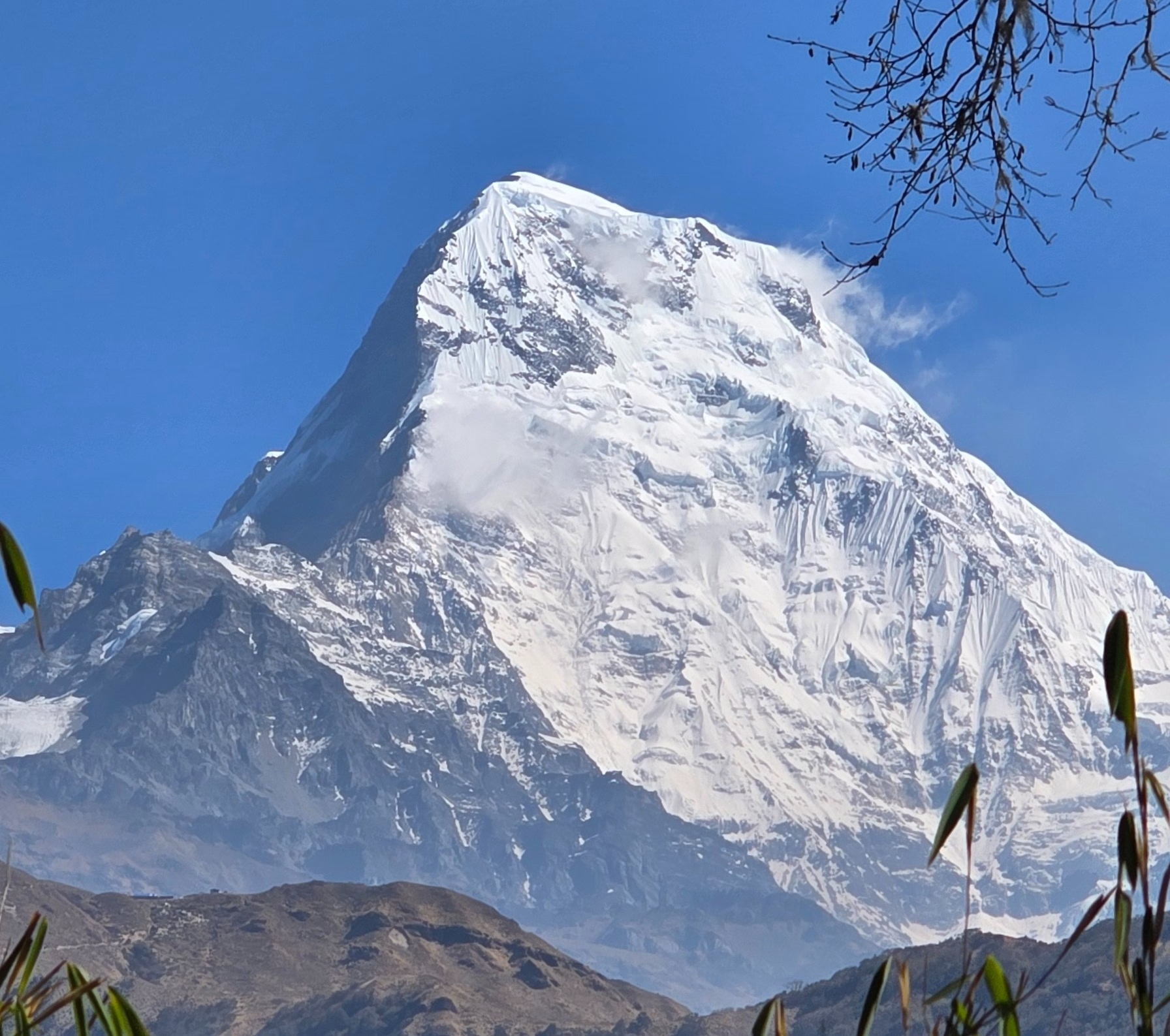
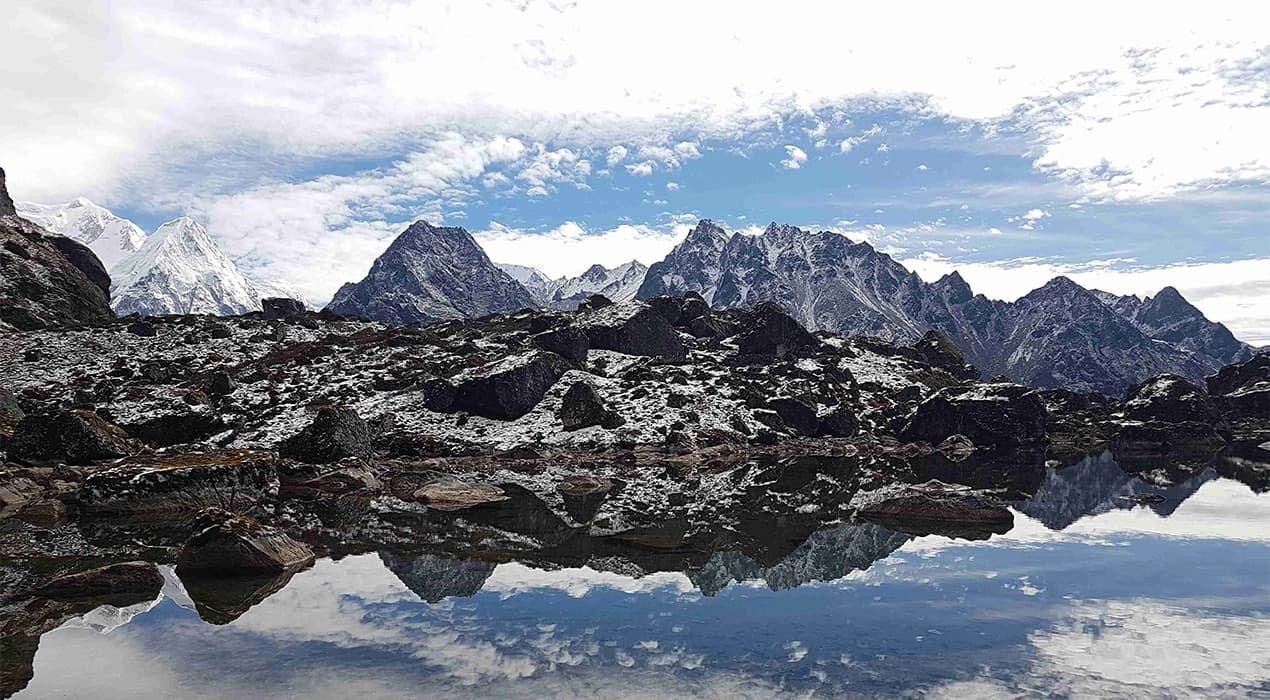
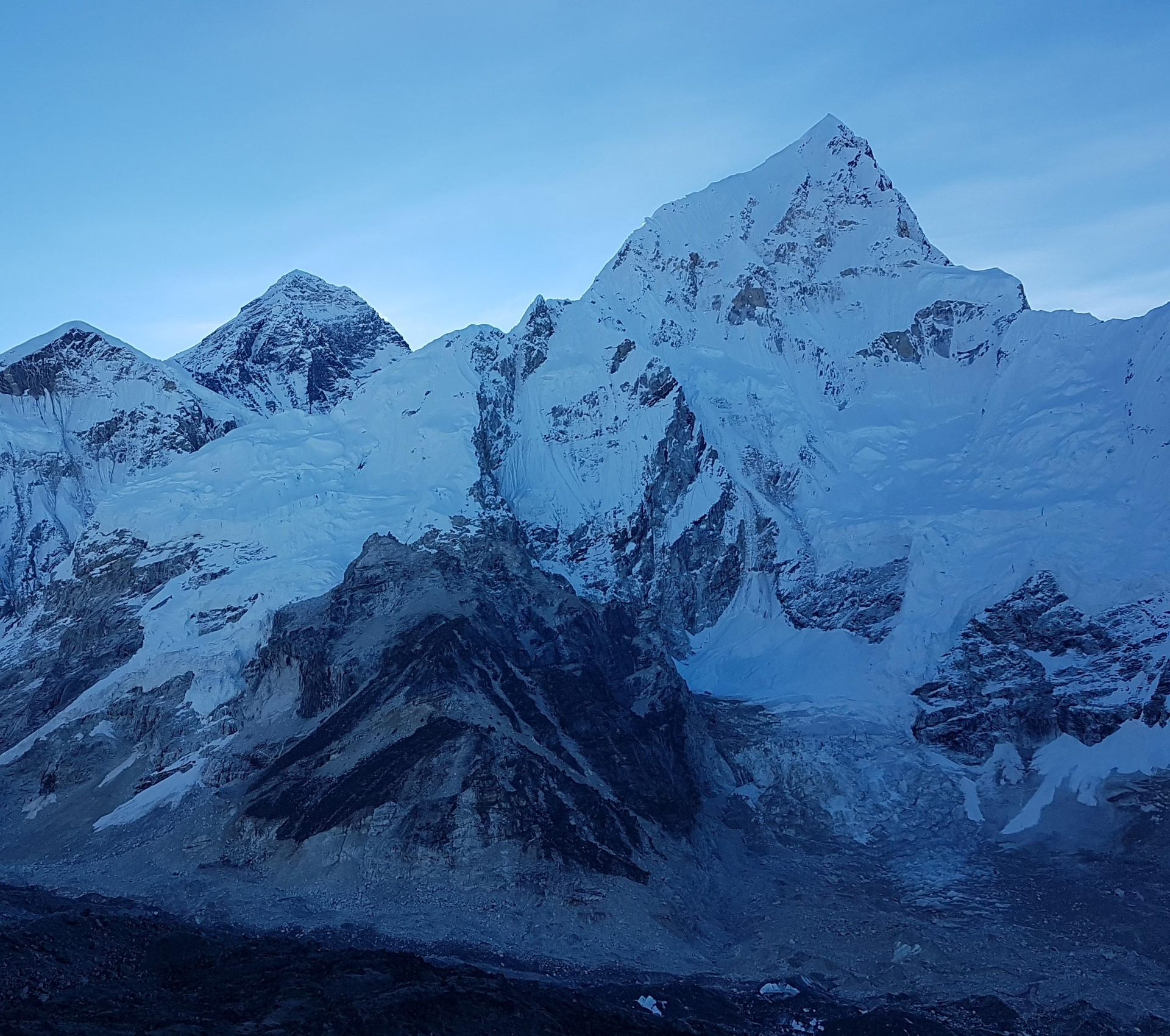
Some awe-inspiring views of the Himalayas, Kanchenjunga, Jannu, and the neighboring towering peaks.
Explore high-altitude, pristine alpine environments with glaciers and meadows.
Kanchenjunga Base Camp (5,143 m) and Yalung Base Camp for spectacular mountain views.
Acclimatization days for safety at high altitudes.
Culturally immersed in the Sherpa and Limbu villages.
Involves a challenging trek only possibly undertaken by more experienced trekkers.
Kanchenjunga Circuit Trek
5.0/0 reviews
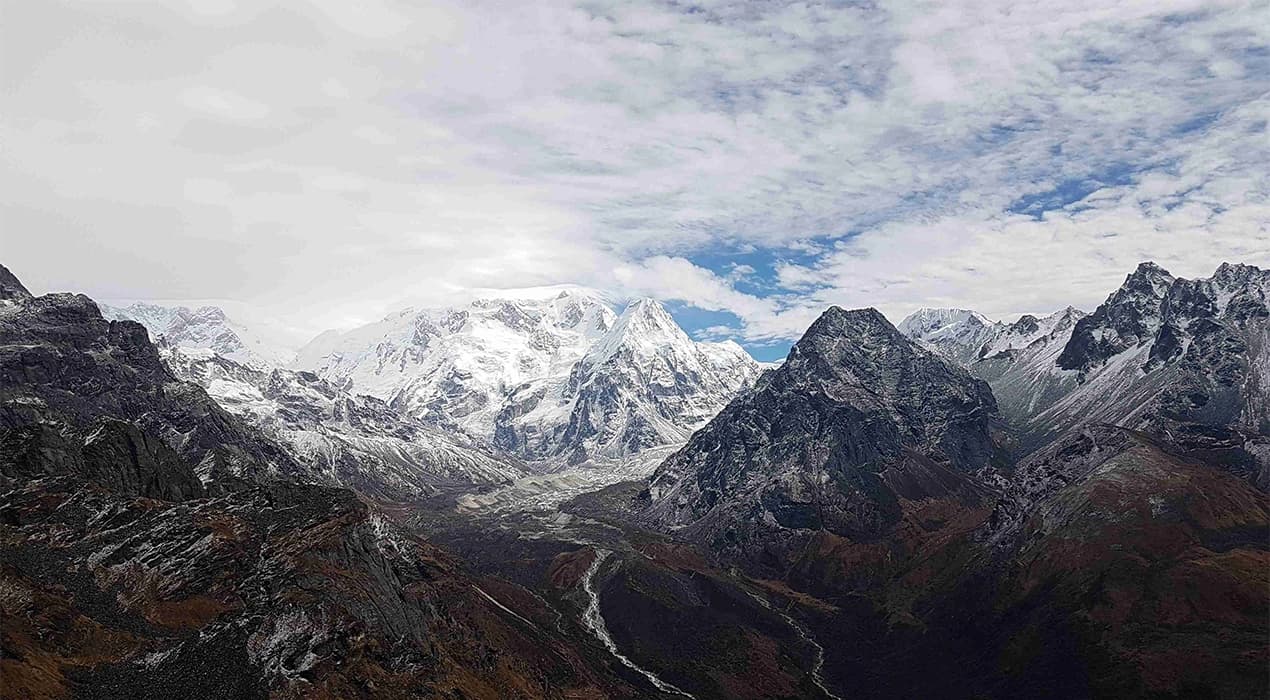
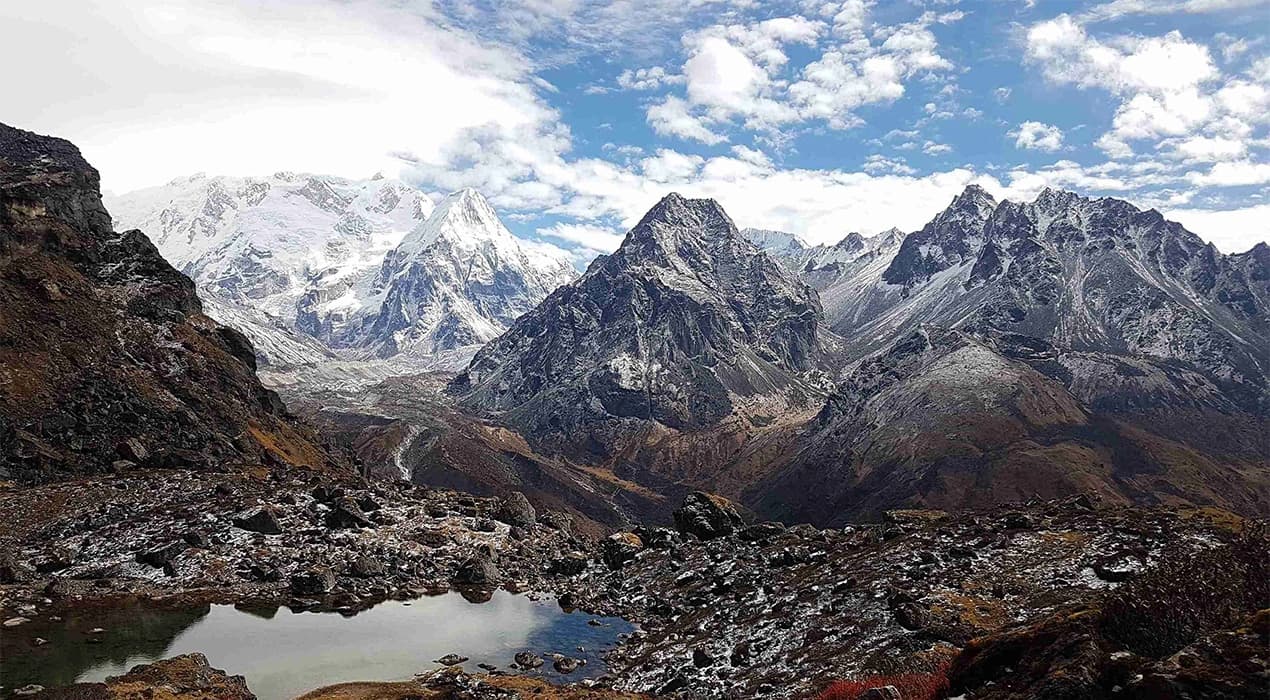
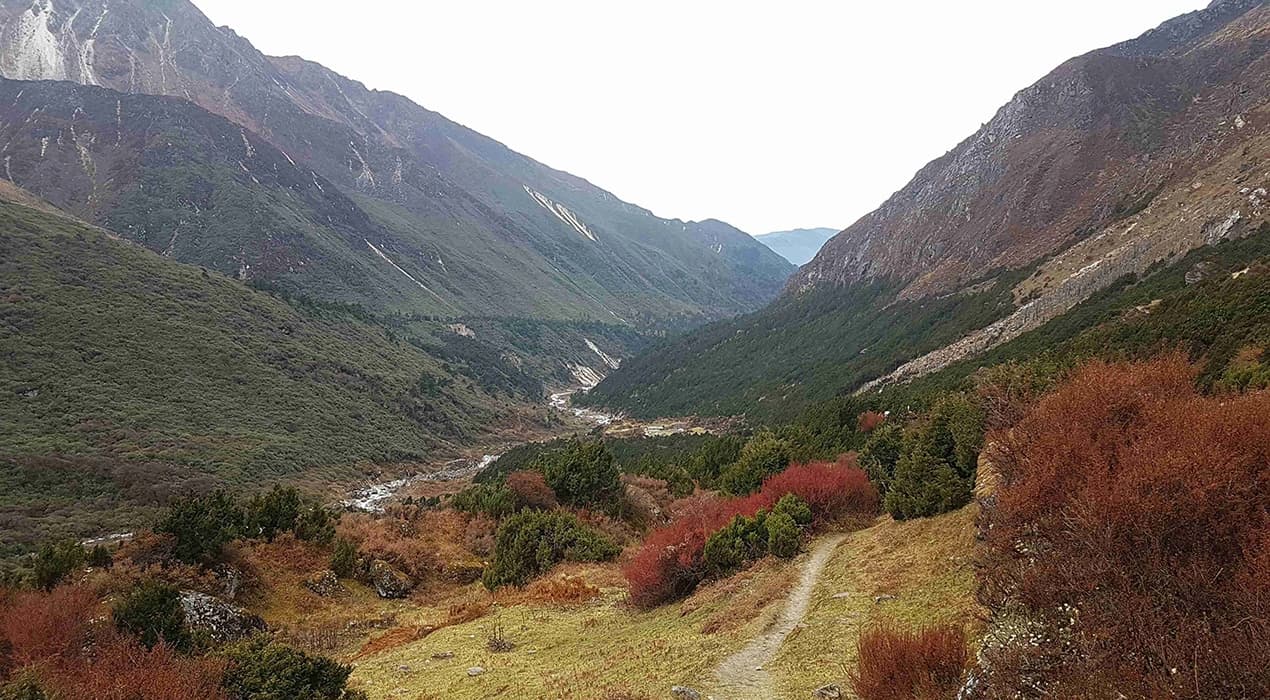
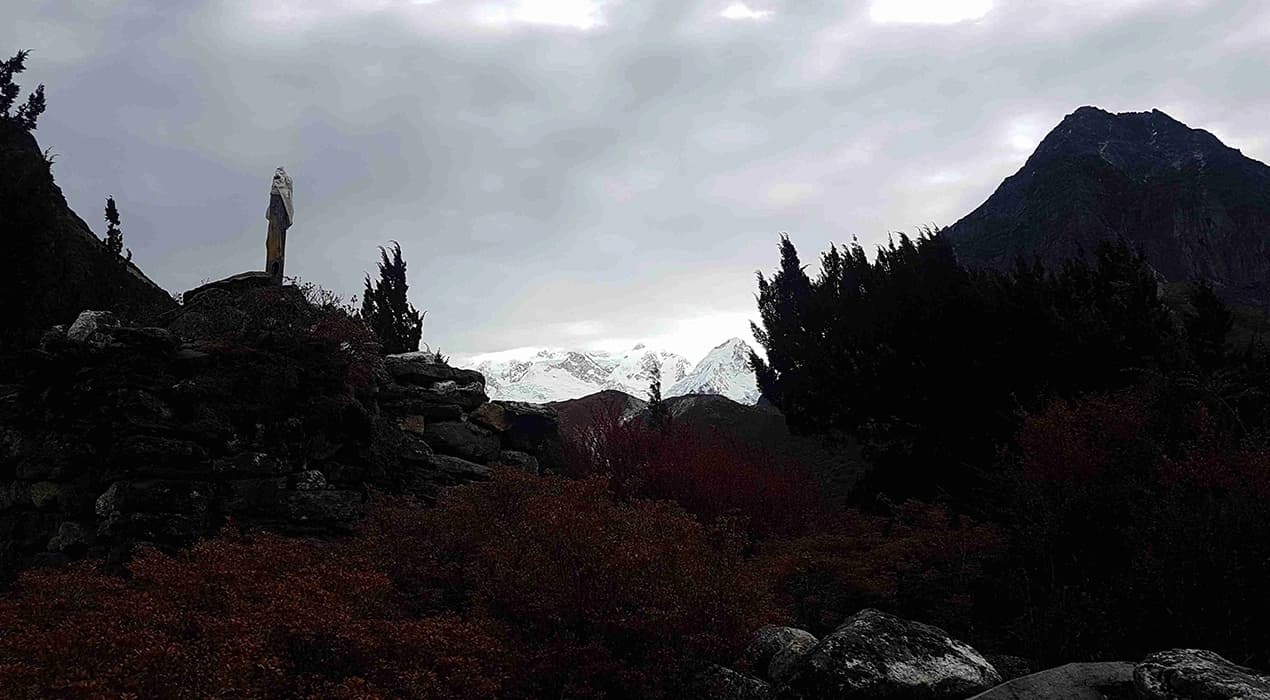
The Kanchenjunga Circuit Trek happens to be one of those trekking trails that promise great rewards while keeping away the travelling hordes. This trekking route offers breathtaking views of the world's third-highest peak, Kanchenjunga (8,586 meters), within a time frame of 24 days with trek experience across open forests, alpine meadows, and all the associated high-altitude challenges. The trek promises to be a deep cultural experience with rural village walks and revealing perspectives on the majestic Himalayan peaks. An excellent journey for the adventurous trekker - off the beaten track.
- DestinationOff the Beaten Treks
- Group TypeFeatured !
- Activities Guided Trekking
- Accommodation Guest House
- Max. Elevation5140mm.
- Group SizeMin. 1 to 30 Pax Pax
- Vehicle Domestic Flight
- MealsBLD
Kanchenjunga Circuit Trek Highlights
24 days Kanchenjunga Circuit Trek Overview
If you're the kind of person who hears "Everest" or "Annapurna" and your first thought is "Yeah, but what about the crowds?", then you're probably going to get what Kanchenjunga is all about. This isn't some pre-packaged, follow-the-leader kind of trek. This is, well, it's the real deal. We're talking about heading way out to the eastern bit of Nepal, the part that still feels properly wild.
Imagine pushing through forests that feel like they've been there since the dawn of time, crossing rivers that are still doing their own thing, and then stumbling into these little villages where life just ticks along differently. And all the while, you're inching closer to this absolute giant, Kanchenjunga – only the third-highest mountain on the planet.
The thing that hits you out there, apart from the sheer scale of it all, is the quiet. It’s not just fewer people; it’s a different kind of silence, a proper mountain hush. You get to connect with the folks living there, share a cup of tea, and see how life works. It’s about more than just ticking off a base camp; it’s about that feeling you get when you're truly out there, relying on your own two feet, and seeing something not many others do.
Honestly, if you’re ready to earn your views, to feel that sense of proper adventure, and to see a side of the Himalayas that still feels a bit like a secret, then this is probably the one. Grab your boots, pack that sense of wonder, and get ready for a journey that’ll stick with you long after you’re back home. It’s one of those trips.
Route Description
Kanchenjunga Base Camp – it’s not just a walk, it’s a proper journey. Takes you right into the guts of eastern Nepal, places where not many folks go. You'll see everything from little villages where life’s pretty much unchanged to these massive, raw mountain landscapes.
First off, you hop on a little plane from Kathmandu down to Bhadrapur. From there, it’s a bit of a bone-rattler of a jeep ride up to Taplejung; that’s where the real walking starts. You’ll wind your way up through terraced fields that look like giant green staircases, into these deep, lush forests, and through tiny settlements like Lalikharka, Khesewa, and a place called Sherpa Gaun.
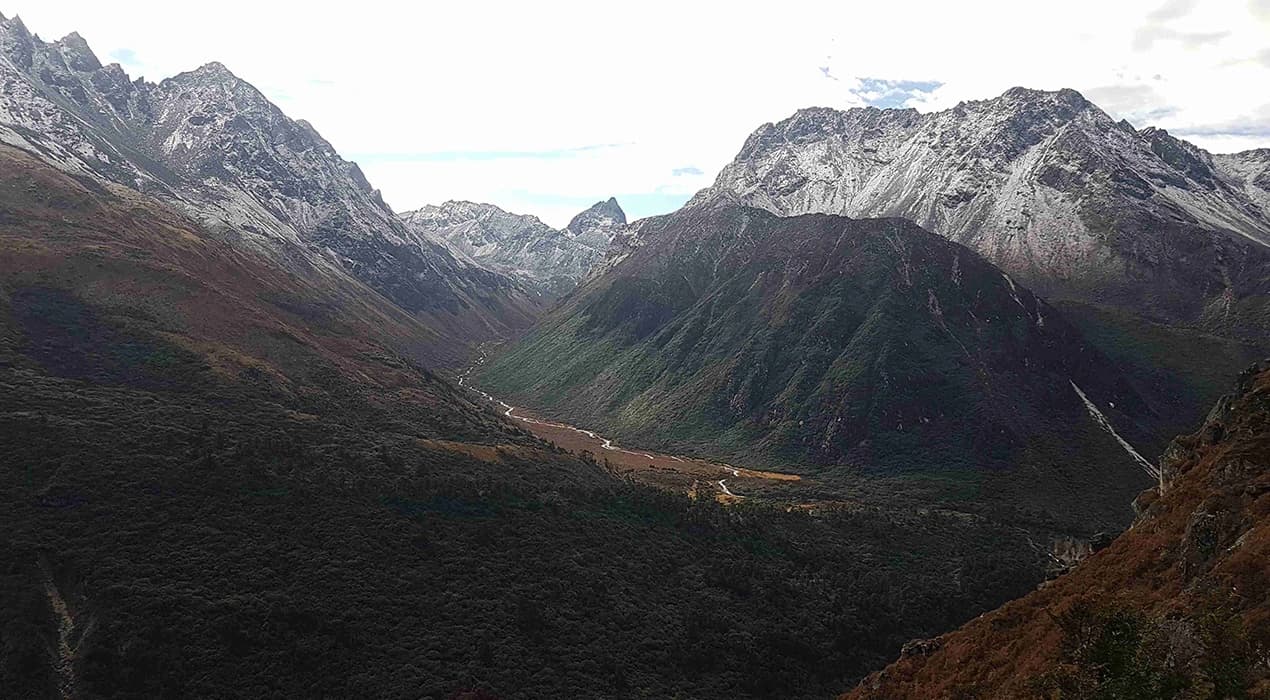
As you keep climbing, the whole world around you changes. Those forests full of rhododendrons, amazing if they're flowering, slowly turn into these big, open glacial valleys. You'll pass through Tseram, then push on up towards the Yalung Glacier and a spot called Ramche. From there, you can nip over to Yalung Base Camp. That’s your first proper eyeful of Kanchenjunga’s south side; it’s huge, just massive.
Then comes the Sele La, a high pass you've got to get over. Once you're across, you drop down into the northern valley. You’ll walk through villages like Gunsa and Khambachen, and then, the big moment – you make it to Pangpema. That’s Kanchenjunga North Base Camp, way up at 5,143 meters. The views from there are just incredible.
After soaking all that in, it’s time to head back. You'll follow some of the same paths back down to Taplejung, but by then, you’ve done this amazing loop and seen both the north and south sides of the world's third-highest peak. It’s an adventure that sticks with you.
Kanchenjunga Circuit Trek Itinerary
As you reach Tribhuwan International Airport in Kathmandu, Nepal, you will meet our representative from Nepal Trekking Rangers, who will bring you in a private vehicle to your hotel. Here you can freshen up and take some rest. If time allows, stroll about the streets of Thamel and visit local markets, savor street foods, etc.
In the evening, your travel team will gather for a meeting to orient you to your guide and each other. Dinner can be at a nice restaurant or on your own; prep for tomorrow's journey.
An early morning flight from Kathmandu to Bhadrapur would take you there; enjoy the flight for the stunning aerial scenery. After you land, have your breakfast and take a trip to Taplejung by private Jeep ride. Here, you can enjoy the beautiful villages of Nepal, the rice fields, and the high green hills.
It requires about 8 to 9 hours to make it to Taplejung. Taplejung is the perfect starting point for the Kanchenjunga trek. You will be sleeping in a local teahouse tonight.
A morning meal will be served at a tea house; hiking will continue up Lalikharka. Follow the trail, which weaves past mountains of lush green jungle and is scattered with the most beautiful rhododendron trees, into the background of the world's tallest Himalayas.
After walking along the path for about 6 hours, you will finally reach Lalikharka, where you will spend the night. Lalikharka offers a panoramic view of the Kanchenjunga mountain range.
Today, you walk from Lalikharka to Khesewa. Down into the valley, a path presents itself to the trekkers to experience the beauty of terraced farms and rural villages of Nepal. Allowing pleasant glimpses over the way of colorful rhododendron forests. Khesewa is a 5 to 6-hour walk, with a beautiful landscape to be enjoyed overnight.
On the fifth day, the trail leads through forests, sparse ridgelines, and villages in the Himalayas to Kande Bhanjyang in a trek of around 6 hours.
Kande Bhanjyang will exert town magic with its breathtaking views of the peaks of the Himalayan range.
It’s about a 5-hour walk today from Kande Bhanjyang to Sherpa Gaun. "Gaun" actually means village, and like the name says, this is your chance to check out a traditional Sherpa village. It’s fascinating to see how people live up here, their local ways, and maybe even some cultural stuff happening. Sherpa people are famous for being mountain legends. So today’s a nice bit of cultural insight.
This approximately seven- to eight-hour journey from Sherpa Gaun to Tortong winds through thick forests and tumbling rivers, immersing you in the wilderness of the Kanchenjunga region.
You will find Tortong—a peaceful, quiet place where a trek is the best opportunity for adventure seekers.
Today’s walk is on the shorter side, maybe 2-3 hours, but you’re gaining some serious altitude as you head to Cheram. You'll notice the forest starting to thin out as you move into a more alpine environment. The whole feel of the landscape changes. Cheram is a fantastic spot to rest up, surrounded by massive peaks and glaciers – a key point on the Kanchenjunga South Base Camp trail with great views and decent lodges.
This day is super important. Just hang out in Cheram. Your body needs this time to get used to being up at nearly 4,000 meters. If you’re feeling energetic, you could do a little wander to a nearby viewpoint – short and sweet. Otherwise, just rest, drink loads of water (seriously, hydrate!), and soak up the incredible mountain scenery all around you. Taking this pause is really what makes the rest of the trek successful and, more importantly, enjoyable. Don't skip it!
After breakfast, it’s a trek of about 3 hours up to Ramche. It’s this stunning spot in a glacial valley. Then, later on, you’ll head out for a side trip to Yalung Base Camp. This is where you get a real front-row seat to Kanchenjunga's massive south face. If you're into taking photos or just love seeing mountains up close, this place is incredible – glaciers, moraines, huge walls of ice, the works.
If you couldn't get enough of Yalung Base Camp yesterday, or just want to see it in a different light, you've got another chance today. After that visit, you’ll head back down to Cheram for lunch and a good rest. This bit of backtracking is great for acclimatization, plus you get to see those stunning landscapes from a slightly different angle.
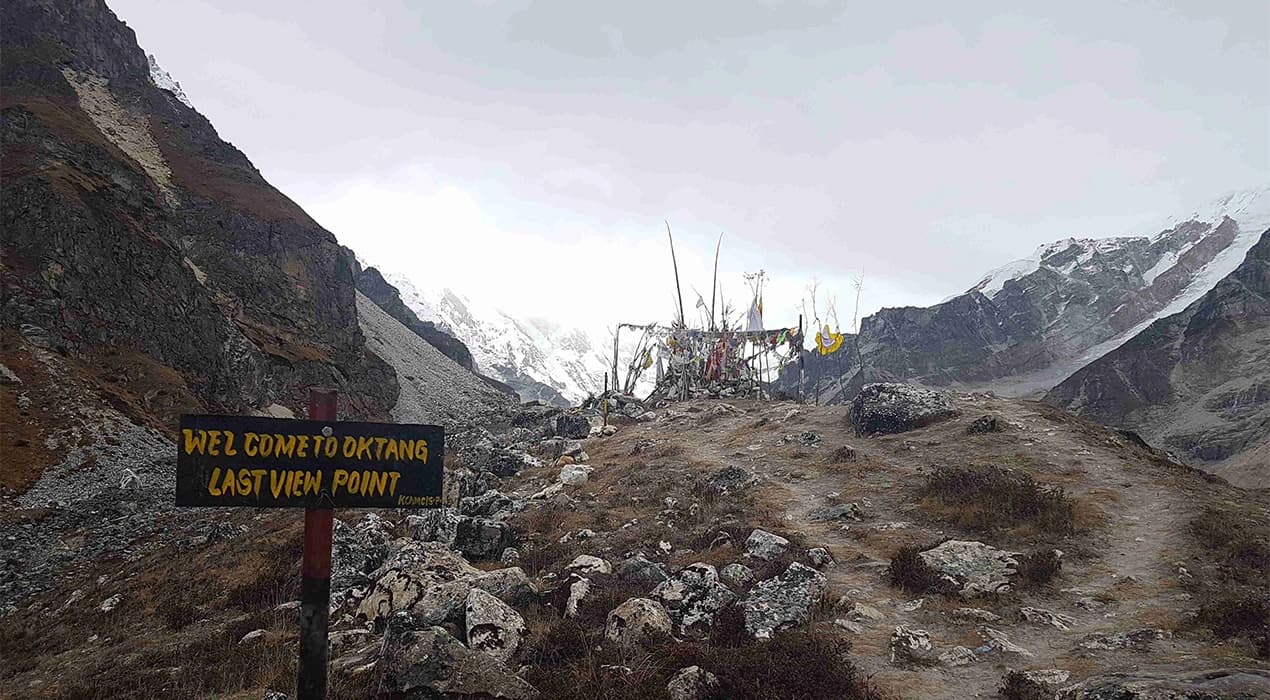
Crossing the Sele La Pass – this is a big day, both for the effort and the views. It’s about 7 hours of pretty tough trekking up steep and rocky paths with all those colorful prayer flags fluttering in the mountain wind. But the views from the top of the pass! You get this full 360-degree panorama of the greater Himalayas. You might even be able to spot giants like Makalu and Baruntse way off in the distance. It’s a challenging day, no doubt, but so, so rewarding.
A bit of an easier day today, which you’ll probably appreciate! It’s mostly downhill for about 3 hours, walking through forests of rhododendron and pine until you get to Gunsa. This is one of the biggest and most traditional villages in the whole region. You'll see stone houses, those long 'mani' walls with carved stones, and little monasteries (gompas).
Gunsa is a real deep dive into Tibetan Buddhist culture here in Nepal. It’s also a good place to catch your breath and maybe pick up any supplies if you need them.
Leaving Gunsa, the trail climbs steadily up to Khambachen, which is a high-altitude village properly snuggled in amongst some seriously dramatic peaks. This 5-hour trek follows the Gunsa Khola (river), and you’ll get some jaw-dropping views of Mount Jannu on the way. Things start to feel colder and more rugged around here – a clear sign you’re getting closer to the Kanchenjunga North Base Camp side of things.
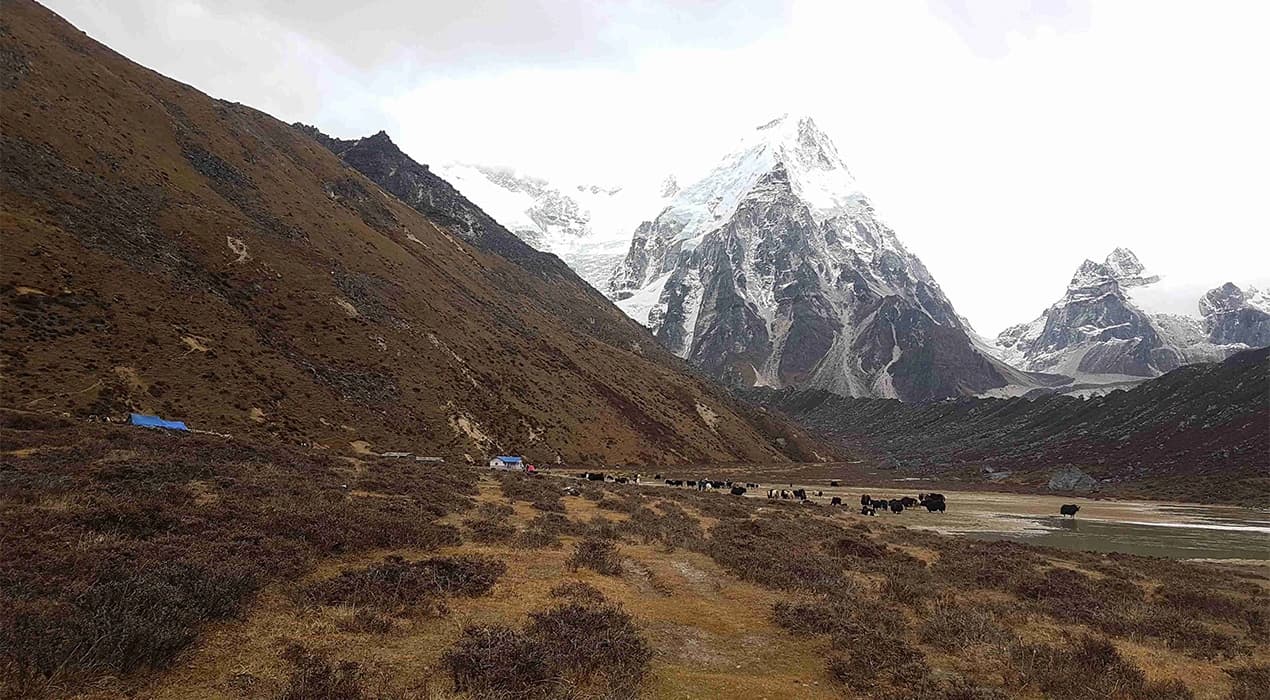
Today’s 5-hour trek to Lhonak takes you even further into the wild heart of the Himalayas. You'll be walking past these huge glacial moraines and through rocky landscapes that honestly feel like you're on another planet.
Lhonak is perched high up above the glacier and kind of serves as the last stop before the base camp. The views of Kanchenjunga's North Face from here? Just unreal.
This is it – the big push to Pangpema, which is Kanchenjunga Base Camp! It’s a fairly short hike, maybe 3 to 4 hours. The trail is remote and pretty barren, but it has this stark, wild beauty to it. Standing there, right at the foot of the world’s third-highest mountain, surrounded by these snow-covered giants. It’s a truly humbling moment. Something you won't forget.
You'll want to be up early for this one. A 3-4 hour round trip to a nearby viewpoint could give you some mind-blowing sunrise views over Kanchenjunga and its neighbors. After you’ve soaked all that grandeur in and had breakfast or an early lunch back at Pangpema, you’ll start heading down, trekking for about two to three hours back to Lhonak.
It’s a longer day of descent today, retracing your steps for about six hours back down the valley to the familiar sights of Gunsa Village. Even though you’re going back the way you came, looking down the valley gives you a whole different perspective, and you’ll appreciate the thicker air!
The trail drops quite steeply today, taking you through forests, past waterfalls, and through remote little villages until you reach Amjilasa. It’s a small settlement perched above the river. This 5 to 6-hour walk is refreshing and scenic – one of the most peaceful stretches of the whole Kanchenjunga trek.
Continuing your way down, the trek to Chiruwa follows the Tamor River. This 6- to 7-hour walk takes you back into lush, subtropical greenery, which is a real change from the alpine terrain you’ve been in.
Chiruwa has cozy lodges, and the warmer climate is a welcome shift.
This is the final trekking day, taking 7–8 hours through forests, rice terraces, and villages. Upon reaching Taplejung, celebrate the completion of your Kanchenjunga Base Camp journey with your guide and porter team. It’s a good place to unwind and reflect.
After breakfast, it’s back in a private jeep for the 8 to 9-hour scenic drive down to Bhadrapur. You’ll pass through tea gardens and rolling hills and cross rivers – one last look at the natural beauty of eastern Nepal before you head back towards the city.
A quick 45-minute flight will have you back in Kathmandu. On arrival, you’ll be taken to your hotel. A hot shower will probably be top of your list, followed by a delicious Nepali meal. Maybe some last-minute souvenir shopping or even a massage if you’re feeling it!
And just like that, your incredible journey to Kanchenjunga Base Camp comes to an end. Depending on when your flight is, your trekking company will get you to the airport. You'll be leaving Nepal with a pack full of unforgettable memories from a truly once-in-a-lifetime adventure in the Himalayas.
If the provided schedule isn't suitable for you, we are able to create personalized travel arrangements according to your preferences and requirements.
Choose Your Package
US $2070per person
Best Price GuaranteeTaxes Included
(Guide. Porter. Permits. Transportation. Accommodation)
Cost Includes
Transportation
International/Domestic Airport pick up and drop
Domestic Round-Trip Flights (KTM-Bhadrapur-KTM)
Private Vehicle from and to Starting and Ending point of Trek
Drop and pick up from and to Hotel and Airport by private vehicle with A/C as per group size
Accommodation
3 Nights Accommodation at Tourist Standard Hotel in Kathmandu and Pokhara with Breakfast
20 Nights Accommodation along the trek (Basic and normal accommodation in Guest Houses or Tea Houses)
Food and Drink
No Food and Drink
Permits and Expenses
Special Restricted permit of Kanchenjunga
TIMS (Trekking Information Management System) Card If requires
All Local Government Taxes and Official expenses
Guide and Porter
Government Register Licensed holder Guide with speaking English Language
An Assistant guide each 7 Trekkers
A porter for each 2 clients (20 KGs limit weights for a Porter)
Covers their (guide and porter) wages, meals, hot drinks, accommodation, transportation, insurance and necessary trekking gears)
Souvenir or Complimentary
Nepal Trekking Rangers Company’s T-shirt/Cap/Buff
Trekking Route Pocket Map
Benefits
NTR’s Duffel Bag each client
Sleeping Bag and Dawn Jacket (return basis) If you require
Farewell or Welcome Dinner at Nepali Traditional Kitchen or Yuddha’s Place
Cost Excludes
Entry Regulations and Visa
International Flights Fare
Nepal Entry Fees (15D-$30, 30D-$50 and 90D-$125)
Accommodation
Accommodation above 3 Nights in Kathmandu or any city
Accommodation in Kathmandu and Pokhara in case of early return in any reason and late departure
Food and Drink
All lunch, dinner and drinks in Kathmandu and Pokhara (Breakfast are included)
Tips
Guides and Porters as gratitude
Travel Insurance and Expenses
Travel Insurance covers emergency High Altitude Rescue/Evacuation (upto 6000m)
Personal Transportation of ground and Air both
Sanitary material such as wet wipe tissues/toilet paper
Hot Shower/hot or boiled water, Wifi, Battery Charge
Hot bag during the nights
Shopping/Souvenir for family and friends
All the extra things/expenses which has not included in the list
Dates & Prices
Your private Kanchenjunga Circuit Trek begins in Kathmandu and ends in Kathmandu, covering 24 days of adventure.
Private departures run on any date you choose, for groups of 1–30, for a personal and flexible experience.
Private Group Deals
| 1 Person | US$2,570 |
| 2 - 6 People | US$2,230 |
| 7 - 14 People | US$2,140 |
| 15 - 30 People | US$2,070 |
Know Before You Go
FAQs
Traveller Review
 5.0 Rating out of 5 based on 1850 Reviews
His quite nature, and taking care of things when and where required.
I spent over one month with Yuddha, his wife and team of assistants on treks and religious travel namely i) Annapurna , 5 days ii) Pokhara and Muktinath, 8 days and iii) Everest Base Camp and Three Passes, 19 days. I must say that my wife and I had wonderful time with Yuddha and his family. Yuddha is a true professional and goes out of way to make things happen. During my time there were several weather related events but Yuddha was able to find solutions for each adverse situation and allow us to continue our journey. He is flexible with timeline, providing facilities and help. My wife also stayed with his family while I was on trek. She thoroughly enjoyed the hospitality provided by his wife. 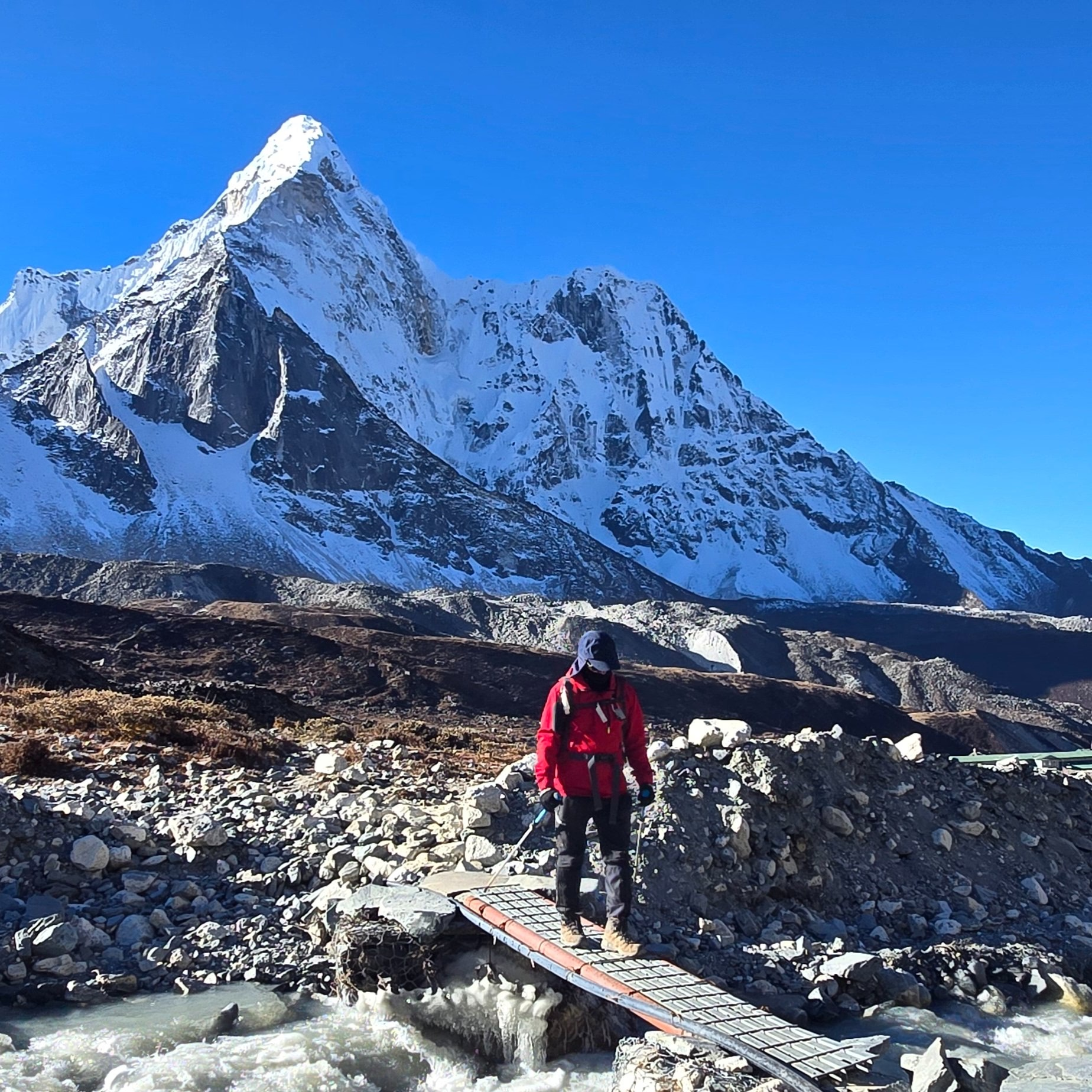
Prakash B 20th Oct, 2026 Great Himalaya experience
Hiked the Three Passes trek with Nepal Trekking Rangers and our guide Yuddha. He was a fantastic guide to have on this trek — knowledgeable, professional, and a great match for our group. I’ll be happy to use their services again on our next Himalaya adventure. 
Camper14369775626 12th Aug, 2026 Great holiday on the roof of the world
Yuddha the company owner has taken care of everything from domestic flights to car transfers, hotels etc. He has put together a very individual trip that has left nothing to be desired. Also the hike Anapourna Circuit was perfectly organized. I can only recommend this company to anyone who wants to travel to Nepal individually. 
Laura B 12th Aug, 2026 A wonderful experience
Excellent trek with a group of friends. Yuddah and his team planned and organized everything brilliantly. Professionalism and good atmosphere throughout the trek with the reward of walking in sublime landscapes. 
Al1do 12th Aug, 2026 A Guide Who Truly Spreads Light
Yuddha is the best guide I have ever met. He is sensitive, very experienced, and always cheerful. He answered my questions with openness, honesty, and kindness. He paid close attention to our group’s needs, and I felt completely safe under his guidance. He booked wonderful accommodations for us and handled the meals very professionally as well. I hope I’ll get the chance to hike with him again — I really miss our conversations. 😊 
Ghyzsofi 12th Aug, 2026 Trek with Nepal Trekking experts if you are going to Nepal!
I just finished the Everest Base Camp trek with Nepal Trekking Rangers and would 100% recommend them to anyone coming to Nepal.Yuddha, the owner, is a true professional. From the beginning when I contacted him, he was super responsive and able to provide advice on which trek was best. Whenever I had follow-up questions, he would always respond the same day. They also operate with the utmost integrity. Originally, I was meant to trek with them in 2020, but this was cancelled because of Covid. Yuddha reminded me that I had paid the deposit five years ago (which at the time I had told him to hold on to) and took that off the price — I had completely forgotten.They gave me a warm welcome at the airport as soon as I arrived, and Yuddha met me at my hotel to make sure I had the correct kit, even providing me with things I didn’t have free of charge.On the trek itself, Yuddha was our guide — so knowledgeable, fun, and spoke great English. Every time I asked him a question about the mountains or region, he had an answer. All the tea houses booked were great and had good food. In the evening, he would play cards with us, and if we ever needed help with anything, he was always on hand.Words can’t describe the views you see on this trek — we were completely surrounded by the mountains. Yuddha also made sure we went at a sensible pace to avoid any risk of altitude sickness and to ensure we could take it all in.Overall, it was an experience of a lifetime, and next time I am back in Nepal, I will be trekking with Nepal Trekking Rangers.Thanks so much, Yuddha! 
Eoin W 18th Jun, 2026 Highly recommend
I had an amazing experience trekking in the Everest region with Nepal Trekking Rangers. What truly made this journey special was Yuddha. I first met him as a customer during the trek, and by the end of the trip, we had become friends.Yuddha was incredibly supportive, knowledgeable, and attentive throughout the experience. Even after the tour ended, he continued to check in and offer extra care and help, which really meant a lot. His information, guidance, and genuine concern made the whole trip smooth and memorable.He is a truly nice guy—down to earth, mellow, and easy to be around. You can tell he genuinely cares about his clients and his work. I highly recommend Nepal Trekking Rangers and especially Yuddha to anyone planning a trek in Nepal. I sincerely hope his business continues to grow strong—he deserves it. 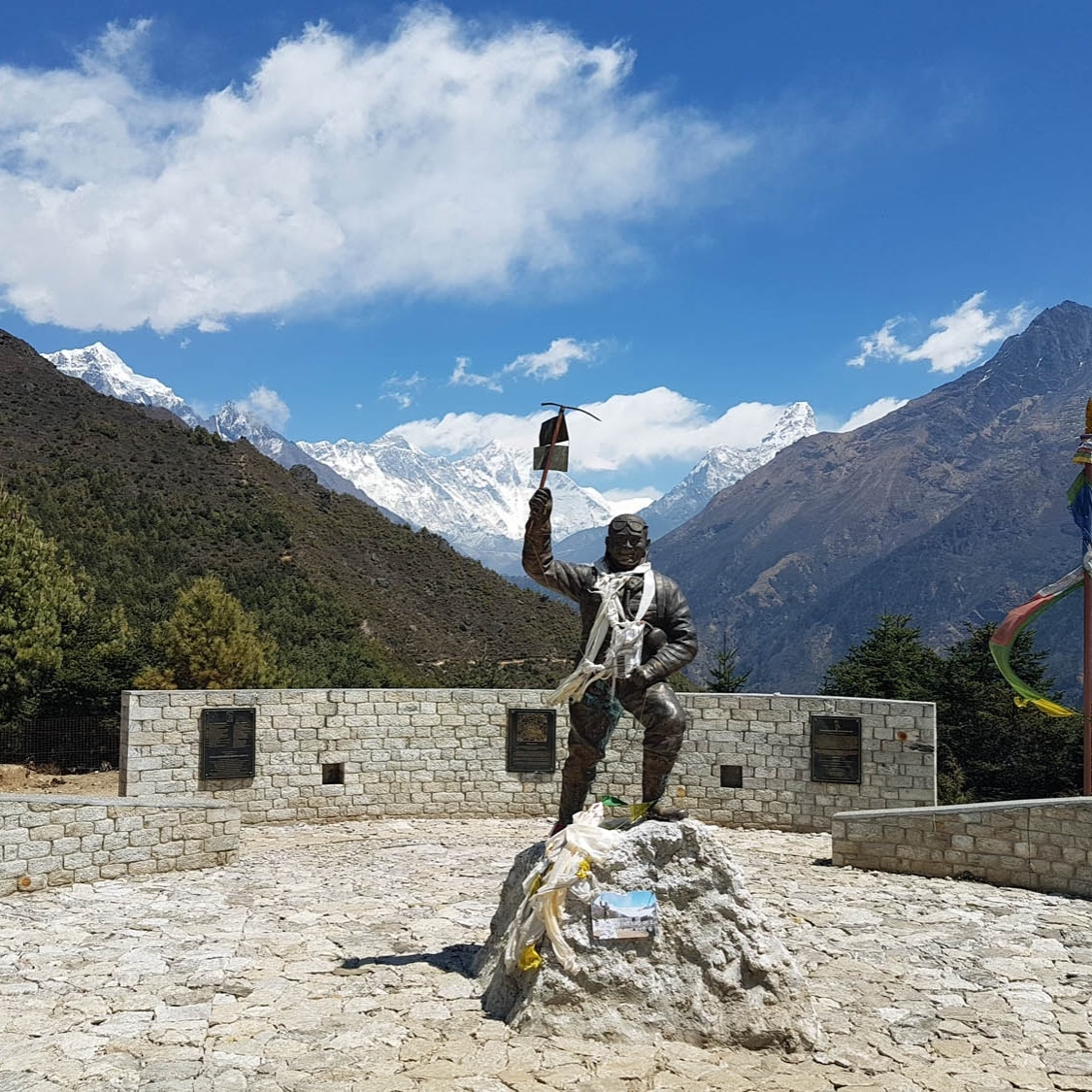
Tia 15th Oct, 2025 Well organised, authentic Nepalese experience
Wow what an amazing experience we had - thanks to Nepal Trekking Rangers. We wanted a trekking holiday to experience authentic Nepal - vistas, people, places and experiences. Yuddha organised our trip of a lifetime - advising on our itinerary, booking accommodation, internal flights, guides, drivers and where to go and what to do. We did a 3 day guided trek around Nagarkot - for most of the trek we didn't see another tourist. We walked through villages, farm land and saw great views of the HImalaya. Our guide was an easy companion, pointing out sights and translating our discussions with the locals. Next we did the trek to Gokyo Lakes. The whole team made this experience amazing. The trek was planned so our acclimatisation went smoothly. Our trek lengths, route, meal stops and over night accommodation were all considered to make the trek a success. The views and experience were five star. Next we went to Pokhara and relaxed. A short guided day trek to Camp Australia provided great views and another fun experience. Finally back to Kathmandu and a walk around the Patan Durbar area. I recommend Nepal Trekking Rangers if you want an amazing, authentic, organised, safe and fun trip. 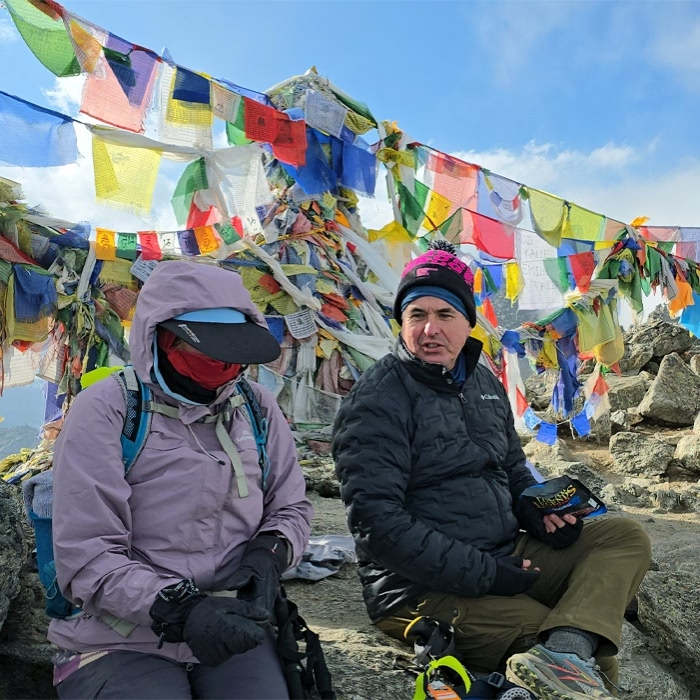
Andrew H 21st May, 2025 The best guides in Nepal!
Nepal Trekking Rangers was phenomenal. Yuddha and his team were communicative, organized, and fairly priced. When our flight to Kathmandu was delayed, Yuddha met us at the airport and ensured we made our connection to Lukla without issue.On the Three Passes trek, Yuddha was exceptional — attentive, flexible, and fun (he taught us Nepali card games we played nonstop). Thanks to Nepal Trekking Rangers, this truly was a once-in-a-lifetime experience! 5 friends. 14 days. 2 high passes. 135 + kms. But countless memories.
5 friends. 14 days. 2 high passes. 135+ kms. But countless memories.Nepal Trekking Rangers ensured that our trek to Nar Phu Valley – Kang La Pass – Thorong La Pass was smooth and incident-free. The team was alert, responsive, and attentive all the way. At one point, we made a decision to tweak the itinerary a bit — our guide Yuddha was extremely proactive in providing alternatives to us, as well as in actioning the changes for the rest of the journey. But most importantly, the team got us back safely. Climbing is one thing, but getting back down safe is equally important.Our experience with Nepal Trekking Rangers has been A1. Incredible Three Passes Trek Experience!
We had an incredible time on our Three Passes trek (and during our whole visit to Nepal) thanks to Nepal Trekking Rangers! I researched trekking guides thoroughly before we started our trip and probably reached out to 15 of them. I decided Nepal Trekking Rangers was the best in terms of reviews, ease of communication, and price. After the trip was complete, I can confidently say I was right to choose them.We had a specific itinerary in mind that needed to fit our schedule, and Yuddha was extremely helpful and accommodating. He answered all our questions promptly during planning and provided extra info, tips, and advice that we wouldn’t have known to ask about. When our international flight to Nepal was delayed by 12 hours, he pulled out all the stops to make sure we still made it to Lukla on time — coming to the airport himself with all the gear we rented, helping us repack into their duffel bags, and storing our suitcases at their office. It was incredibly convenient, and we would have been hugely delayed without his extra effort. He even brought Nepalese rupees to exchange from our USD so we wouldn’t waste time at the airport — and at a better rate!Our guide, Yuddha, was clearly one of the best we saw on the trails. His decades of experience showed. He was kind, attentive, knowledgeable, and a lot of fun. He helped us navigate the chaos of Lukla airport, made sure we got the best possible accommodations within our budget, communicated with tea house staff, showed us local plants, animals, and landmarks, and answered all our “Which mountain is this?” questions with patience and insight. He told us amazing stories, taught us a Nepali card game that became a nightly tradition, and kept us safe and confident through tricky sections like Chukhung Ri, glacier crossings, and the steep descents from the passes.When we decided mid-trip to skip an acclimatization day in Dingboche, Yuddha quickly rebooked all our accommodations to adjust the schedule. That flexibility allowed us to return to Kathmandu a day early and enjoy more time in the city — a perfect ending to the trek.Nepal Trekking Rangers clearly employs some of the best in the business, and Yuddha is incredibly skilled and dedicated to making sure guests have an unforgettable experience. After the trek, we visited his office in Kathmandu to share our experience, and he was a warm and gracious host, eager to hear our feedback — which was all glowing.This was a truly memorable trip, and we’re so glad we chose Nepal Trekking Rangers. Perfekter Trek zum Everest Basecamp
We have nothing but positive things to say about our trek with Nepal Trekking Rangers! Our group of three friends was looking for something a little different from the EBC trek and didn’t have time to do the full Three Passes loop. Nepal Trekking Rangers gave us lots of options, and we decided to trek directly to Gokyo Lakes, then over Renjo La and back down to Lukla. It was perfect for us.Our guide, Yuddha, was super knowledgeable, and the team supporting us was kind and helpful throughout. The communication before and after the trek was excellent, and when we ran into a small snag during our journey, Yuddha handled it smoothly and professionally.I can’t say enough about how experienced, well-connected, and genuinely kind everyone was. We had an amazing trip, and you’ll be in great hands with Nepal Trekking Rangers.
Similar Trips
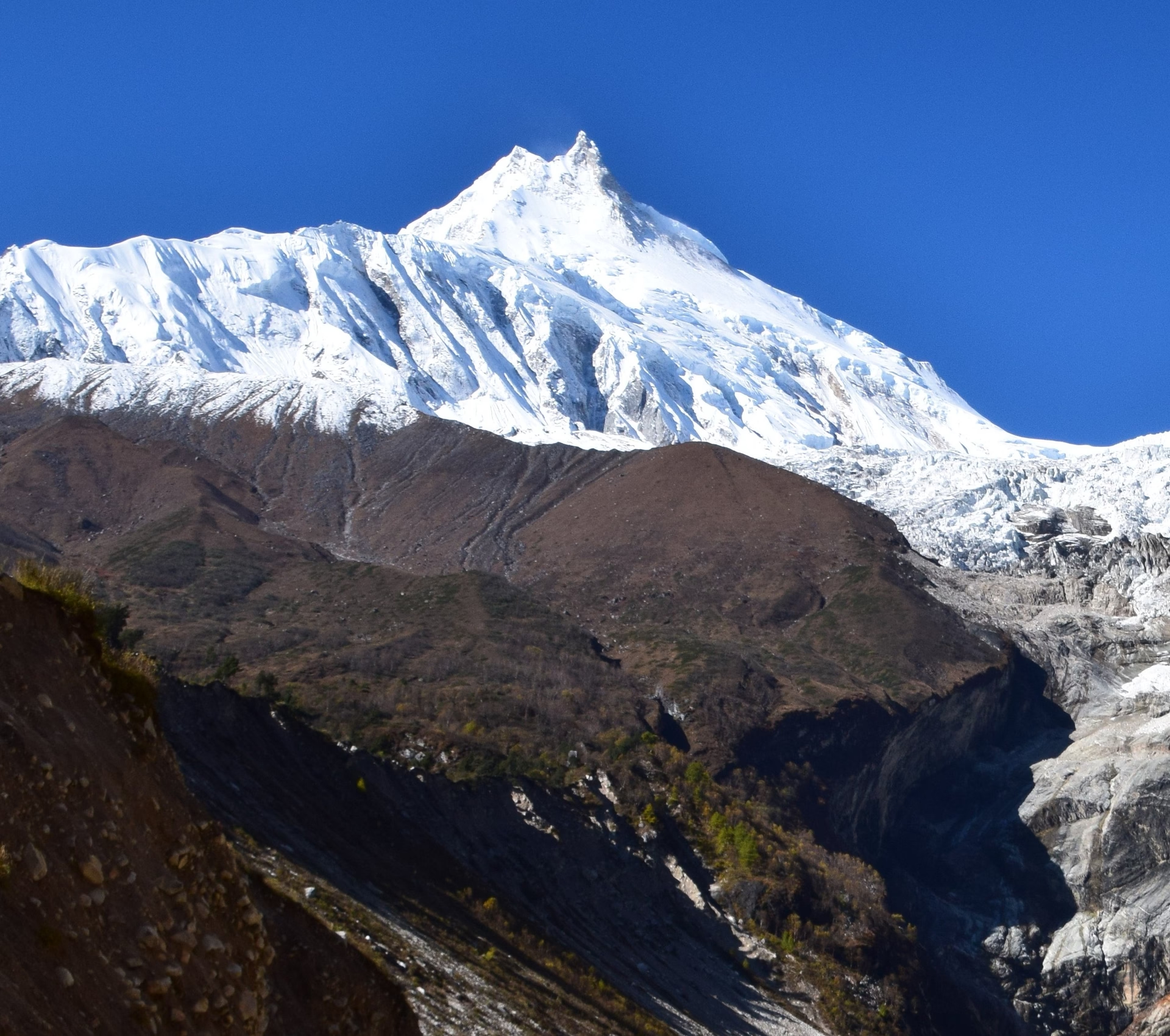
US $755
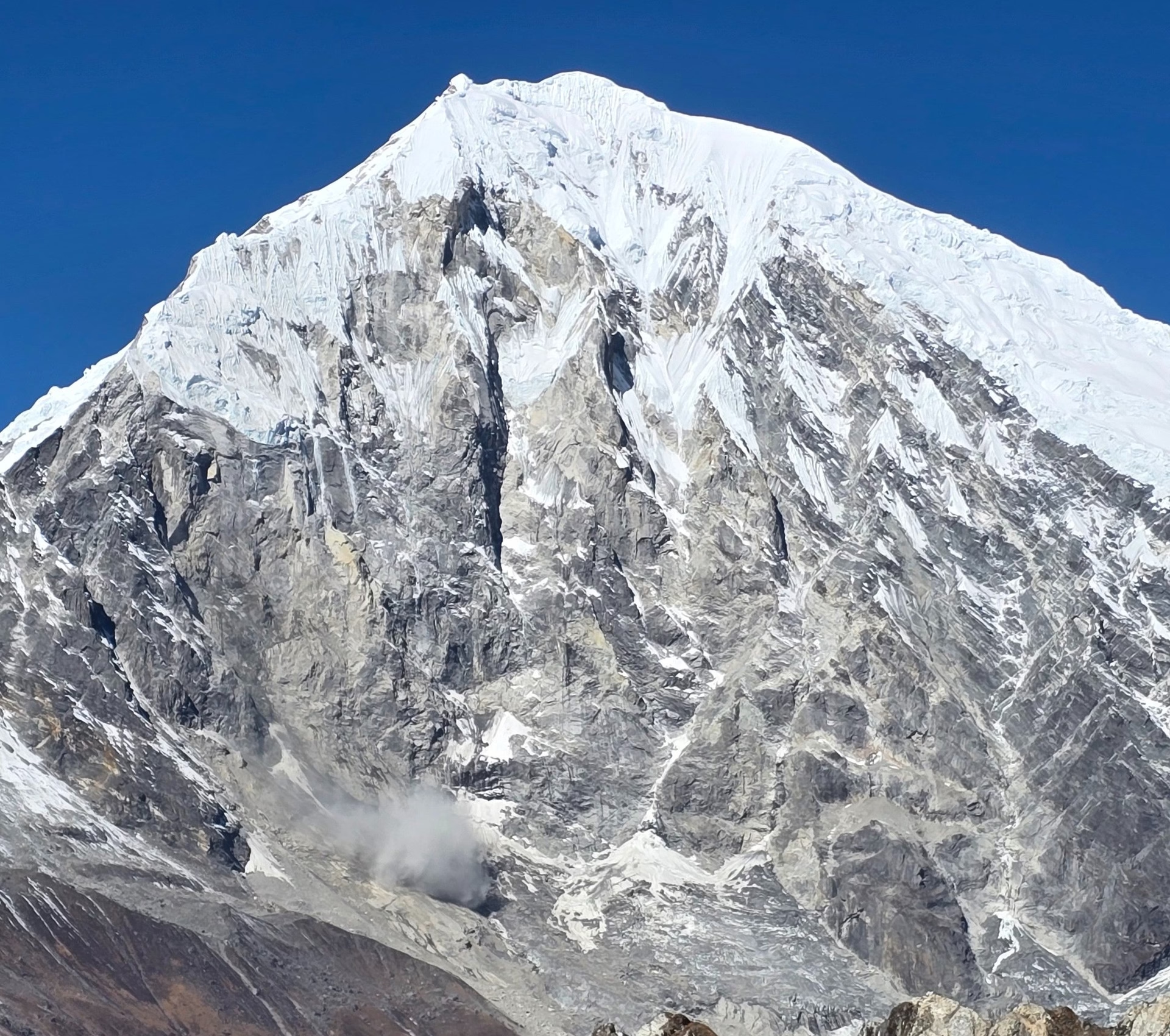
US $400
US $1115