
14-day trek through the Everest region to Gokyo Lakes
The scenic flight to Lukla either from Kathmandu or Ramechhap
Days for acclimatization in adjusting to high-altitude trekking
Trek to Everest Base Camp, Gokyo Lakes, and Renjo La Pass
Breathtaking views of majestic Himalayas including Mount Everest, Lhotse, Makalu, Cho Oyu, etc.
Sunrise visit to the Hillary Memorial and Gokyo Ri
Overnight in Sherpa villages and visit monasteries
Cultural exploration of Namche Bazaar, Khumjung, and surrounding villages
Gokyo Lake Trek via Renjo la Pass
5.0/2 reviews
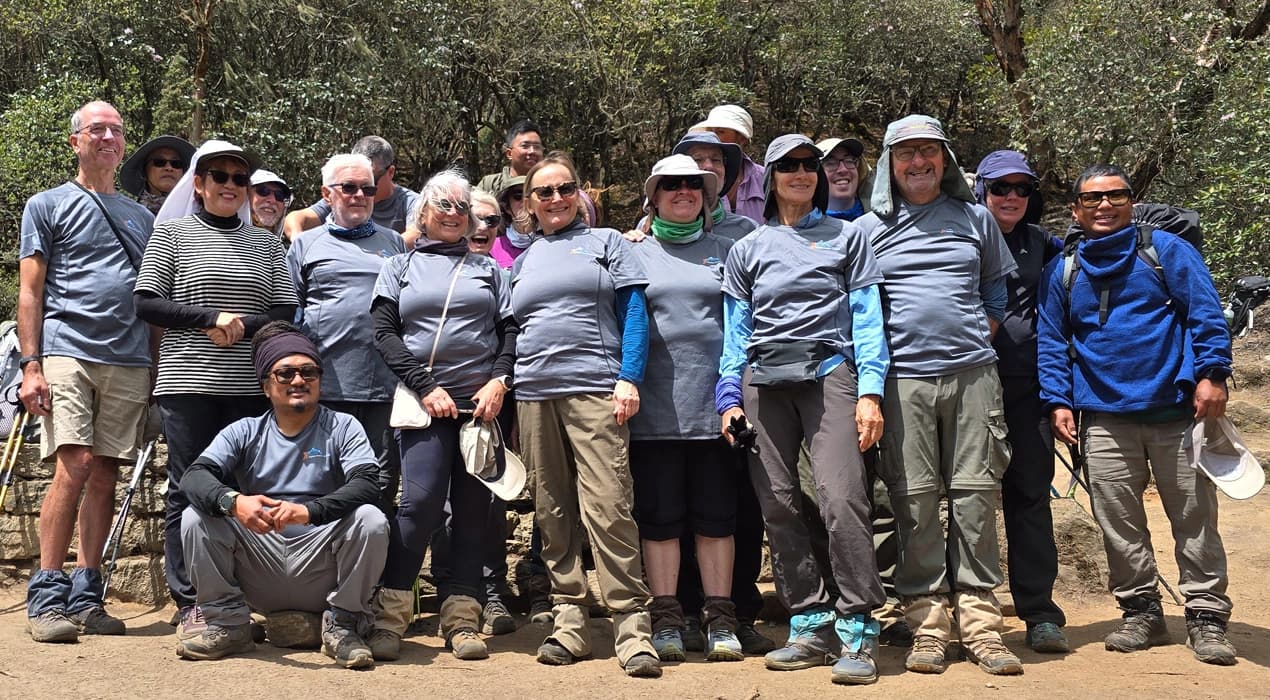
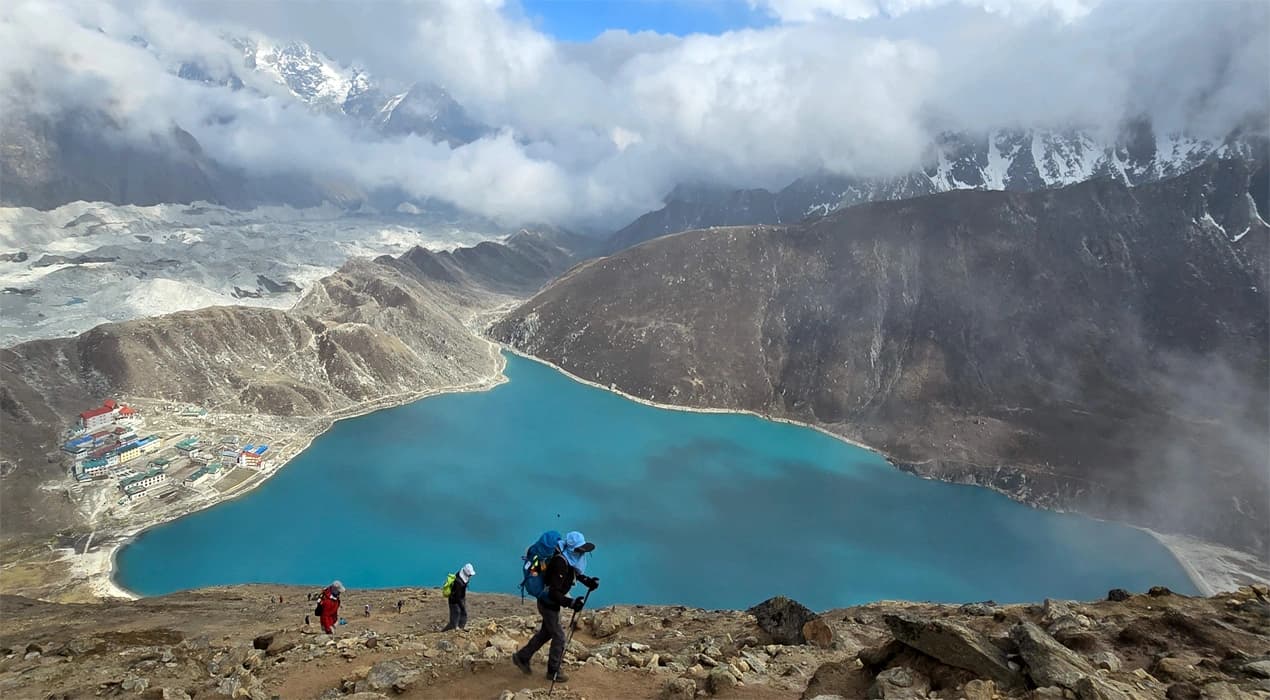
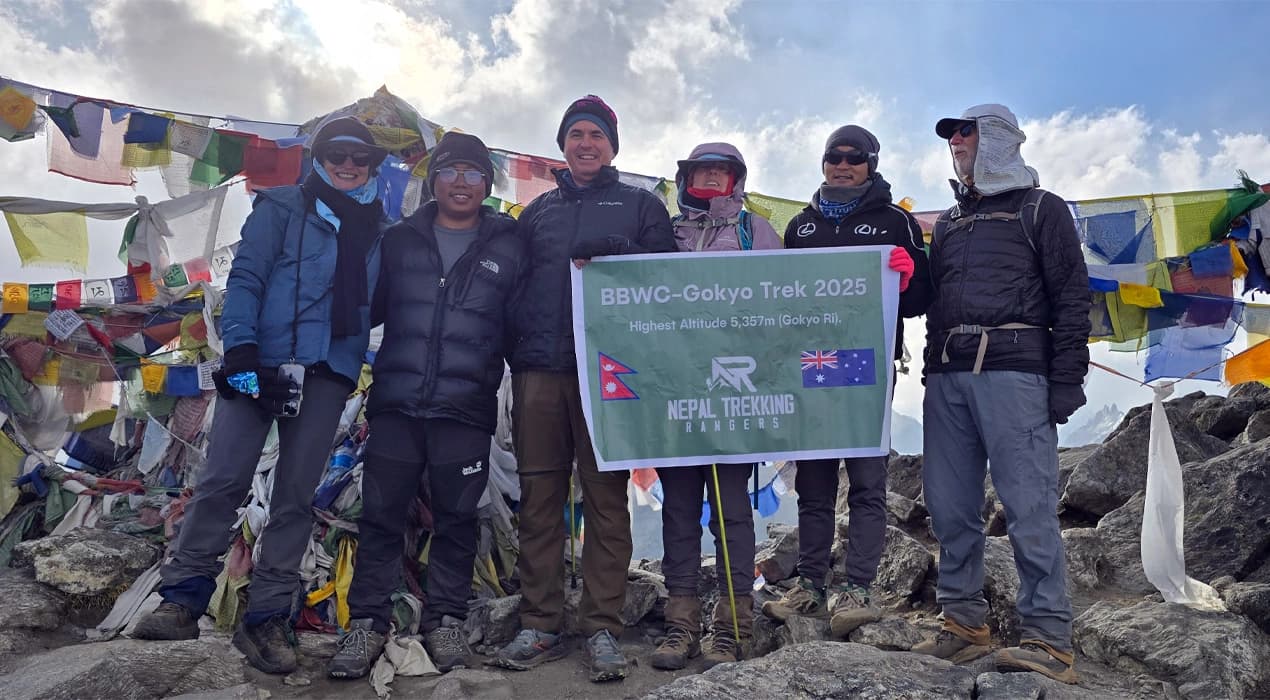
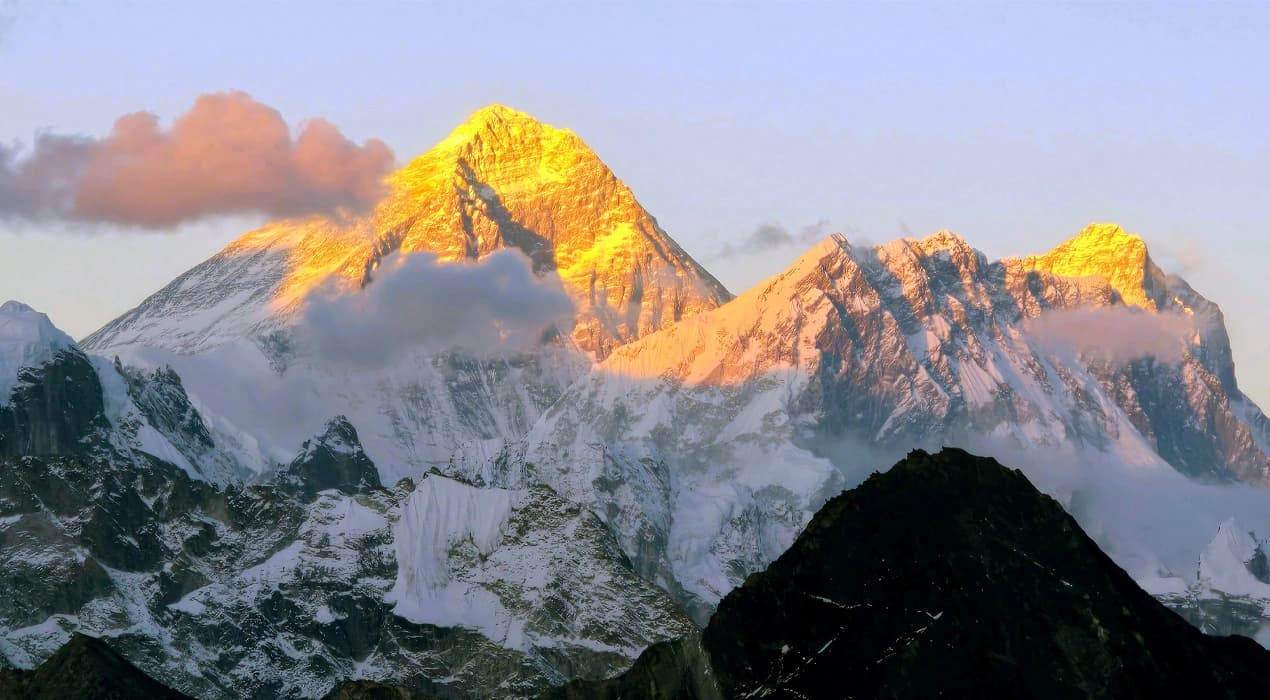
Book the Gokyo Lake Trek via Renjo La Pass in Everest at 1730 $ for 14 days itinerary. Visit Sherpa villages during Nepal Trekking.
- DestinationTrekking in Everest
- Group TypeOn Sale!
- Activities Guided Trekking
- Accommodation Guest House
- Max. Elevation5357m.
- Group SizeMin. 1 Pax
- Vehicle Domestic Flight
- MealsBLD
Gokyo Lake Trek via Renjo la Pass Highlights
14 days Gokyo Lake Trek via Renjo la Pass Overview
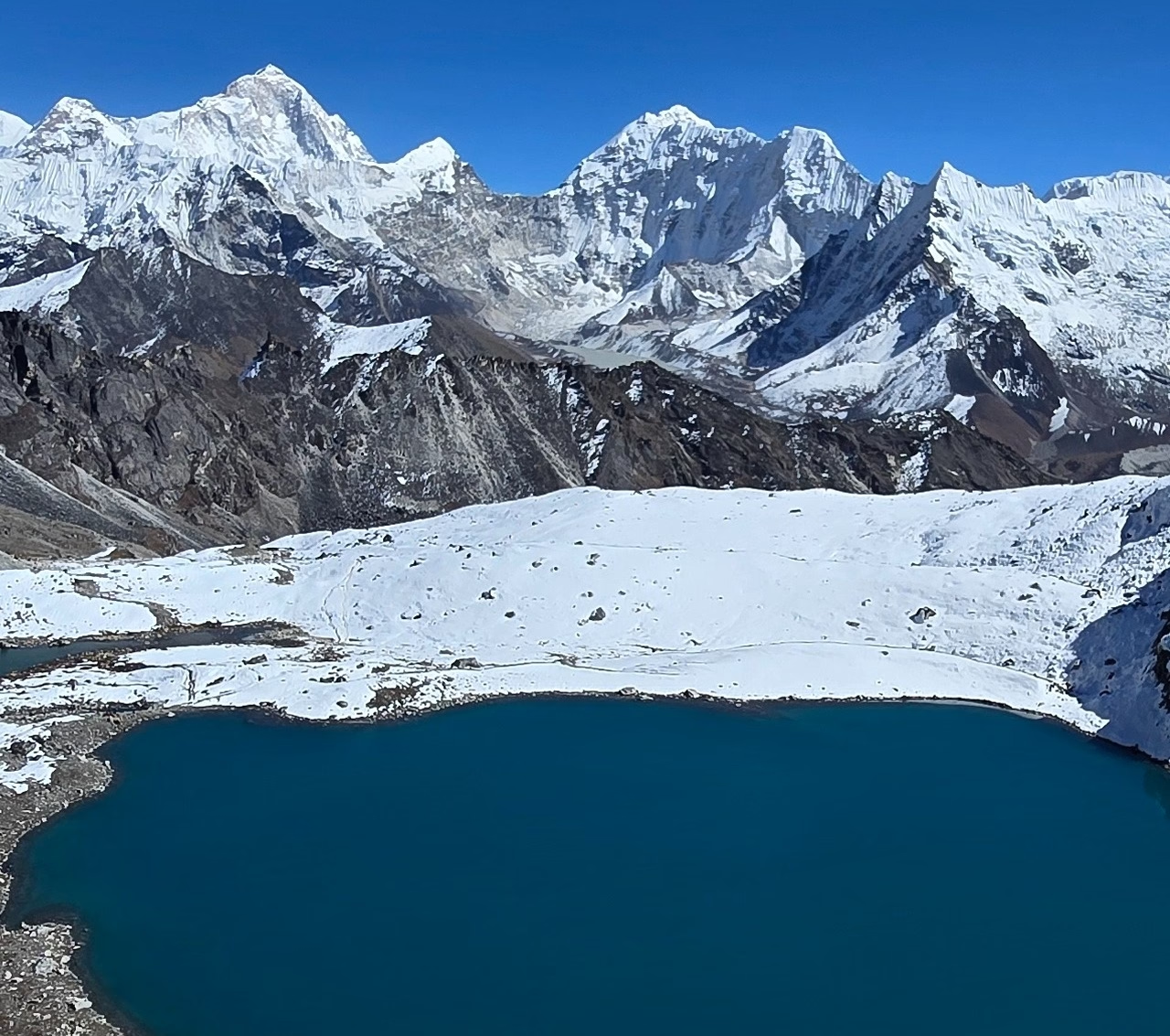
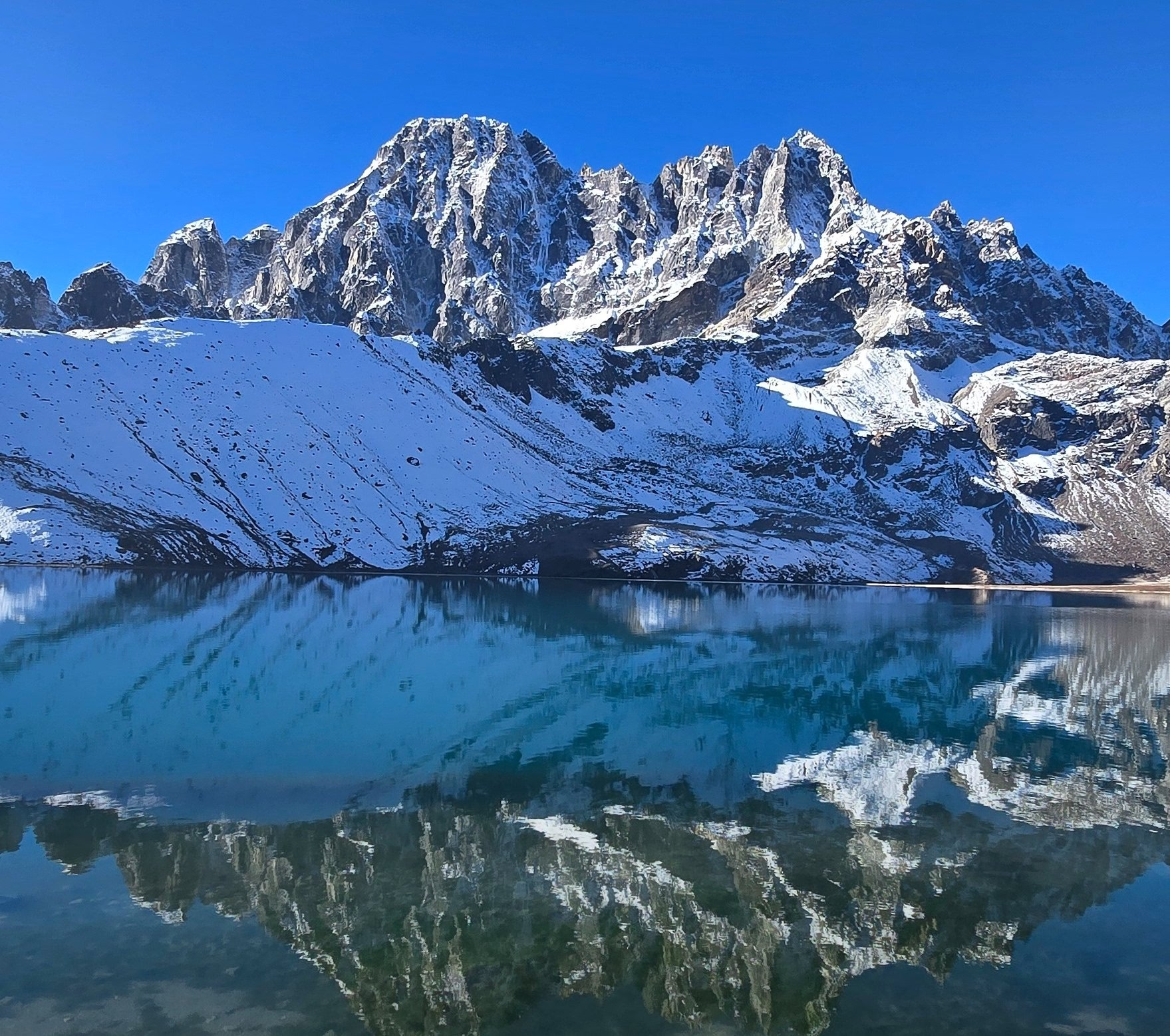
Everest Region has a place which looks exactly like a common fantasy painting of snowy mountains at the back and blue turquoise lake in front including the small hamlet. Yes, Gokyo Lake is the place where you can realise your fantasy into reality! The place is spectacularly located in the valley surrounded by mountains and high passes. In the heart of Khumbu, the valley should not be missed if you are looking for rewarding Everest trekking moments. Therefore, the travel planners of the Nepal Trekking Rangers have knitted fantastic trekking itinerary of the Gokyo Lake Trek via Renjo La Pass.
The package is uniquely designed to add the challenging crossing of the Renjo La Pass alongside marvelous Gokyo Lake Valley Trek. It is the combination of joyous and challenging trekking theme. Therefore, trekkers can knit the unique and diverse trekking moments. In addition, the trekking trip takes trekkers to more than 4 authentic Sherpa villages. No wonder, lots of our clients consider the trek as an opportunity to understand Sherpa people while enjoying the marvels of Gokyo Lake Trek and Renjo La Pass Trek.
Trek to Beautiful Gokyo Lake
The journey of the Gokyo Lake Trek via Renjo La Pass is divided into three sections. The first section is until Namche Bazaar, the second section is until Gokyo Lake and the third section is crossing Renjo La Pass (5360 m). Everyone is familiar about the first phase of the trek. In fact, almost all trekking trips inside the Everest region of Nepal follow the similar pattern. The phase is also knitted as an independent trekking package by the Nepal Trekking Rangers. It is called the Everest Panoramic Trek.
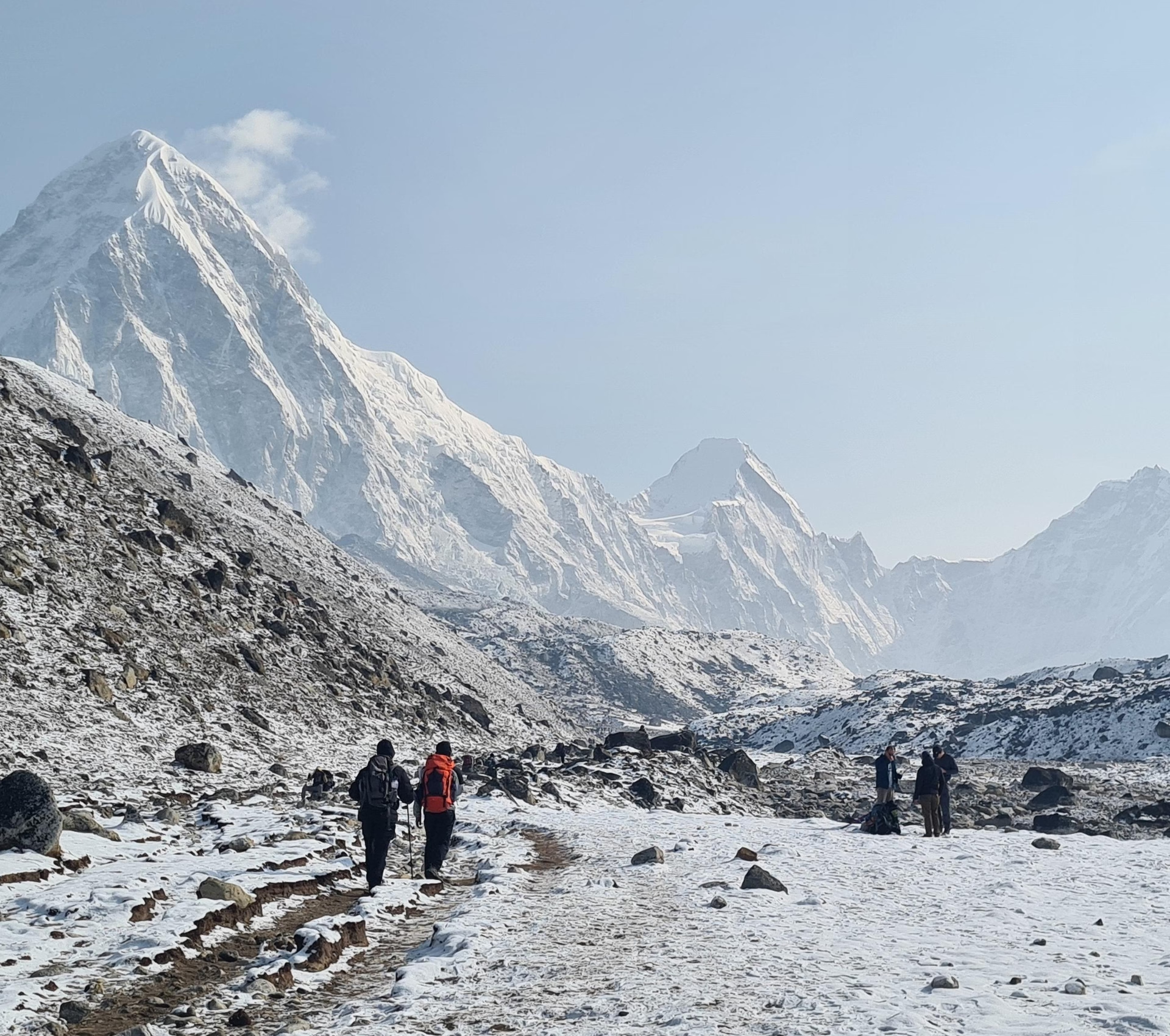
Trek to the beautiful lakes of Gokyo is one of the most scenic and joyous trekking activity to do in Everest region of Nepal. The trail traverses through diverse landscape and vegetation. After the acclimatisation activities, trekkers head towards Gokyo Valley via Dole and Machhermo. These villages are small villages located in the narrow gorge valley in the alternative trail than the Everest Base Camp Trek route. Trekkers leave the Everest Base Camp Trek route from Kyangjuma and take the trail of Mongla Danda for Gokyo Lake Trek via Renjo La Pass.
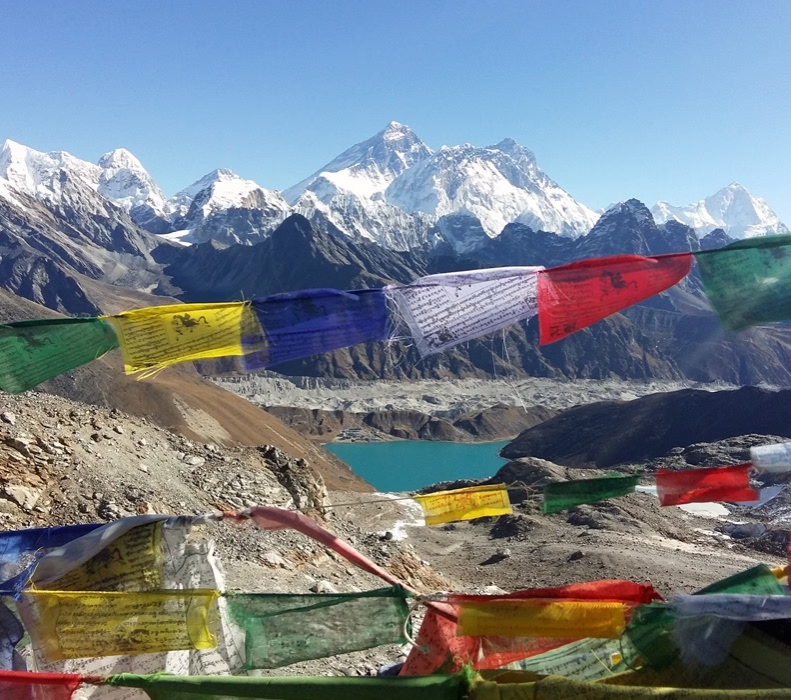
At first, trekkers experience the green lush alpine forests and slowly enter the grassy meadows region. Finally, they enter the tree less areas of Gokyo Valley. The first lake among major six lakes of the Gokyo Lake is the Longpopa followed by second lake and the major one the third lake the Gokyo Cho (Dudh Pokhari). These lakes are the alpine freshwater lakes and have the fragile alpine eco – system. Travelers will notice the effect of the climate change on these lakes too. Major highlights of this phase of trekking are Gokyo Ri hike, 4th and 5th Lake hike. These two are probably the most scenic hiking routes of the world. From the top of the Ri, you can get mesmerizing scenery of mountains on all sides including the sights of Everest, Lhotse, Choyou, and Makalu. Interestingly, 4th and 5th Lake hike offers bigger and different scenery of Mt. Everest.
Alternative Gokyo Lake Trek Itinerary
There are countless monotonous trekking itineraries to explore the Gokyo Valley of Nepal. Almost every trekking itinerary follows the similar pattern. Therefore, our team of travel planners decided to knit an alternative trekking itinerary for Gokyo Lake or Valley exploration. Our trek itinerary doesn’t have the same trail for return trek. Trekkers will have to cross the Renjo La Pass before meeting the original trail back in Namche Bazaar. If you embark on the Gokyo Lake Trek via Renjo La Pass then you will surely be able to knit a diverse holiday moments than the regular Gokyo Lake Valley Trek.
Renjo La Pass: Easy Pass Among Three High Passes of Everest?
Renjo La Pass is the 3rd pass among the iconic three high passes of the Everest region. It is also the lowest among these mountains in terms of altitude. The pass is at an altitude of 5360 m from sea level. People assume that it is the easiest pass to climb in comparison to other two passes. Don’t get fooled though! Crossing the Himalayan Mountain Pass is never easy! Trekkers must have good fitness level and stamina. The trail is rugged and rocky with full of big boulders.
The best part about crossing the Renjo La Pass (5360 m) is that it offers breathtaking scenery of mountains including 4 mountains from the top ten mountains of the world. In addition, the pass also separates Gokyo Valley and Thame Valley. Upon crossing the pass, trekkers will be able to explore the iconic and legendary village of Everest Summiteers – Thame Village. Yes, the village has at least one from every household in the Everest Expedition. The trail to Namche Bazaar is off the beaten away from the bustling of the Everest Base Camp Trek.
Book the Gokyo Lake Trek via Renjo La Pass
If you are looking for a tranquil & off the beaten trekking holiday in the Everest region of Nepal, then the Gokyo Lake Trek via Renjo La Pass is an ideal choice. The trek covers the villages less explored and trails less trekked! On the outskirts of the Everest Base Camp Trek route, trekkers can find eternal peace of mind. Clean mountain air and soothing sound of lake water can be life changing for many. The Nepal Trekking Rangers highly specializes in operating trekking activities in the Everest region of Nepal. We employ locals for any kinds of trekking. Therefore, book the Gokyo Lake Trek via Renjo La Pass with us and feel the difference. Trek with the locals and get to know about Sherpa people more by traveling with them for nearly two weeks up in the Himalayas.
Get an impeccable hospitality and quality services at the most reasonable cost! Explore the majestic Gokyo Valley and challenge the mighty Mountain Pass the Renjo La Pass in one single trekking trip.
Gokyo Lake Trek via Renjo la Pass Itinerary
When you land at the Tribhuwan International Airport, you're going to be met by your guide to facilitate your transfer into Kathmandu. The balance of the day, you can adjust to the different time zones and get your final preparations for the trek. You can enjoy a quiet evening walk through and around the colorful city, visit temples, shop for trekking gear, or enjoy some Nepali delicacies.
The 25-minute scenic early morning flight from Kathmandu to Lukla is one of the gateways to the Everest region. Or you could drive for 5-6 hours to Ramechhap and take a connecting flight to Lukla for 17 minutes.
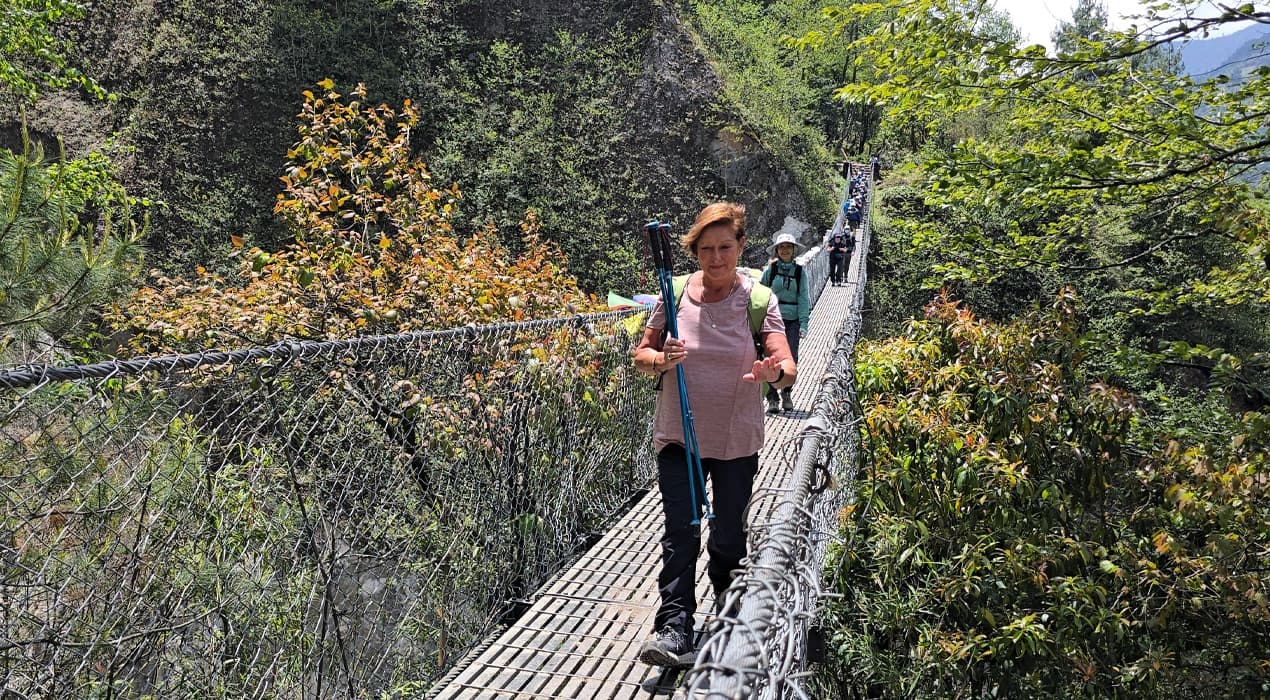
Afterward, starting from Lukla, the trek to the mesmerizing Phakding village would take several hours downhill, beside the Dudh Koshi River. Visit the monastery at Phakding and walk around the local houses for a taste of Sherpa culture and lifestyle.
After the longest hike from about 6-7 hours of walking through thick forests, suspension bridges, over the Dudh Koshi River, and many villages, it could be considered the hardest part of the whole trek, which will take you to grassland. As you proceed that bit higher, your vision will clear and open on the towering peaks-Thamserku and Kantega.
Here at Namche Bazaar, the lively trade hub of Khumbu land, feast your eyes on the panoply of views that Mount Everest, Lhotse, and so many more soaring peaks have to offer. Namche is a perfect place for getting the body relaxed, taking a stroll or two in the market, and for acclimatization.
Concerning acclimatization, it is visiting to acclimatize you for successful trekking. You acclimatize on this day to the altitude. On this day you'll hike for a short while to reach Syangboche (3780m).
From here, the trek leads up to the Everest View Hotel (3880 m), which is your reward for seeing the mighty Everest, Ama Dablam, and many other iconic peaks. Then enjoy walking down to Khumjung, a lovely Sherpa village at 3790 m, and back up to Namche for the night.
Today's hike is not too long; it is roughly two hours to take you to the lovely ambiance of Khumjung village. Roam across the village and visit the Hillary Memorial Viewpoint (4,000 m) for exhilarating views of the panoramas of Everest, Lhotse, Ama Dablam, and the other adjacent mountains. The view from this point can be said to be one of the most beautiful in this whole region and is an excellent opportunity for photographs.
You'll sleep in Khumjung, experiencing local culture and peace.
After breakfast, it's time to head out on a five-hour walk to a little village called Dole perched at the 4,040 meters level. This path takes you through forests of pine and rhododendrons, all the while affording excellent views of the far-off mountains during the uphill.
Even if this trek may prove to be rather tiring at a high altitude, the thrill and, of course, the beauty of the scenery compensates for it all.
After a rough and rocky four-hour journey from Dole, you will finally step on the little settlement of Machhermo, sitting at an elevation of 4,470 meters, well known for its fantastic vistas from there. The higher you rise, the more barren and rocky the terrain becomes. A fantastic place to take in sunset views of Cho Oyu, Thamserku, and the whole range of the Himalayas.
The place makes the cultural exposure very interesting because of the strong local community where you can admire Sherpa's life.
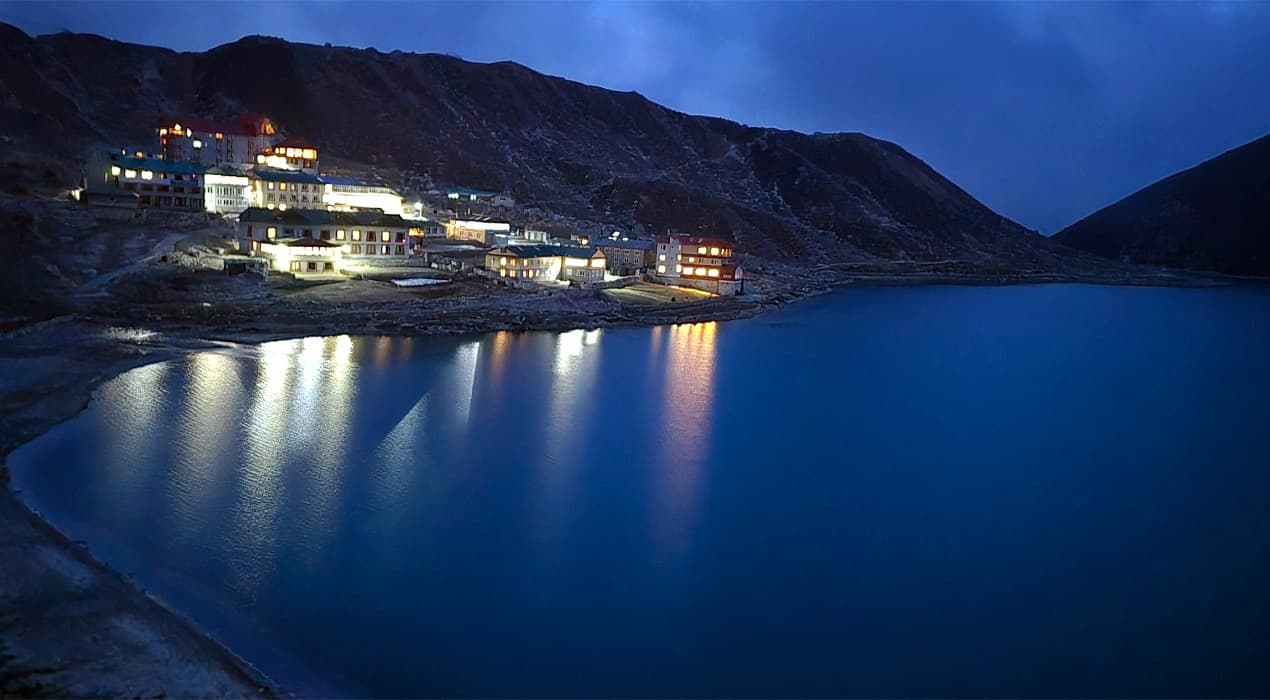
About 5 hours of trekking will take you to Gokyo, where it lies in a beautiful system of lakes constituting Gokyo Lakes, situated at an altitude of 4,780 meters of sea level. Take that opportunity to relish the Gokyo Lakes which is a couple of clear turquoise lakes encircled by towering mountains.
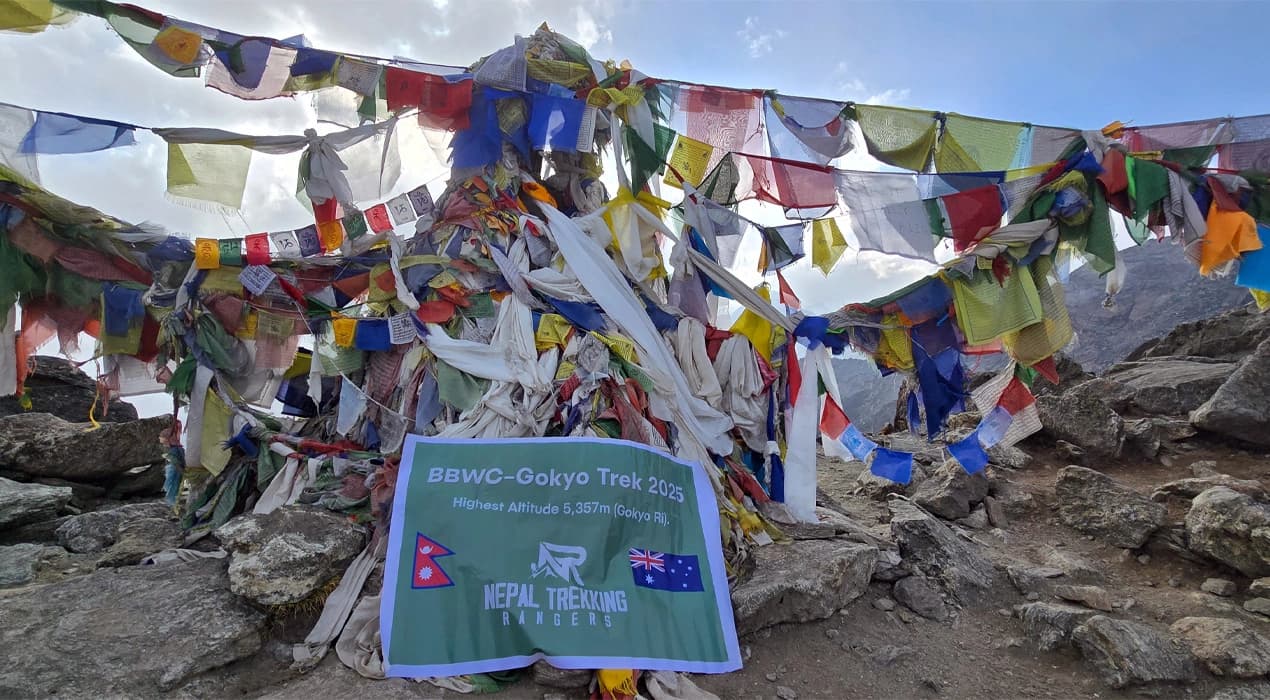
Once set, initiate hiking towards Gokyo Ri (5,357 m) to enjoy an impressive view of the adjacent peaks, Everest, Lhotse, Makalu, and Cho Oyu, at sunset.
For your acclimatization, spare one more time and spend a day around Gokyo Lake to hike around the Fourth and Fifth Gokyo Lakes. The remote lakes showcase stunning views of Mount Everest and other peaks. The place is quiet and calm; very conspicuous manifestations of beauty can help you reflect on it.
This is a perfect day for taking photographs and enjoying the quietness of this alpine paradise.
Renjo La Pass stands at an elevation of about 5,360 meters, offering an exhilarating yet certainly arduous day of the trek with breath-stealing views of the surrounding mountains.
This day should take about 8-9 hours with a fairly steady pace due to the taxing climb. The further downhill trek to Lungdhen will never be looked upon as a peaceful resting and recovery from such an exertion.
Backtrack from Renjo La Pass to Namche (3,440 m). This journey takes about 5 to 6 hours. It is a much easier descent compared to the body, and along the way, you will pass the same beautiful Sherpa culture, villages, forests, and suspension bridges.
By now, you will have arrived in Namche and will find time to relax and shop around for souvenirs and a nice hot meal after the long trek.
The last portion of the hike finally takes you back to Lukla (2,846 m): a 7-8 hour trek downhill. It is the time for reflection on the great journey and the very last breathtaking views of the Himalayas.
After arriving in Lukla, you celebrate your trek with your guide and fellow trekkers, knowing that this is a special achievement for all of you.
The early morning flight from Lukla to Kathmandu may last roughly 25 minutes; alternatively, a flight from Ramechhap followed by a picturesque drive (for about 5-6 hours) back to Kathmandu may be the best option.
After returning to the capital, you may have an afternoon to relativize, go on exploration, or shop for souvenirs homeward.
On your final day, you will be transferred to the airport for your flight homeward or your further travels, having made memories of an unforgettable adventure in the Himalayas, from trekking to some of the highest points on Earth and experiencing the beauty and culture of Nepal.
If the provided schedule isn't suitable for you, we are able to create personalized travel arrangements according to your preferences and requirements.
Choose Your Package
US $1115per person
Best Price GuaranteeTaxes Included
(Guide. Porter. Permits. Transportation. Accommodation)
Cost Includes
Transportation
International/Domestic Airport pick up and drop with Private Vehicle with A/C as per Group Size
Domestic Round-Trip Flights (KTM-LKL-KTM) OR (RAMECHHAP-LKL-RAMECHHAP)
Drop and pick up from and to Ramechhap by private vehicle as per group size If Flights schedule via Ramechhap
Accommodation
2 Nights Accommodation at Tourist Standard Hotel or Boutique in KTM with Breakfast
11 Nights Accommodation along the trek (Basic and normal accommodation in Guest Houses or Tea Houses and Attached bathroom in Lukla/Phakding/Namche-3 Nights)
Food/Drink/Snacks
Not Included
Permits and Expenses
Sagarmatha National Park Entry Permit
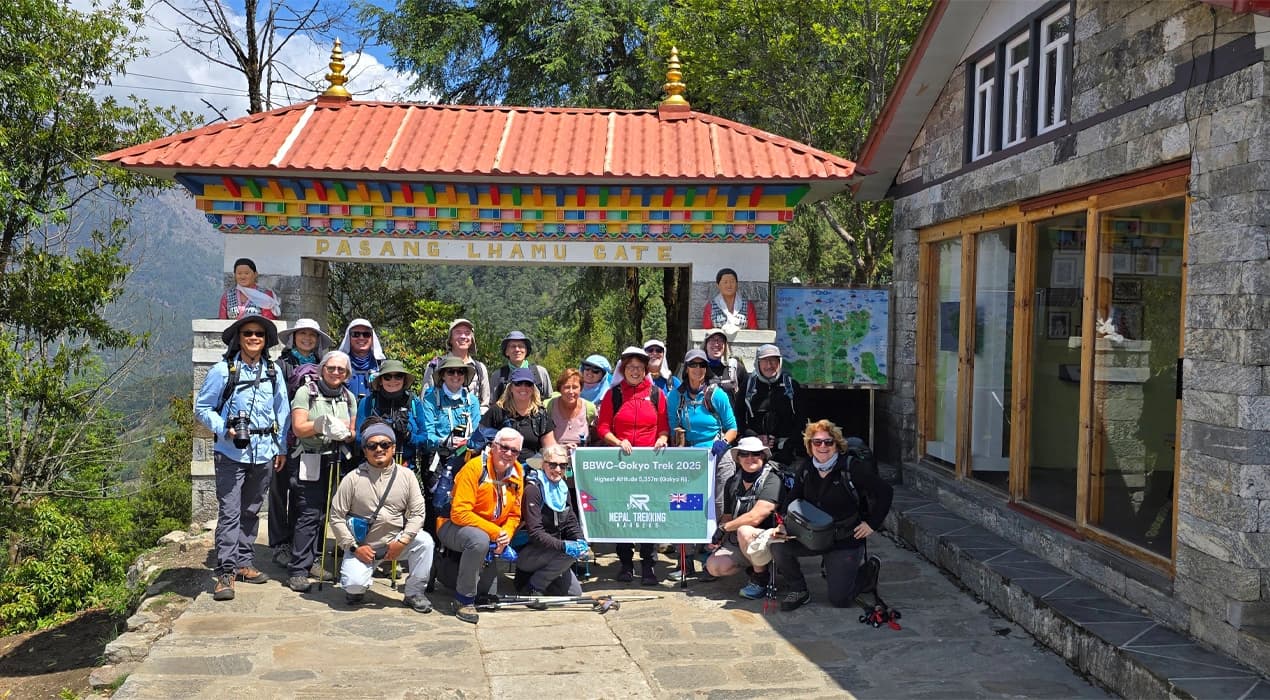
Pasang Lhamu Rural Municipality Permit
All Local Government Taxes and Official expenses
Guide and Porter
Government Register Licensed holder Guide with fluently speaking English Language
An Assistant guide each 7 Trekkers
A porter for each 2 clients (20 KGs limit weights for a Porter)
Covers their (guide and porter) wages, meals, hot drinks, accommodation, transportation, insurance and necessary trekking gears)
Souvenir or Complimentary
Nepal Trekking Rangers Company’s T-shirt/Cap/Buff
Trekking Route Pocket Map
Benefits
NTR’s Duffel Bag each client (return basis)
Sleeping Bag and Dawn Jacket (return basis) If you require
Cost Excludes
Entry Regulations and Visa
International Flights Fare
Nepal Entry Fees (15D-$30, 30D-$50 and 90D-$125)
Accommodation
If you stay more than 3 nights in Kathmandu
Extra Nights even you return early with any Reasons such as AMS, Illness and any reasons of clients
Food and Drink
All Food and Drink (Breakfast Included)
Tips
Guides and Porters as gratitude
Travel Insurance and Expenses
Travel Insurance covers emergency High Altitude Rescue/Evacuation (upto 6000m)
Personal Transportation of ground and Air both
All soft and hard drinks, All hot drinks in pot size or above 4 cups a day, Snacks, extra Chocolate bar
Sanitary material such as wet wipe tissues/toilet paper
Hot Shower/hot or boiled water, Wifi, Battery Charge
Hot bag during the nights
Shopping/Souvenir for family and friends
All the extra things/expenses which has not included in the list
Dates & Prices
Your private Gokyo Lake Trek via Renjo la Pass begins in Kathmandu and ends in Kathmandu, covering 14 days of adventure.
Private departures run on any date you choose, for groups of 1–30, for a personal and flexible experience.
Private Group Deals
| 1 Person | US$1,510 |
| 2 - 6 People | US$1,170 |
| 7 - 14 People | US$1,150 |
| 15 - 30 People | US$1,115 |
Know Before You Go
FAQs
Traveller Review
 5.0 Rating out of 5 based on 1850 Reviews
Perfekter Trek zum Everest Basecamp
We have nothing but positive things to say about our trek with Nepal Trekking Rangers! Our group of three friends was looking for something a little different from the EBC trek and didn’t have time to do the full Three Passes loop. Nepal Trekking Rangers gave us lots of options, and we decided to trek directly to Gokyo Lakes, then over Renjo La and back down to Lukla. It was perfect for us.Our guide, Yuddha, was super knowledgeable, and the team supporting us was kind and helpful throughout. The communication before and after the trek was excellent, and when we ran into a small snag during our journey, Yuddha handled it smoothly and professionally.I can’t say enough about how experienced, well-connected, and genuinely kind everyone was. We had an amazing trip, and you’ll be in great hands with Nepal Trekking Rangers. Excellent service makes a wonderful Nepalese trekking holiday
We had an excellent experience using Nepal Trekking Rangers. Yuddha was easy to communicate with via WhatsApp and email. He helped us plan our Nepal holiday, providing advice, planning our itinerary, booking accommodation,internal flights and guides. We did three separate parts to our trip - all organised by Yuddha. A three day guided walk around Nagarkot. We thoroughly enjoyed this trek - great vistas, authentic Nepalese experience (we were even joined in on local wedding). It was our warm up for the Gokyo Lakes Trek. Again another great experience, everything was sorted - all we had to do was walk. The Nepal Trekking Rangers team was fantastic - pointing out points of interest, carrying our gear, organising meals and accommodation. They monitored our heart rate and oxygen levels everyday. When someone in the group was unwell or needed assistance they were there to help. We then did a visit to Chitwan National Park - a must see. The day safari was amazing. Then onto Pokhara where we relaxed. Yuddha organised a guided day trek to Australia Camp. Again this was a great experience - the views, the authenticity, and the experience. It was great having someone who was fluent in English and Nepalese. Having someone who understands the Nepalese ways and makes your trip smooth and enjoyable. 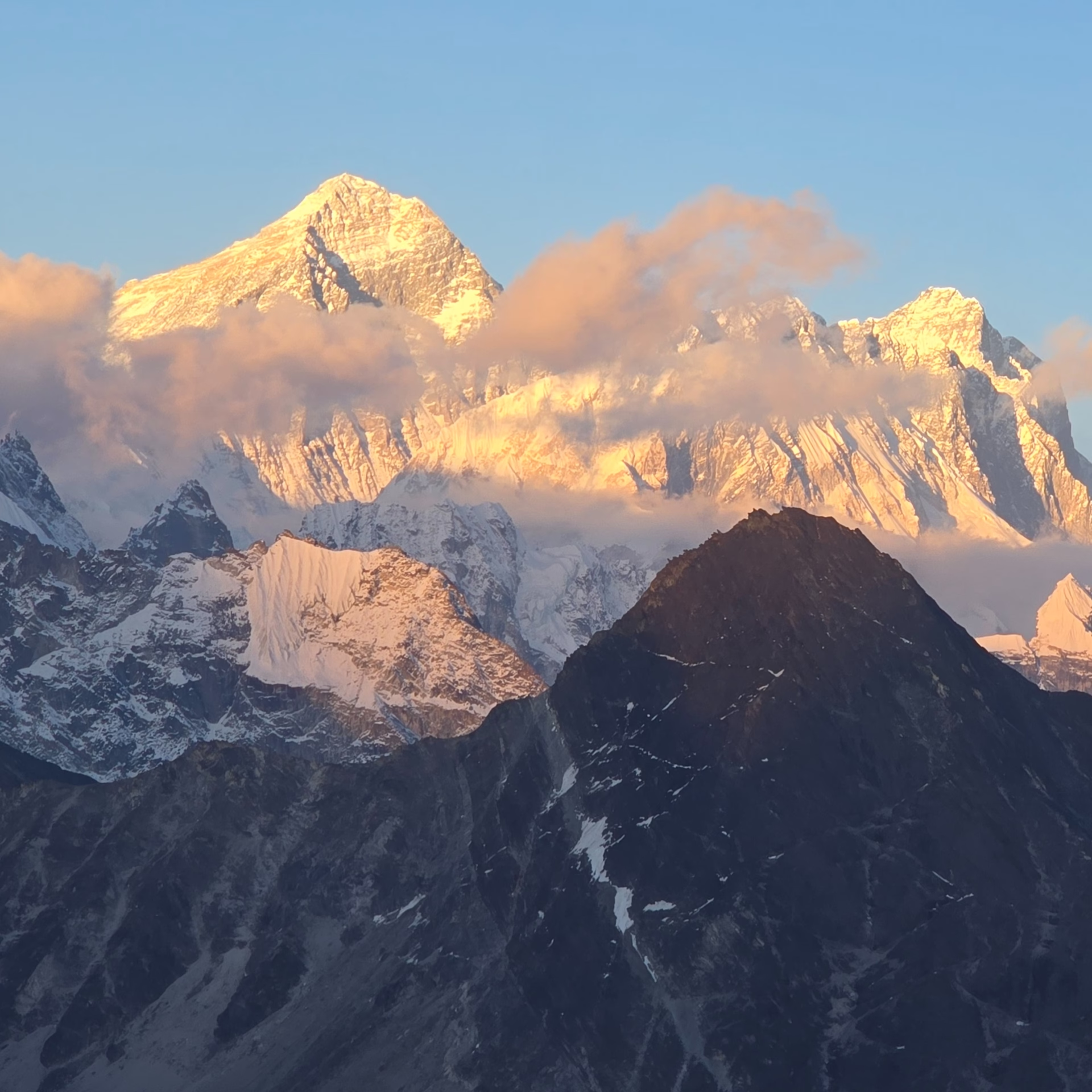
Vanessa H 30th Apr, 2024