
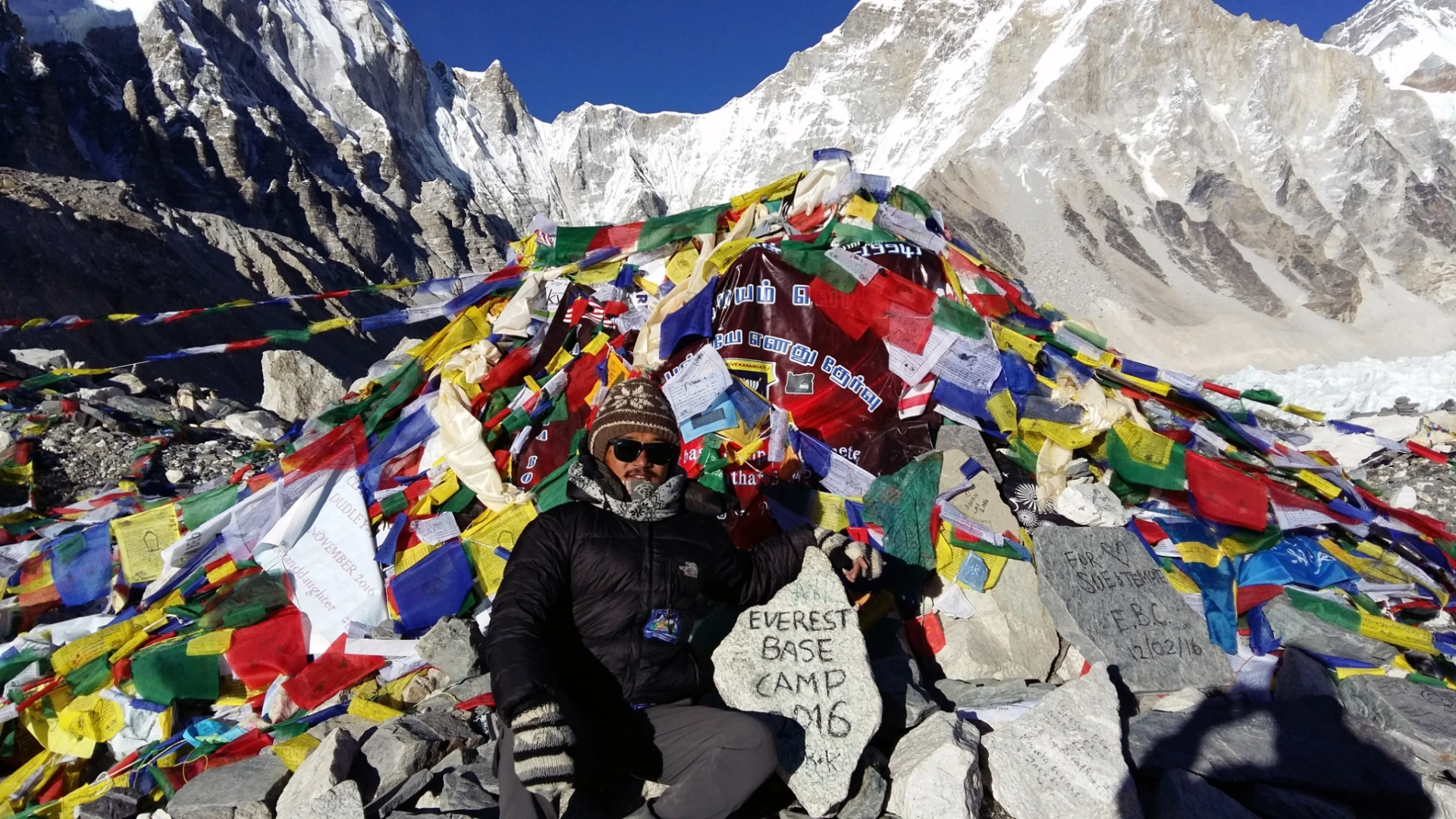
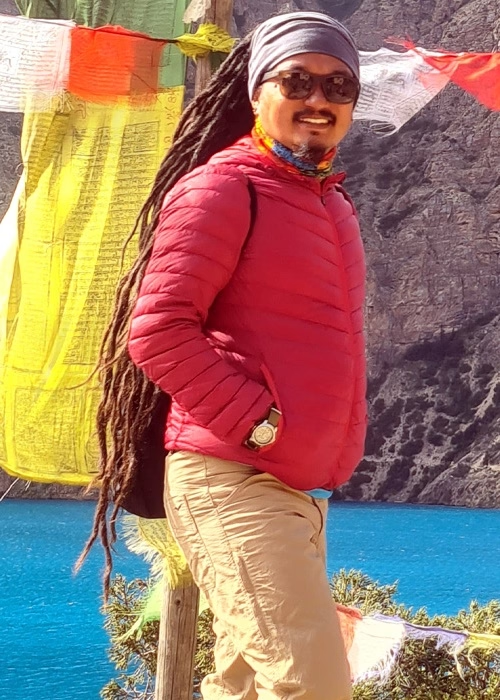
Mr. Yuddha Tamang from the Nepal Trekking Rangers is the experienced trekking guide for Everest region. Since 2006, Mr. Tamang has been working in the field of Nepalese trekking industry diligently and passionately. If you ask me the question who is the experienced trekking guide for Everest Region, then I can surely vouch for him without a hint of doubt. His philosophy of working under sustainable eco – friendly measures keeping the safety of guests first and giving back worth of every penny spent by them make him an outstanding trekking guide. Well, he has been to almost every trekking routes of Nepal over these 20 years of work in this field but nothing matches his contributions in the Everest region.
Mr. Tamang has closely worked with the Sherpa communities ensuring these people get recognition from people across the globe for their mountaineering prowess, unique traditions, and warm hospitality. He resembles both by appearance and heart as a Sherpa lad. Therefore, this blogger finds it easy and comfortable to recommend Yuddha Tamang as an experienced trekking guide for Everest region.
Let’s find out more about importance of choosing the right trekking guide for higher – elevation trekking trips like in the Khumbu Everest region. But first, let’s know about different trekking trails which are open for trekkers to trek!
Best Everest Region Trekking Routes to Explore
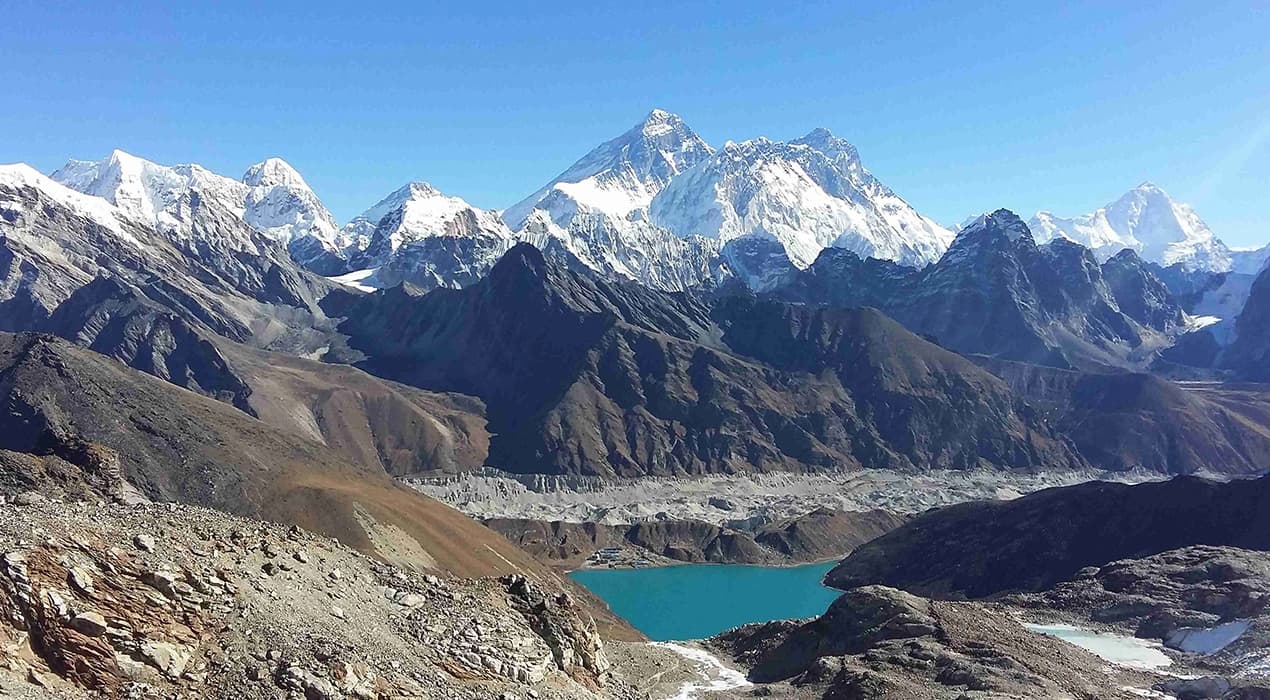
It is a common understanding that the Everest region is the cornerstone of Nepalese tourism industry especially in the fields of peak climbing and trekking. The presence of superlative mountains like Everest and Lhotse make it the number one Himalayan adventure destination. Besides peak climbing, the region hosts plenty of short to long trekking routes. Some of the trails of the Everest region are legendary like the Everest Base Camp Trek route. The trail takes trekkers to the foothill of the world’s tallest mountain, Mount Everest (8848.86 m). There’s something for everyone in this trekking region.
Inside the world’s highest situated national park, the Sagarmatha National Park (from 2880 m to 8848.86 m), the region hosts amazing trekking routes. You can do short to long and easy to adventurous trekking activities.
Here is the list of the major and popular trekking routes to trek in the Everest Region Nepal:
1. Everest Base Camp Trek
2. Three High Passes Trek
3. Gokyo Lake Trek
4. EBC Chola Pass Gokyo Lake Trek
5. Everest View Trek (Short and Low Elevation Trek)
6. Phaplu EBC Trek
7. Classical Everest Base Camp Trek from Jiri
8. Amadablam Base Camp Trek
Can Peak Climbing be called Trekking?
As mentioned above, there are plenty of trekking routes to trek in the Everest region. Besides trekking activities, travelers can knit adventurous peak climbing activities. The mountains below 7000 m altitude are considered trekking peak as recognized by Nepal Mountaineering Association (NMA). Therefore, you can say that the peak climbing activities are advanced and adventurous form of trekking.
Check out the popular trekking peaks open for climbers to climb in the Everest Region Nepal:
1. Island Peak Climbing (Imja Tse Peak)
2. Lobuche Peak Climbing
3. Mera Peak Climbing (Stretches to Gaurishankar Conservation Area from Everest Region)
4. Kwangde Peak Climbing
5. Kusum Kangaru Peak Climbing
6. Cholatse Peak Climbing
7. Kyazo Ri Peak Climbing
All these activities happen in remote and higher elevation places. Therefore, the question of who is the experienced trekking guide for Everest Region stands valid. Don’t even think about trekking or peak climbing in Nepal without hiring a guide!
What Nepalese Law says about hiring a guide for trekking in Nepal?
Nepal is one of the most democratic and flexible countries of the world. We regard our guests as god and our hospitality is known to the world. Recently, lots of incidents happened to many solo or unguided group of trekkers especially in the wilderness areas. There is a mandatory guide hire rule if you are traveling inside the restricted areas of Nepal.
Manaslu region, Upper Mustang region, Nar Phu region, Kanchenjunga region, etc. are few popular restricted areas of Nepal where rule of mandatory guide hire is present ever since the opening of these trails for trekking. After lots of guests’ requests and tourism authorities’ requests, Nepal Government stated clearly that you must hire a trekking guide while exploring conservation areas, national parks, and remote areas of Nepal. Thus, you must hire a guide for Everest Trekking. Despite all these rules, people are still trekking unguided which has brought many incidents of guests’ disappearances in the high mountains and deep jungles.
If you wish to have a momentous, safe, and hassle – free trekking activities in Nepal, then consider hiring a trekking guide.
Why Choose an Experienced Trekking Guide for the Everest Region?
Well, it is evident from the sheer magnitude of the Everest region that you must be with the locals or trekking guide to explore this place. Safety always comes first while traveling. You may end up in the middle of nowhere where oxygen is thin and your body is exhausted. It’s normal to get caught in this type of situation while trekking in the Everest region. The biggest hurdle to overcome for a successful trekking trip in the region is not the trail but the altitude. From the first day, trekkers must enter the zone prone to altitude sickness risks. Please note down that the places above 2500 m from sea level are considered high risk altitude sickness zone. Similarly, the places above 3500 m from sea level are considered fatal zones which need to be treaded carefully. Most of the nights in the Everest region are spent beyond 3440 m from sea level. Therefore, you must have someone looking after you while trekking in these places. An experienced guide comes in handy during emergencies.
The biggest factor to hire a trekking guide is safety without a doubt but there are other perks of hiring a guide while trekking. Your trekking guide handles all logistics and you can trek without any issues of transportation, accommodation, and meals. Furthermore, you will also don’t need to worry about getting permits and finding a safest route to the destination. The culture and traditions of the place can be better explained by your trekking guide than the information that you gather in an internet or AI chat boxes. So, relying on your trekking guide comes up with many perks.
What Makes the Everest Region a World-Class Trekking Destination?
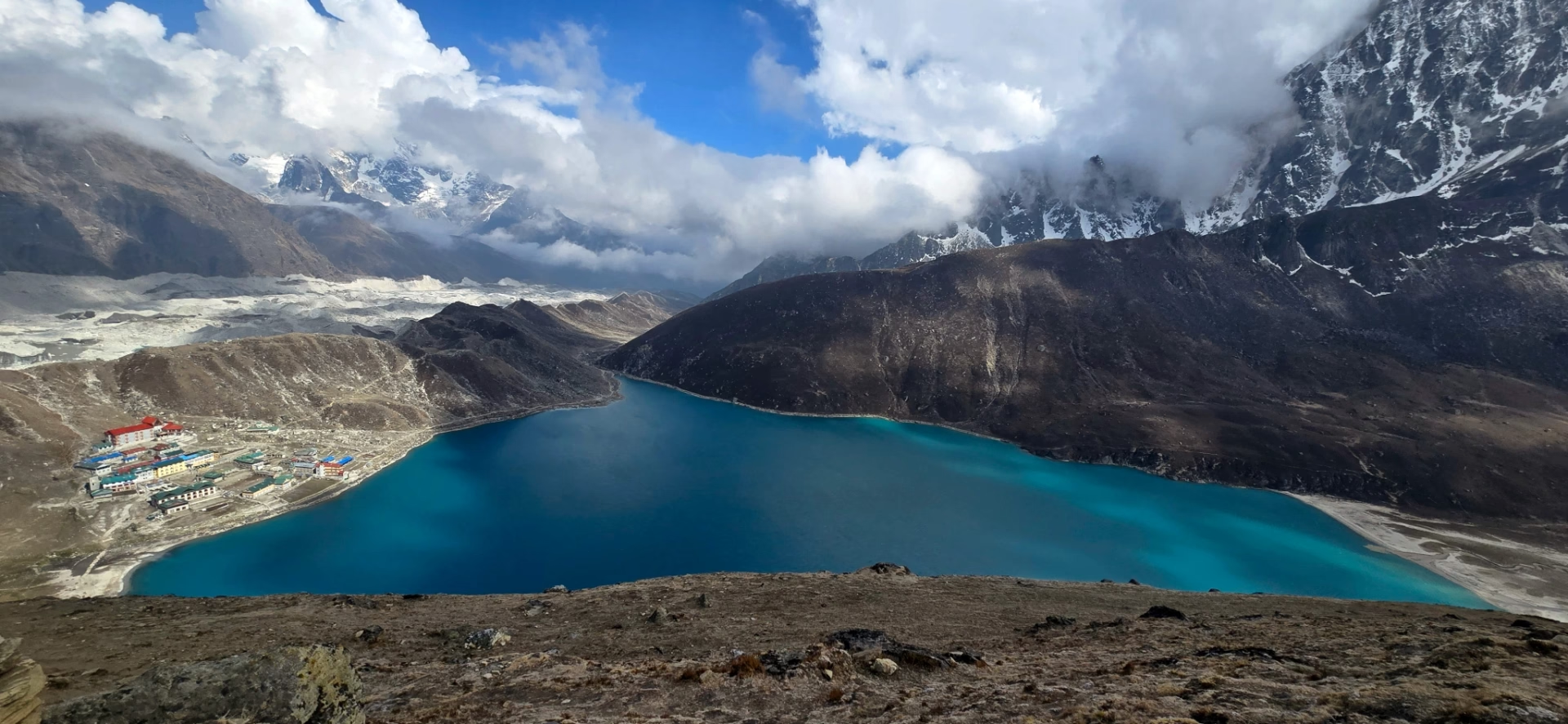
The one fact alone about the presence of the world’s tallest mountain, Mount Everest (8848.86 m) makes the region the world – class trekking destination. Travelers from across the globe have the dream of reaching the Everest region at least once in their travel bucket list. Such is the grandeur of having the world’s tallest mountain in its side. Furthermore, the region boasts the presence of mountains like Lhotse and Cho Oyu which are fourth tallest and sixth tallest mountains of the world. Besides these mountains, there are countless snow – capped mountains where climbers have recorded many ascents!
The world’s longest glacier, the Ngozumpa glacier and the world’s largest glacier, the Khumbu glacier are other assets of the region. Sherpa are known across the world as the strongest people and they are known for their mountaineering prowess. Lots of people are curious to know about these people in their own courtyard. The majority of Sherpa people live in the Khumbu Everest region. Ancient monasteries like Tengboche Monastery and Khumjung Monastery where the myths of Yeti (Mountain Ape) is still preserved make the region valuable for many.
The facts that the region holds diverse landscapes from river valleys to moraines and from hills to high mountain passes make the region darling to adventure lovers. Trekkers can experience sub – tropical, temperate deciduous, alpine, and tundra vegetation in one region. From cultural grandeur to natural wonders, the region stands out tall from others. All these amazing things and people make the Everest a world – class trekking destination. So, people from all over the world crave desperately to at least make a visit. The best way to explore the region is by trekking.
How an Experienced Guide Makes Your Everest Trek Safer?
Having a guide and having an experienced guide is different. A guide is not a person that shows you the way or point at the mountain but they are also the one that makes your trip hassle – free. An experienced trekking guide takes care of your health, wellbeing, and overall trip operations. If you are looking for best value of your travel investment, then an experienced trekking guide comes in handy.
Get an experienced guide like Mr. Yuddha Tamang who not only provide safety cushion but also provides value of your money. During times of emergencies, experienced guide can quickly act to save lives. Similarly, these experienced guides know how to get best lodging facilities and best healthy meals even during peak season. Remember that the Everest region becomes highly crowded especially during the months of spring season (March – May) and the months of autumn season (September – November). These months are the best time to do treks in the Everest region or any other trekking areas of Nepal.
Everest Base Camp Trek: What You Need to Know?
The iconic trekking route of the Everest region is the Everest Base Camp Trek. I have already mentioned above different trekking routes open for trekking in the region. Among all these trekking routes, the Everest Base Camp Trek route is way ahead! In fact, there are few trekking routes in Nepal which are popular among travelers from across the globe. Treks like the Annapurna Base Camp Trek, the Annapurna Circuit Trek, the Manaslu Circuit Trek, the Langtang Valley Trek, etc. are on par with the Everest Base Camp Trek but in terms of achievement the EBC Trek tops all.
You must know that the Everest Base Camp Trek route is about 130 kilometers long including the return trip. The trek starts from Lukla like many treks of the Everest region. Lukla is the gateway of the Everest Treks. It passes through several Sherpa villages and takes about 10 to 14 days of itinerary. The trail features well maintained portion to walking on moraine and glaciers. Everest Base Camp (5364 m) and Kalapathar (5545 m) are the highest point of the trek. Every day, trekkers must walk in an average about 6 to 7 hours in total. There are two acclimatization days on route to the Everest Base Camp for safety purposes. Trekkers can enjoy more than a dozen mountain vistas and also get chance to leave their footprints in the foothill of the world’s tallest mountain, Mount Everest.
Acclimatization Tips: How trekking guide helps to avoid altitude sickness in Everest Trekking?
Many travel blogs talk about the risks of altitude sickness in the Everest trekking journeys. They never share that the consequences of the altitude sickness can be fatal at times. Even a local person may be the victim of the altitude sickness. If you are physically fit with strong cardio – vascular ability, then also you can’t ignore the risks of altitude sickness. You must follow certain guidelines to avoid such circumstances. Therefore, the instructions of an experienced guide come in handy to prevent the risk of altitude sickness during treks in the Everest region.
Make sure that you follow the acclimatization activity diligently. This blogger has seen many trekkers who ignore the proper principle of altitude acclimatization. The principle is simple. Reach high and sleep low! Yes, it is the basic concept of quick acclimatization during the higher elevation trips. Don’t skip halfway of your acclimatization hike. Few trekkers choose to cut short their first hike to the Everest View Hotel from Syangboche Airport which is not highly recommended! If possible, this blogger suggests you to add visit of the Khumjung Village and Khunde during the first acclimatization activity in Namche Bazaar.
Drink plenty of water. Stay hydrated every 15 minutes of the trek especially when you enter places above 3500 m from sea level. High – altitude places have low oxygen density and you get dehydrated easily. Eat soupy foods as much as possible even if you lose appetite in the higher elevation places. Maintain uniform pace while walking. Too fast or too slow can be detrimental for a successful altitude sickness free trekking activity and remember that an exhaust body could easily get altitude sickness.
For some cases, you can also choose to take half pill of Diamox (Acetazolamide) from the beginning of the trek to the end. Remember that while using pill, you may get discomfort but you can avoid the sickness. It doesn’t mean that you can skip acclimatization hike or skip following instructions of your guide as mentioned above. Be confident and have strong mental attitude. Sometimes, a confident person can surely avoid the risks of altitude sickness. So, have a clear conscience and confidence while navigating the higher elevation places of the Everest region.
Understanding Weather and Trail Conditions in the Everest Region: Best Season to Trek
Know about weather conditions and trail conditions before the trek. These two things can break or make your trek momentous or horrendous. As for the Everest Base Camp Trek route, the trail is well maintained with lots of signage along the way. In difficult sections, you may find stone staircases too. There are suspension bridges to cross raging glacial rivers in the trekking trail. You can find good tea houses and eateries along the way. The section between Lobuche and Everest Base Camp via Gorakshep is rugged and in the moraine. Therefore, you may struggle a bit comparatively the trail below Thukla village.
Weather conditions are unpredictable. It is the well - known fact that the mountain weather can change unpredictably in a matter of minutes. There’s a popular and funny saying in Nepal that you can’t trust the character of women and weather conditions of mountainous region fully! It seems somewhat true and you will realize once you are in the trail. Nights are cold and day can be warm! The temperature can drop below minus 10 degrees Celsius in night but daytime temperature is around 5 to 15 degrees Celsius depending upon the season. Winter season (December – February) is extremely cold especially beyond Dingboche Village. In fact, in some cases, the trail may be closed beyond Dingboche if it is snowing heavily. The chances of snowstorm are high during winter season.
Monsoon season (June – August) is also okay to trek in the Everest region provided that you get smooth flight to Lukla. Skipping Lukla flight during monsoon season is out of question due to the conditions of Phaplu to Surke road. Usually, trekkers choose the road route from Phaplu instead of Lukla flight during dry seasons. The road is still a dirt track and under construction. Therefore, traveling to trailhead for the trek during monsoon season is not safe. Skies may not be polite to you too during monsoon season blocking the panoramic view of mountains.
Choose the months of spring season (March – May) and months of autumn season (September – November) for a hassle – free trekking in the Everest region.
How to Prepare Physically for the Everest Trek? View from Experienced Trekking Guide
First thing you must remember before finding out the physical requirement to do Everest trek is that the journey is not like a stroll in a park. Expect tired legs, rainy days, snowy days, and difficulty in breathing as you go higher. The difficulty level of trekking in most of the trails of the Everest region except the Everest View Trek is challenging. For instance, if you are doing the Everest Three High Passes Trek, then you must have tremendous amount of physical fitness, perseverance, endurance, and cardio – vascular ability.
From the perspective of a trekking guide, you must start preparing physically at least one month prior to the trek. Practice by walking in the long stairs or by doing different types of cardio building exercises. Activities like cycling, swimming, and running help immensely to build you up ready physically for any kinds of trekking activities in the Everest region. Be prepared for worst as you may get stuck for days due to Lukla flight cancellations. Physical preparation is important but mental preparation is equally needed too!
Navigating Remote Mountain Trails with a Professional Guide
A sense of safety can improve your confidence level if you are navigating the remote mountains trail of Nepal with a professional guide. Imagine you are in the remote wilderness area and you are served a hot cup of tea or hot drinking water with a smile in their face! Also, imagine you are exhausted and you are treated with hot meals of your liking without your effort of finding the better place. After long walking hours, you get to sleep in a cozy warm bed without your effort of bargaining or finding a right accommodation for you! No documentation hassles and no chaos in finding the best flight to the world’s most extreme airport, Lukla Tenzing Hillary Airport are blessings. All these things are handled professionally by a professional guide while you can enjoy the trail to the fullest!
Exploring Sherpa Culture and Villages along the Trail
Getting the services of an experienced trekking guide means that you get to visit the places that least number of people know. An experienced trekking guide can take you to the right place to know about the culture and traditions of the locals which are Sherpa People. While walking with the experienced trekking guide, you can also know about hidden villages besides the villages present in the Everest Trekking trail.
Main villages where you can immerse into the Sherpa cultures are Lukla, Phakding, Monjo, Jorsalle, Benkar, Namche Bazaar, Khumjung, Khunde, Tengboche, Phortse, Pangboche, and Dingboche. Even if there are three villages beyond Dingboche, these villages are meant to serve trekkers only. Besides the villages in the Everest Base Camp Trek route, there are other villages worth mentioning here to explore Sherpa Culture. They are Gokyo Valley, Machhermo, Dole, and Mongla Danda!
Accommodation and Meals during the Everest Trek
One of the most sophisticated trekking trails of Nepal is the Everest Base Camp Trek route or trails of the Everest region. Even the remotest trail like the Amadablam Base Camp Trek, EBC Chola Pass Trek, and the Everest Three High Passes Trek can be done in a tea house style. Once you cross the high – altitude mountain pass, you can cozy up in a warm tea house with hot meals! The region has countless categories of accommodation starting from porter house to luxury mountain lodges. Tea houses with basic facilities are common but you can also choose luxury lodging facilities while trekking in the Everest region.
Surprisingly, high in the mountainous region of Khumbu, you can get lots of options for food (meals). The most popular one is obviously Nepalese Dal Bhat but there are different dishes which you can order while trekking in the Everest region. Chowmein (Fried Noodles), Pizza, MOMO, and spaghetti are popular choices of meals among trekkers. There are bakeries and coffee houses too at least until 4400 m altitude place (Dingboche Village). So, you don’t need to worry about accommodation and meals in the trail. Allocate around NRs. 3500 to NRs. 5500 per day for Breakfast, Lunch, Tea/Coffee, and Dinner in the trail. If you buy the standard trekking package, then all these are covered.
Please note that you can also get other facilities like battery charging, internet, hot showers, and laundry during trekking in the Everest region. These services are available in about 1 $ to 5 $ depending upon the altitude and service nature.
Permits and Essential Requirements for Everest Trekking
Two permits are necessary for any kinds of trekking activities inside the Everest region. If you are doing an advanced trekking (peak climbing), then you may have to add additional peak climbing permit from Nepal Mountaineering Association (NMA). Sagarmatha National Park Entry Permit and Khumbu Pasang Lhamu Rural Municipality Permit are needed for the trek. The local permit replaced the old TIMS (Trekkers’ Information Management System) permit. Permits cost NRs. 6000 to foreigners and NRs. 4500 to SAARC citizens. You can get these permits in the trekking trail. Pasang Lhamu Rural Municipality entry permit is issued in Lukla and the Sagarmatha National Park Entry permit is issued in Jorsalle near Monjo Village.
The repercussions of trekking without a permit are high. Expulsion from trekking and even deportation from the country can happen if you are trekking without permit. Moreover, getting a permit means you are well tracked throughout your journey inside the trekking region. In times of emergencies, you can easily be rescued by the authorities. Furthermore, your insurance claim becomes valid if you have official permit for the trek.
Responsible and Sustainable Trekking in the Everest Region
The concept of responsible and sustainable trekking in the Everest region is highly necessary. Sustainable practice means doing the things in such a way that it protects nature, respects culture, and supports local economy. Once you hire a trekking guide, the money goes directly or indirectly to improve the lives of those relying on him. Furthermore, using the local tea houses, eateries, and using local guides and porters can help to lift the economic standards of these people. As for the natural resources, you must follow certain rules and regulations of a national park.
Trekking with a guide means that you will know about these rules including local customs. It prevents you from doing unethical things without knowing! So, getting a trekking guide can surely help you do the Everest trek in the most responsible and sustainable way!
How to Choose the Right Everest Trekking Guide?
The right Everest trekking guide can surely enhance your overall trekking experiences. However, you must also get the legitimate trekking guide. There are few things which you need to know before choosing the right Everest trekking guide. Ask for credentials before booking the trek. Official Nepal government license of a trekking guide is needed! A person can’t get license without attending formal training program conducted by Nepal Government.
Apart from the trekking guide license, also ask for the local crew members’ travel insurance plan. Your insurance plan is also needed but you are not entitled to buy insurance plan of your guide and porters. The risk is same for all. Therefore, choose the guide who has high – altitude insurance for the trip. Well spoken, good natured and proper hospitality sense guide must be accompanied while trekking in the Everest region of Nepal.
Why Local Experience Matters on an Everest Trek?
Who knows about their own homelands better than the residents of the place? Yes, it is true that the locals know from hidden places to climatic variations of the place better than outsiders. The geographical terrain and higher – elevation places full of risks of altitude sickness can surely turn a wonderful trek into a nightmare. Therefore, you must need pair of hands that supports during time of emergencies. Furthermore, you must also need to get the people who know about culture, nature, and history of the place to fully get back the travel investments. From safety issues to overall trekking experiences, you need local experience on an Everest trek.
Start Your Everest Adventure with an Experienced Trekking Guide Yuddha Tamang
So, the question of who is the experienced trekking guide for Everest region is valid! You must trek with an expert to these extreme places in an around 5000 m altitude. At the end of the blog, this blogger again would like to recommend Mr. Yuddha Tamang as the most experienced and reliable trekking guide for any kinds of trekking or peak climbing activities in the Everest region. In fact, you can count on the services of Mr. Yuddha Tamang for any kinds of trekking activities inside Nepal. Utilize his vast knowledge and over 2 decades of experiences in the field of Nepal Trekking for a hassle free holiday in Nepal.